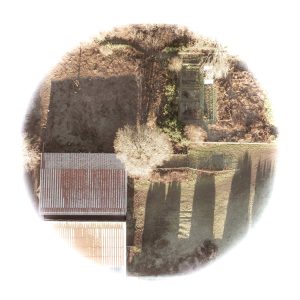

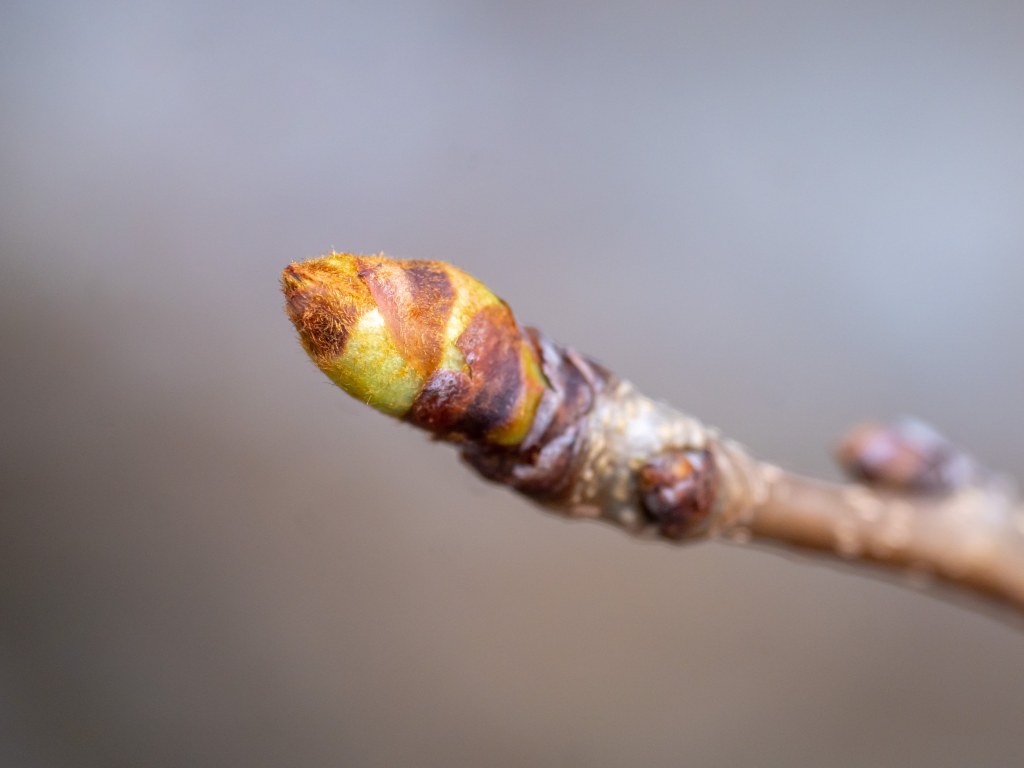
Whilst gardeners across southern parts of the UK are normally underway with all sorts of gratuitous sowing and planting activities – I’m reminded of what the reality of late-winter/spring is like at Bamff. Since moving here in late 2018 I have lived now through four Bamff springs – and the story is usually the same: some faint signs of it in cold icy January, which remains practically unchanged in cold icy february (apart from a slightly fuller emergence of snowdrops), then small patches of green (tiny blades of grass and some micro nettles) and a few more bulbs appearing in cold icy March, the days are noticeably longer, but accompanied by inevitable March snows, perhaps a small “heatwave” in April, an explosion of growth from May into June (including blossoms) – followed by some cool weather again and voila: it’s “summer” (in mid/late june!).
Last year’s intense summer heatwave was, of course, unusual for here, or indeed anywhere, but spring seems to have remained fairly predictable – although a distinct lack of “April Showers” resulting in a drought may now be one of a number of new permanent features due to our changing climate.
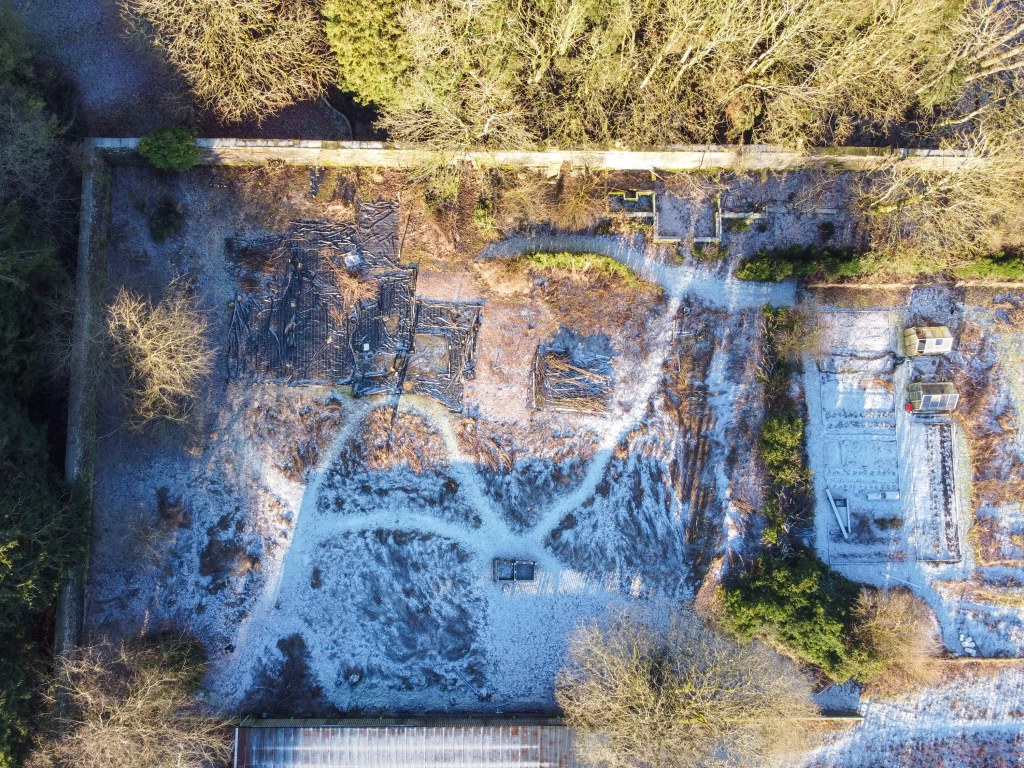
So although I’m reminded of what spring is like at Bamff – that hasn’t stopped me from impatiently trying to get a million things underway.
Brash
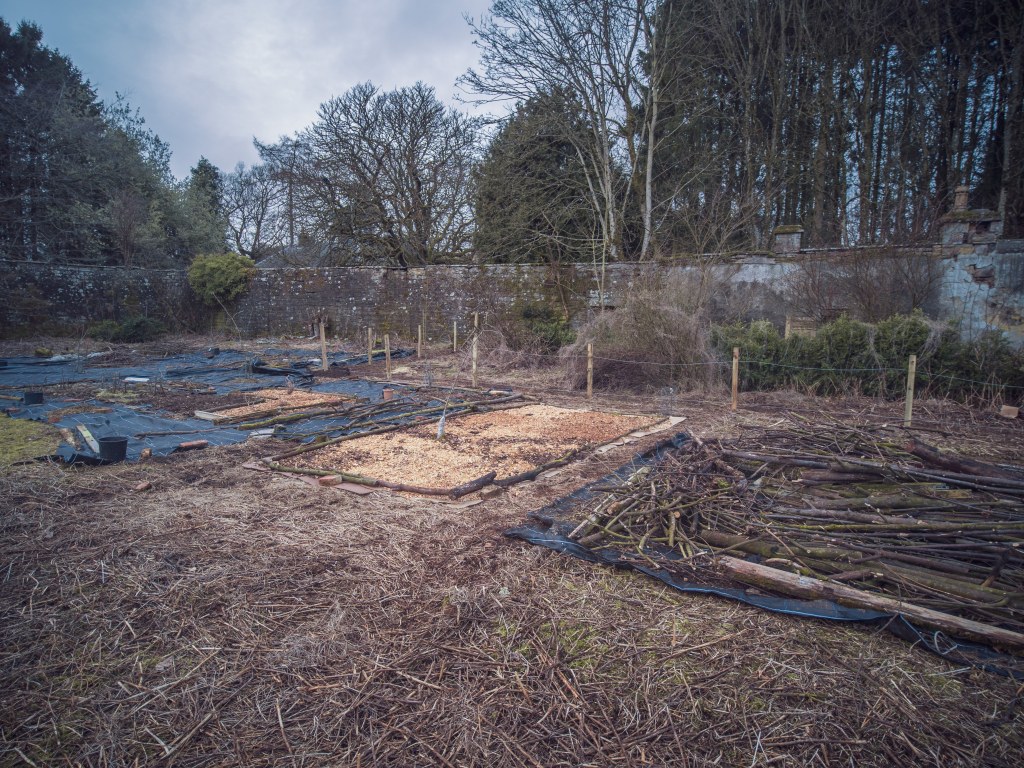
In January huge amounts of brash (sticks/branches etc.) from previous years cleared sycamore and red berried elder (and last year’s fallen poplar) was finally dealt with – mostly dressed (trimmed with a billhook) and neatly placed into piles for further consideration. With some also piled onto the already existing prototype hugel-kultur style bed that colleagues of mine helped to construct last autumn. Some local people have suggested to me that I should burn it all – but sometimes it’s useful – such as for borders around growing beds, or creating pathways, or maybe dead hedges for wind protection. So I won’t do that.
Additionally the remaining buried and half buried rotting structures and plastic paraphernalia from ancient gardening times have also been finally unearthed entirely ( I think..). There are times when it feels like I’m working in Chernobyl, rather than a bucolic garden paradise, as the amount of abandoned and buried wood/plastic/metal/rubber/glass/toxic paint/fabric garbage I have uncovered has been quite staggering..
Seeds and Seed potatoes
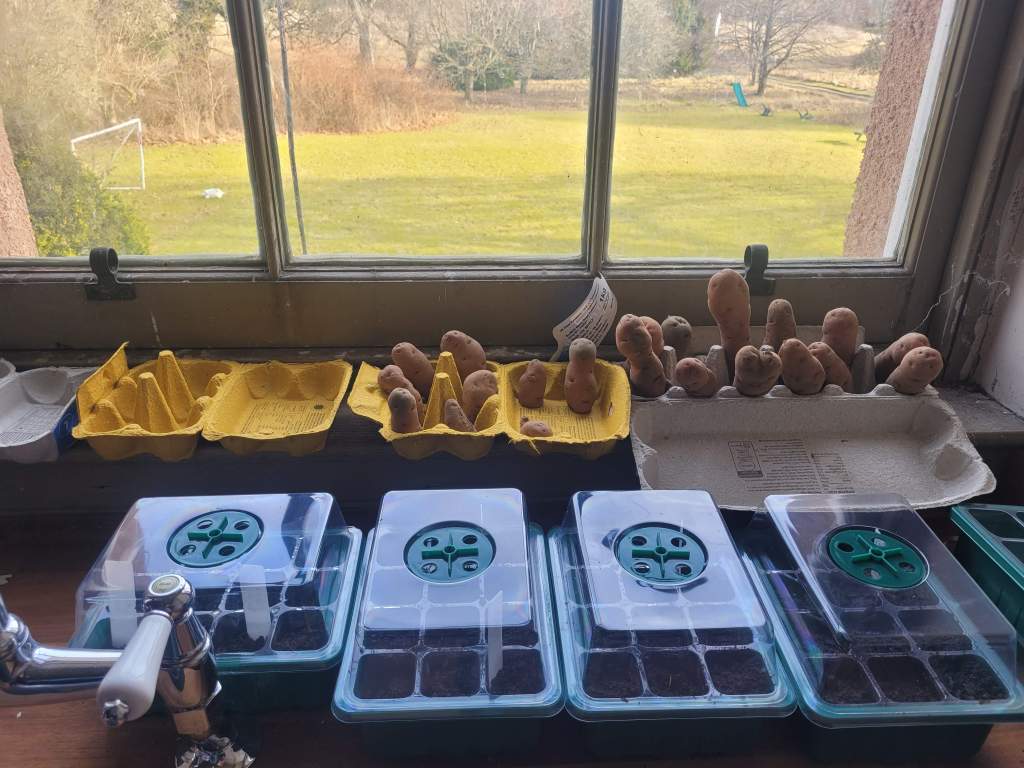
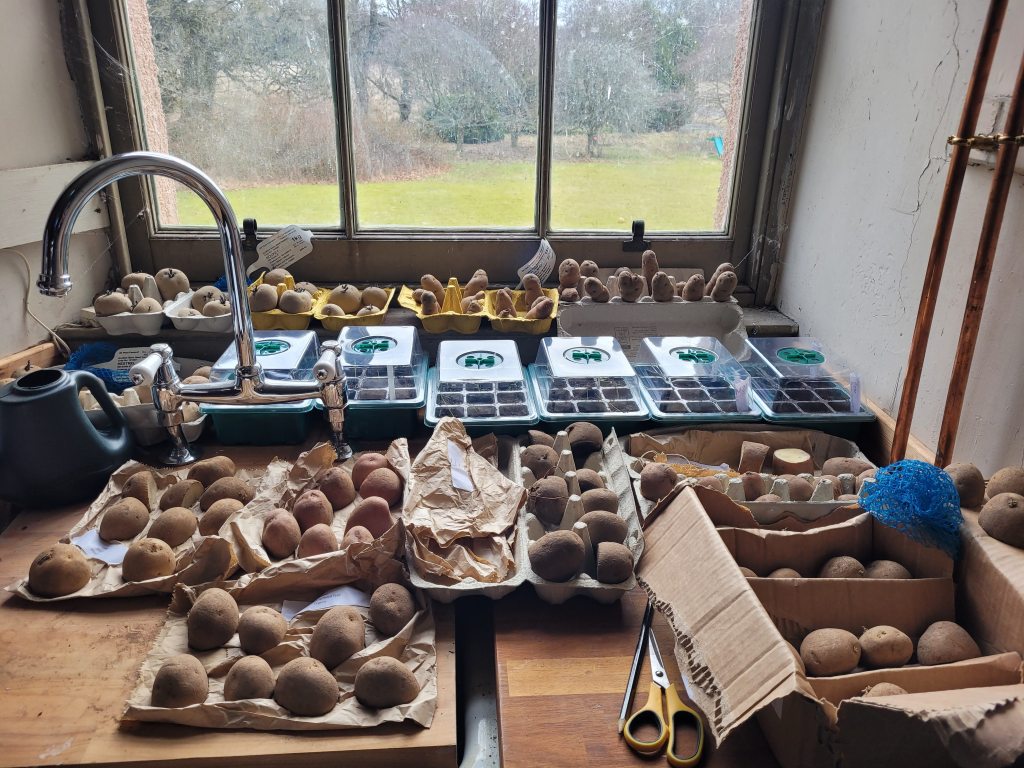
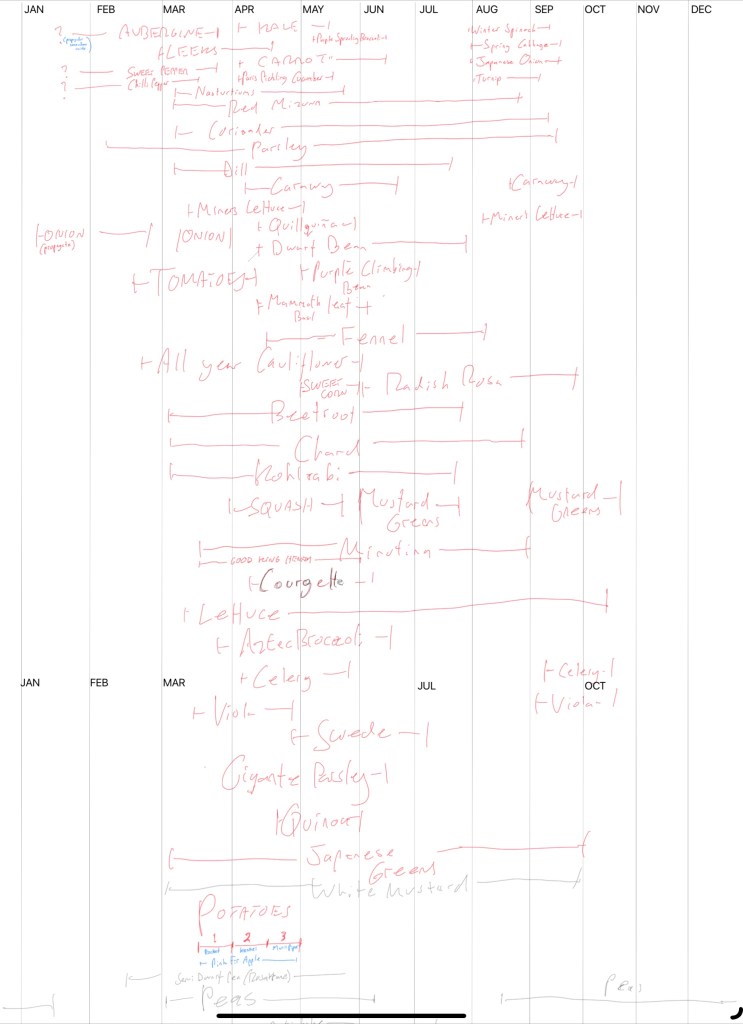
In late January I began using indoor seed propagaters to get red pepper/chilli/onion/aubergine plants underway. This was then later accompanied by my first ever experience with “chitting” seed potatoes – beginning with pink fir apple, rocket, kestrel and maris piper varieties.
Fencing
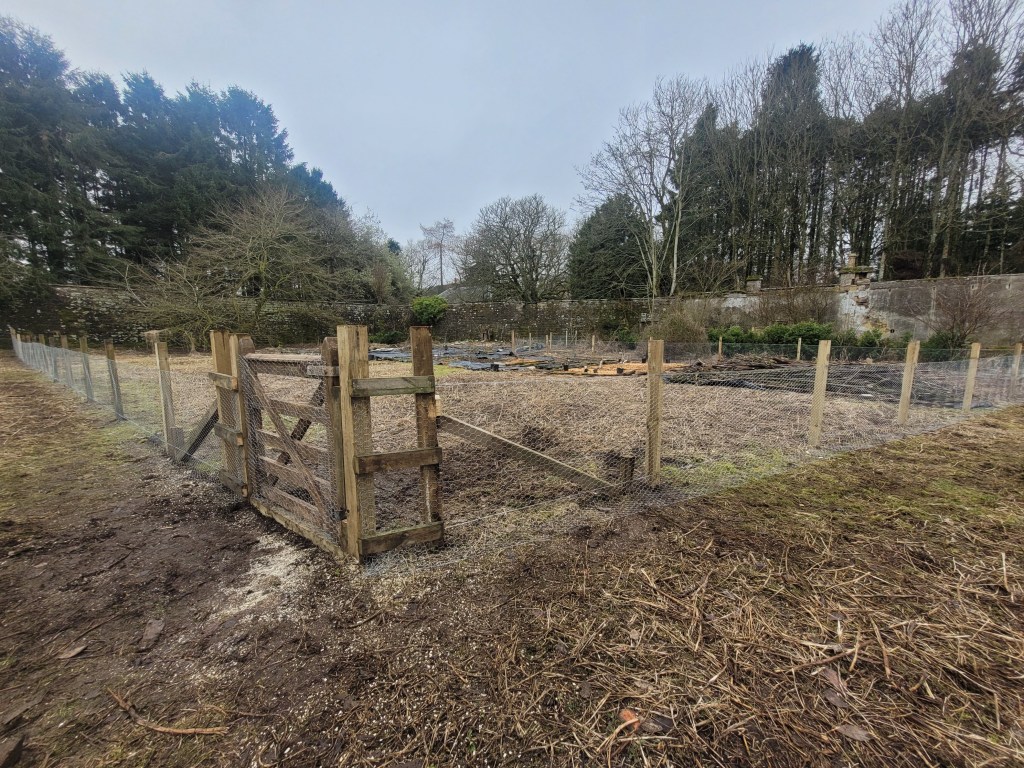
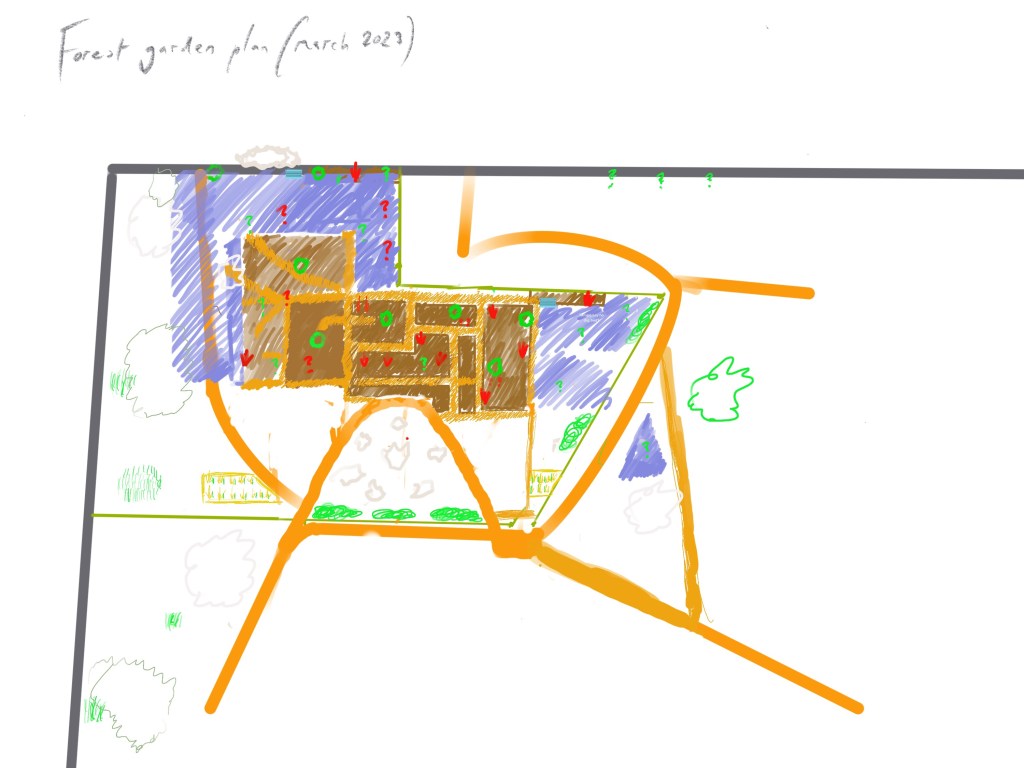
After some trepidation, I finally took the plunge with rabbit proof fencing around part of the “forest garden” area. This was completed in mid-February and helped to bring into a focus a more detailed plan for how this area could progress. But it also raises the questions about how formal/informal the area should ultimately be. I’m leaning towards a slightly more formal version for the plan of this area now, and the fencing has inevitably helped to enhance that. But at the same time, some chaos and unpredictability is welcome; the books of Masanobu Fukuoka and Anni Kelsey reinforce the relatively more recent gardening trends (though is most applicable to a form of forest gardening), as a habitat that humans are only one beneficiary, and that “pests” and “weeds” should be sometimes welcomed alongside our preferred species. But the rabbits were so vicious in their destruction of my initial plantings, that I had little choice but to fence them out, otherwise it would have been an uphill struggle getting anything started, unless I wanted a garden of solely nettles, ground elder and rosebay willow. With an ambitious rewilding project happening just over the wall, it doesn’t feel appropriate to take the “do absolutely nothing” approach here, especially as one of the main aims is to ultimately provide multiple ways of producing food (for humans). To recreate something like a “forest floor” with edible perennial plants and fruits and berries requires some intervention here, especially if one is in any kind of a hurry to achieve it. Aside from regular scything, coppicing self seeded sycamores and removing some red berried elder, I’m avoiding any other form of habitat destruction.
Northern Lights
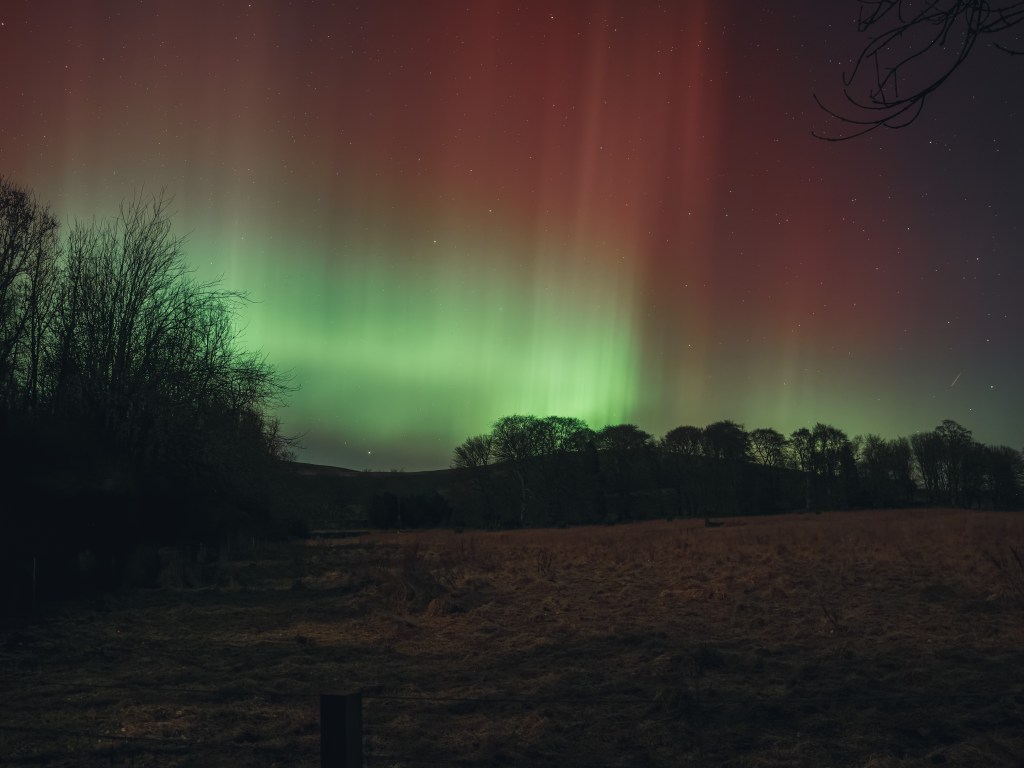
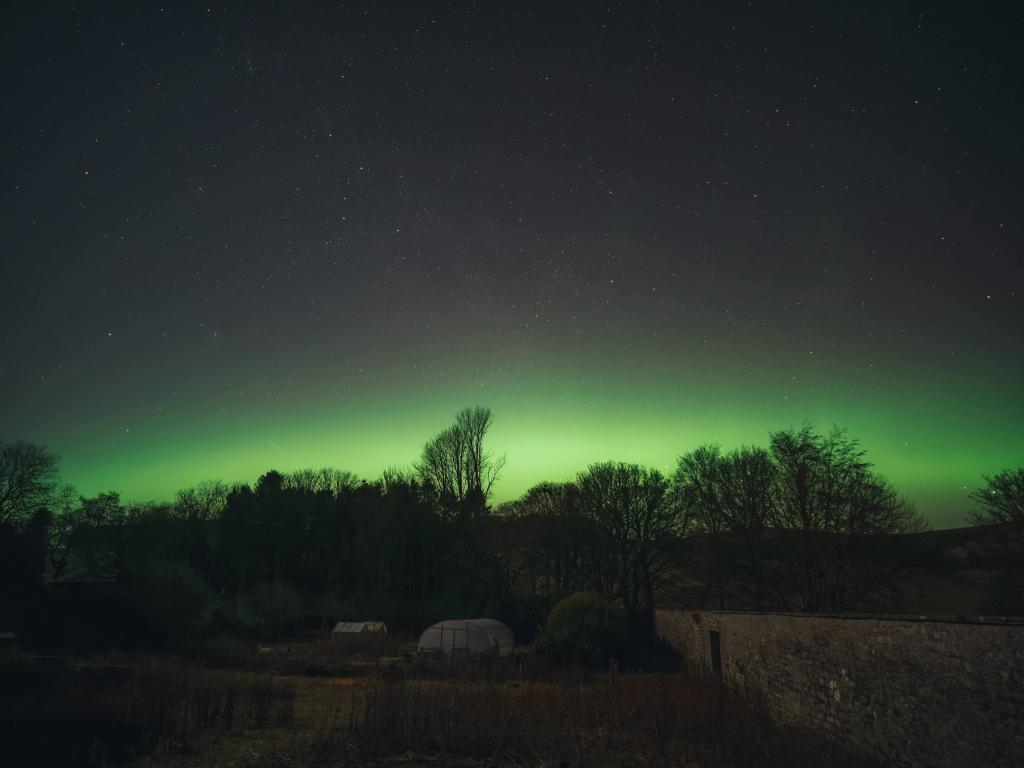
I often go to the garden for photographic opportunities when conditions are spectacular – but I didn’t expect such an amazing display of aurora to appear on 26th February… though I had already witnessed its peak out in Bamff Wildland moments earlier, it was still magical to stand in the garden with some of the sky to the north still ablaze.
Three sisters
“What can I plant right now!” (I asked myself in mid-February) I had read that Jerusalem artichokes were often planted in late February – so I decided to give it a go and ordered dozens of bulbs of the Fuseau variety from ebay. But where to plant them? Hastily I made three fairly generous new beds in areas normally populated by the classic resident weeds – these were well dug beds and I pulled as many weed roots out as I could, but apparently Jerusalem artichokes can help clear the ground in a similar way to potatoes (which I’m not entirely sure is a myth, but anyway..) – they also keep coming back and are likely to spread, hopefully meaning bounteous harvests year upon year with little effort. But wait! Do I actually like them? Don’t they make fart a lot? Let’s see!
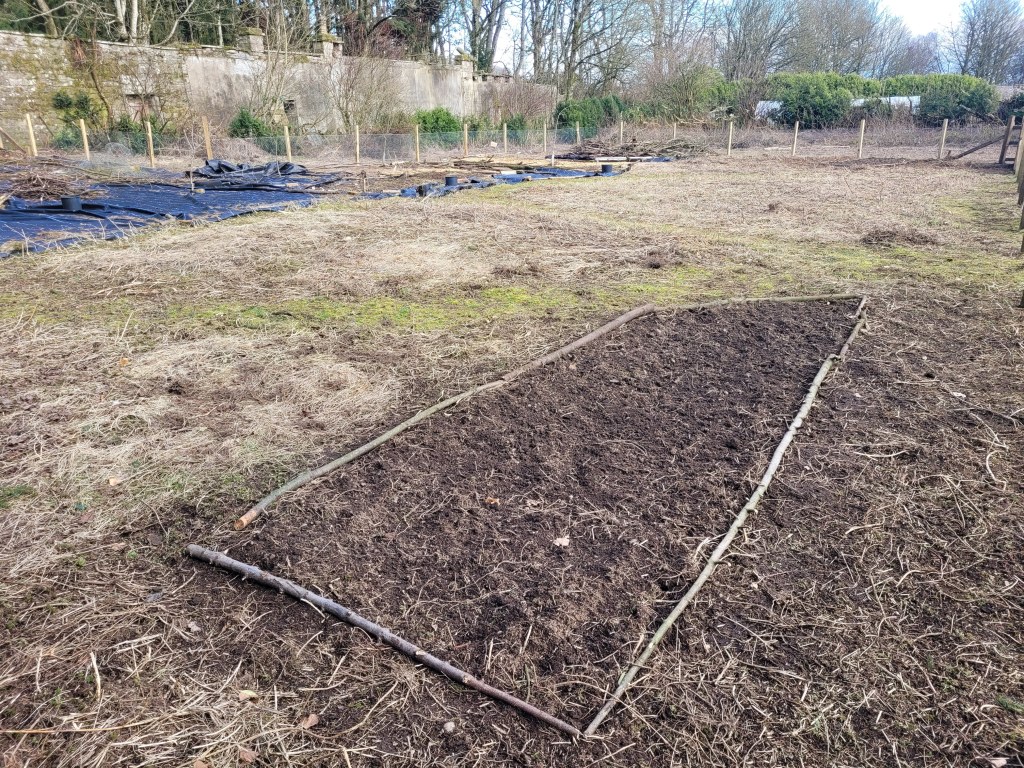
Interestingly they can be grown using the “three sisters” method – which is an ancient Native American gardening technique employing companion planting between corn, beans and squash. The corn can be swapped for Jerusalem artichokes – which, as they are related to sunflowers, grow tall and burst into small sunflower-like flowers. The beans (in my case I decided to buy lots of field beans, as advised by one of my favourite youtubers Huw Richards) can grow up alongside the stalks of the artichokes – and the squash can (eventually) cover the ground with a bounty of vegetables (I’m trying three varieties of squash this year after last year’s massive success with the Anna Swartz Hubbard).
Transplanting
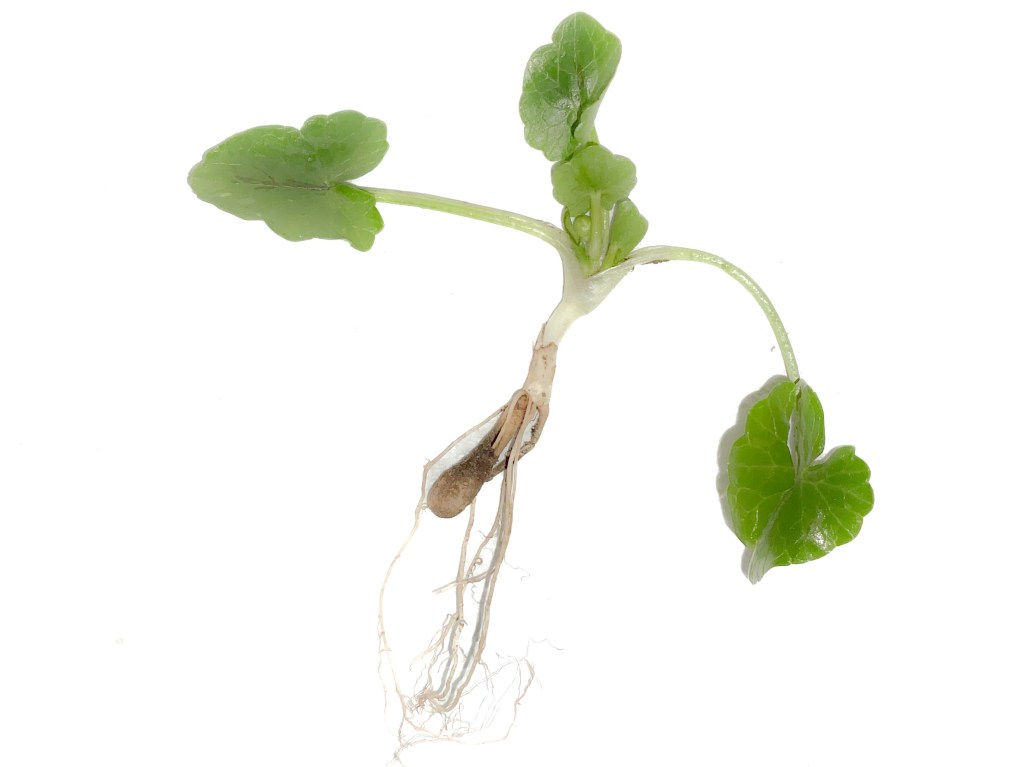
One of the aims of the garden is to exhibit useful plants that already grow wildly around Bamff, and place them in and amongst other species I am growing – something that the forest garden area should be perfect for. So far I have only transplanted: wild strawberries, Siberian purslane, lesser celandine, and wild raspberry, I had also sown some locally growing sweet cicely seeds last autumn – but there should be many other interesting plants from around Bamff to join them, including yarrow and even rhubarb which is found in various patches dotted around. I was a bit nervous about the lesser celandine (ficaria verna, also known as pilewort; its tubers look like piles and some consequently thought it cured your dangleberries) as there are endless youtube videos about this plant being an unstoppable pest, with people trying everything they can to exterminate it using every weapon in their arsenal. Turns out this is mostly an American phenomenon where it is a non native species – but still, chill out!
More seeds and seed potatoes
I was too late to grow tomatoes last year. Not so this year. So, in late February, into the seed propagaters they went – numerous varieties of all sizes and colours. A visit to the annual Tattie Day in Kirriemuir (yes, it’s as exciting as it sounds) resulted in four more varieties of potatoes chitting away alongside the others – but I fear I have been a little too enthusiastic trying to double up quantities by slicing some in half – not realising that I need at least two eyes in each chunk for the chits to emerge – ah well, so I ordered even more seed potatoes (sarpo mira) and have decided that the majority of them will be grown in 30 litre buckets, where a combination of some garden topsoil, some manure from the old cow dung mound – plus maybe a little mushroom compost will be used. Others may go into the ground (mainly into a large mound of topsoil dumped from cattle shed ground excavation) – and I may try growing just a few under woven plastic mulch sheets.
Polytunnel
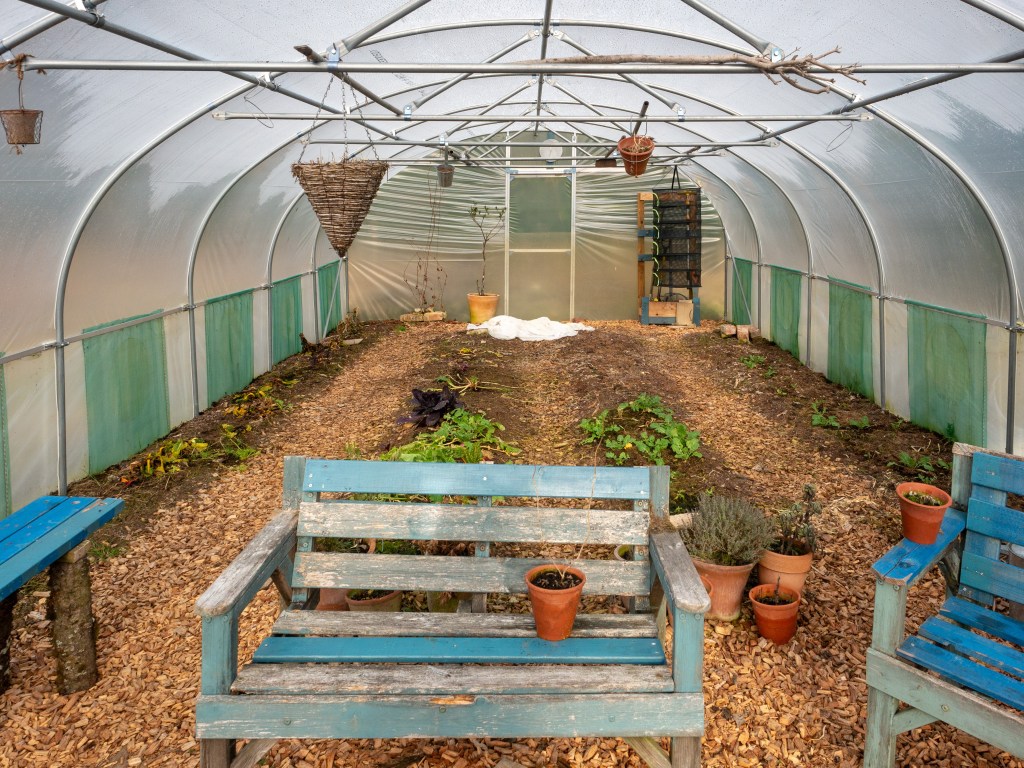
All this exciting activity didn’t cause me to forget the polytunnel. Some plants in the tunnel have survived the winter – turnips, parsley, a little red kale and kohlrabi, bok choy, celery, some chard and beetroot, wild rocket, mizuna – sounds like a lot, but it’s a fairly humble scattering of plants. I have discovered how important it is to lay fleece on the plants, which has protected them from some very low temperatures – often as low as -10 degrees. In fact, the garden just seems…cold, in general. Which is also an observation from some others who have tried gardening here in the past, and which feels like a distinct disadvantage – but as last year showed, a lot is still possible during summer. But I’m struck by how there is literally nothing green surviving outside at all here during winter (except of course for anything evergreen).
New seed sowings in the tunnel began in early march into seed trays and modules – a long list ranging from globe artichokes to peas, chard, beetroot, carrots, kohlrabi, cauliflower and much more. These have been covered in some offcuts of tunnel polythene to help warm them, but in reality I really need a heated seed bed of some kind to help germination, the temperatures in the tunnel currently fluctuate from -10 at night to nearly 30 degrees on a sunny day. But having a device in the tunnel permanently connected to mains electricity sounds distinctly unappealing, so I may research other solutions.
I have also increased the growing area in the tunnel – reducing the width and area of some paths, then adding more mushroom compost.
Further plantings
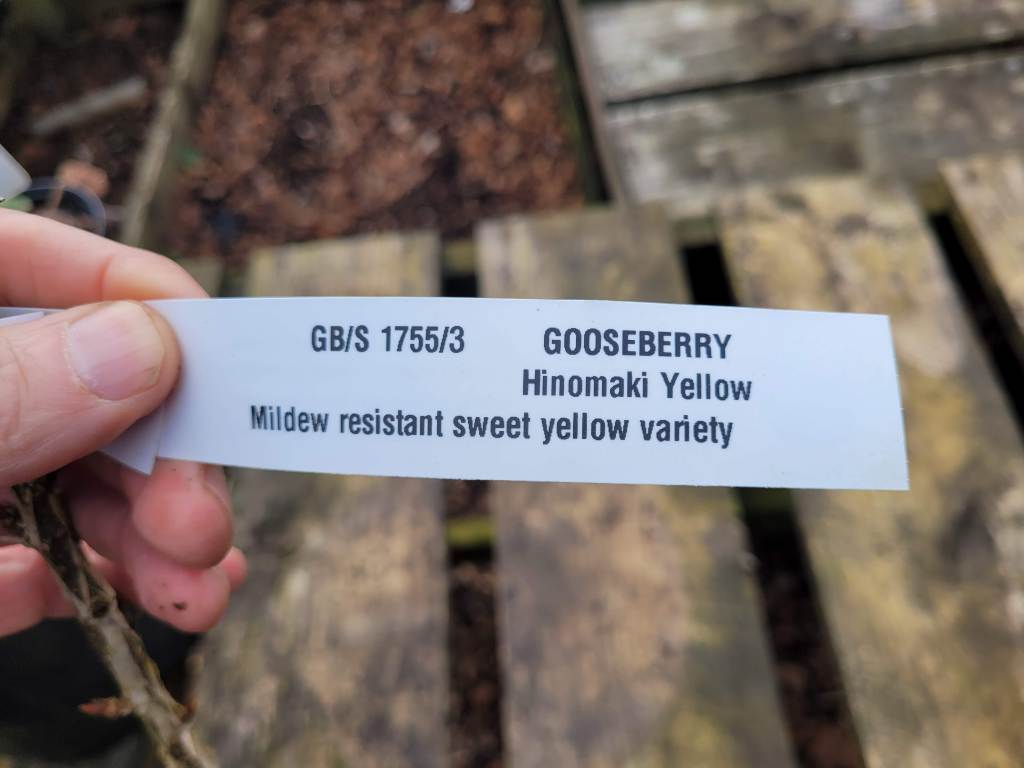
The fruit trees and berries of the forest garden were joined by some new companions – whitecurrant, three varieties of gooseberry, blackberry and strawberries. In over five shadier areas around the walled garden I have planted patches of Ramsons bulbs (wild garlic) hoping that they will flourish and spread year upon year. Rather impatiently I ordered a handful of perennial kale (taunton dean) cuttings and stabbed them into the forest garden – in icy temperatures… I will be extremely surprised if they survive – especially as an unidentified creature keeps pulling them out.. (edit: the local jackdaws!)
Forest Garden
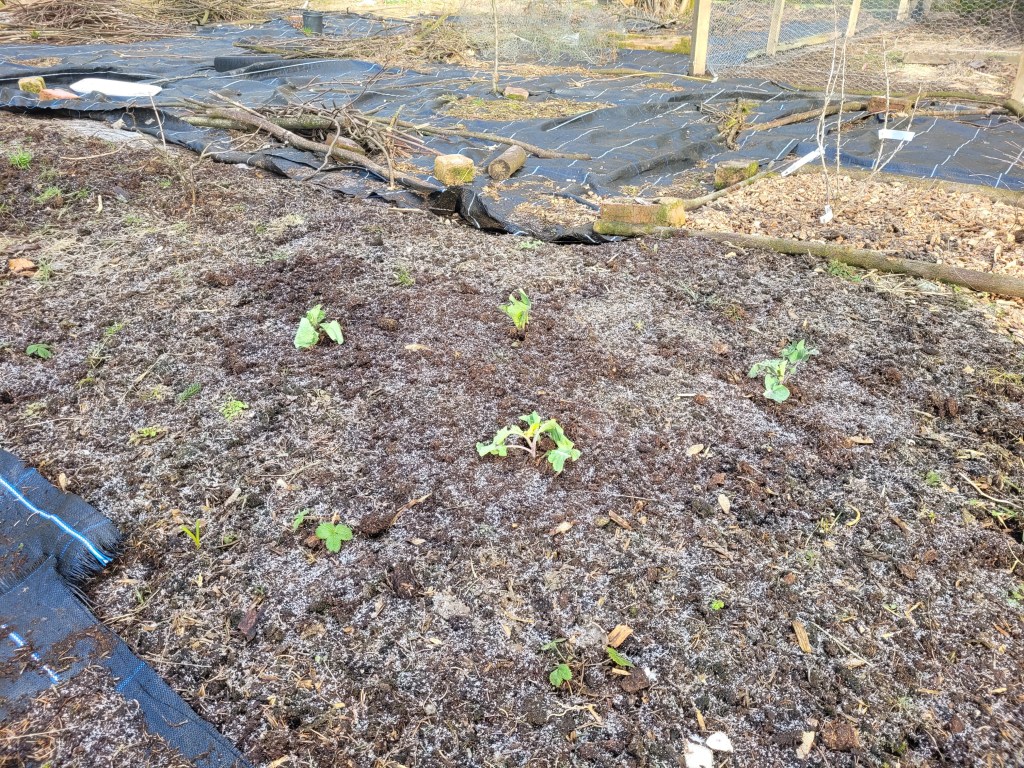
As seen above, much of this year so far has been about a slight lack of patience. This has extended most of all into the forest garden area, where I have liberated some sections from plastic mulch sheets, originally laid over scythed weeds in late 2021, hoping that planting and sowings (white mustard, peas, vetch, various wild flowers, field beans and more) won’t be suffocated by the return of the weeds. Initially I thought I would replace the plastic with cardboard and woodchip. But my lack of patience deepened, and although I started in this fashion, I decided to forgo this method – truly liberating the ground and the earth (at least in one small area)! The soil should be rich in nutrients, so I’m gently loosening it (after some compacting due to humans repeatedly walking over the sheets) before planting and sowing. Some partially rotted local woodchip can then be added as a light mulch. This might all be a mistake, but it will be an interesting experiment, and experimentation is a key feature of this whole project.
Nevertheless, so far it looks promising, as signs of any new nettle and ground elder etc. are seemingly absent, when they are already beginning to emerge elsewhere.
In any case, I’m not at war entirely with these weeds, as my ultimate aim is for all these species to somehow co-exist, without one dominating the other. They all have their uses and their own individual beauty.
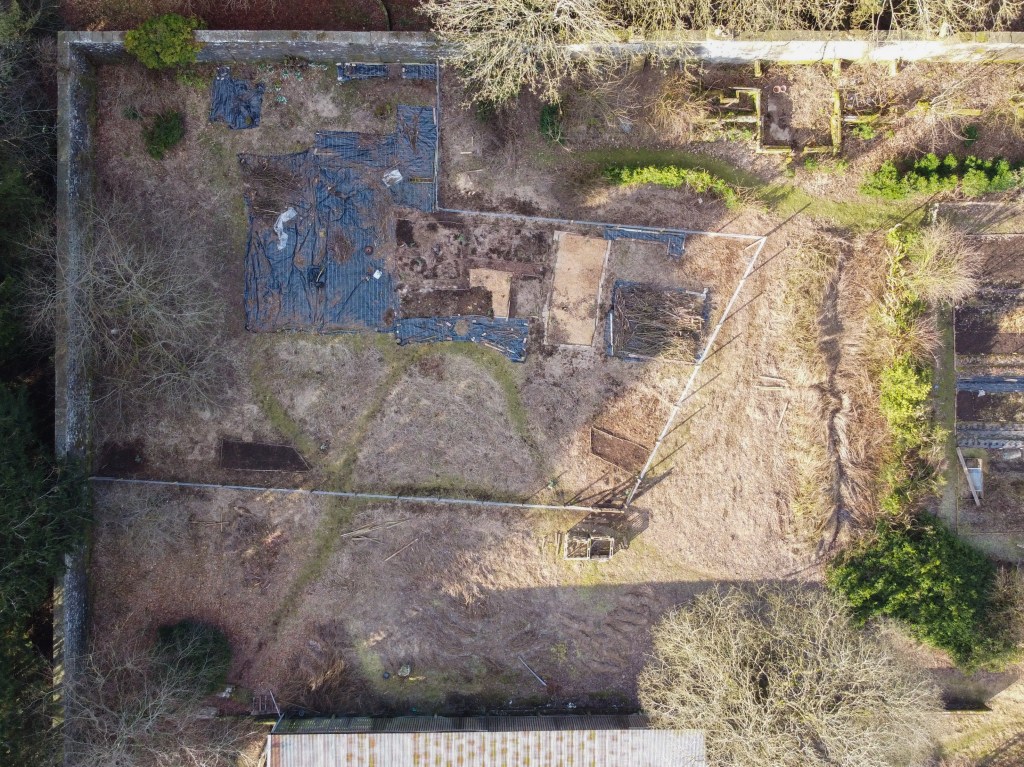
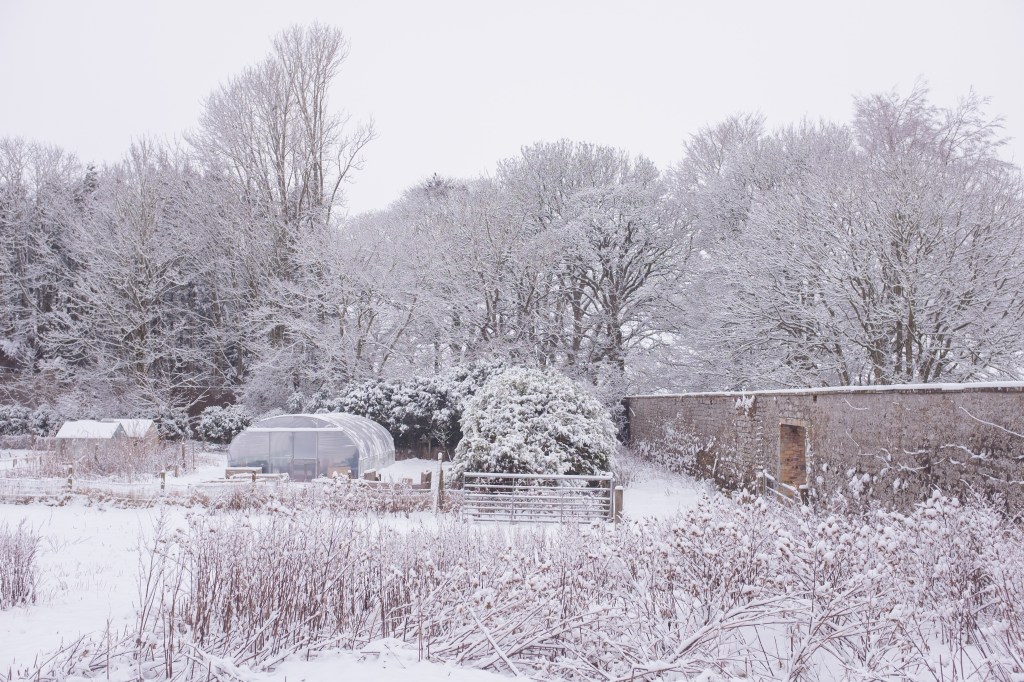

 The Bamff Walled Garden.
Greetings from sunny Australia ^_^
Reading your blog, I was trying to imagine temperatures of -10C and vegetables I grow in the Central West of NSW surviving there! The lowest temperature here during winter (June, July, August) is maybe -4C but that is quite rare.
However, once frosts start, the demise of summer plants commences and the skeletons of once-flourishing tomatoes are relegated to the compost pile.
I appreciate the fallen tomatoes decomposing into the mulch and seek out how many may naturally germinate once the soil temperatures reach 15C…..which may not be until late December as it was last year.
You mentioned the necessity of using a fleece to protect the plants against the cold – what type of fleece is this?
I have avocadoes spontaneously sprouting through my one-acre garden wherever I have buried the buckets of kitchen scraps, and these young plants need protection from frosts for at least their first three-four years….hence my query about the fleece.
I look forward to reading more of your blogs and all the best with the summer vegetables.
Cheers, laughing and feasting locally every week.
LikeLike
I’m so sorry to not have replied to this sooner – I have been neglecting the blog lately, but have just done a big update.
Regarding the fleece, here is a page which explains it more https://www.rhs.org.uk/prevention-protection/fleece-and-crop-covers
essentially it’s a white translucent fabric that protects against frost, whilst letting in some light and moisture.
Many thanks for your comment!
LikeLike