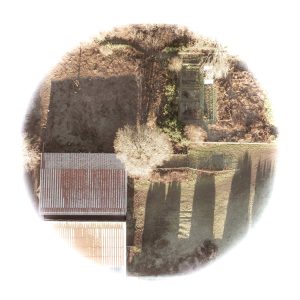
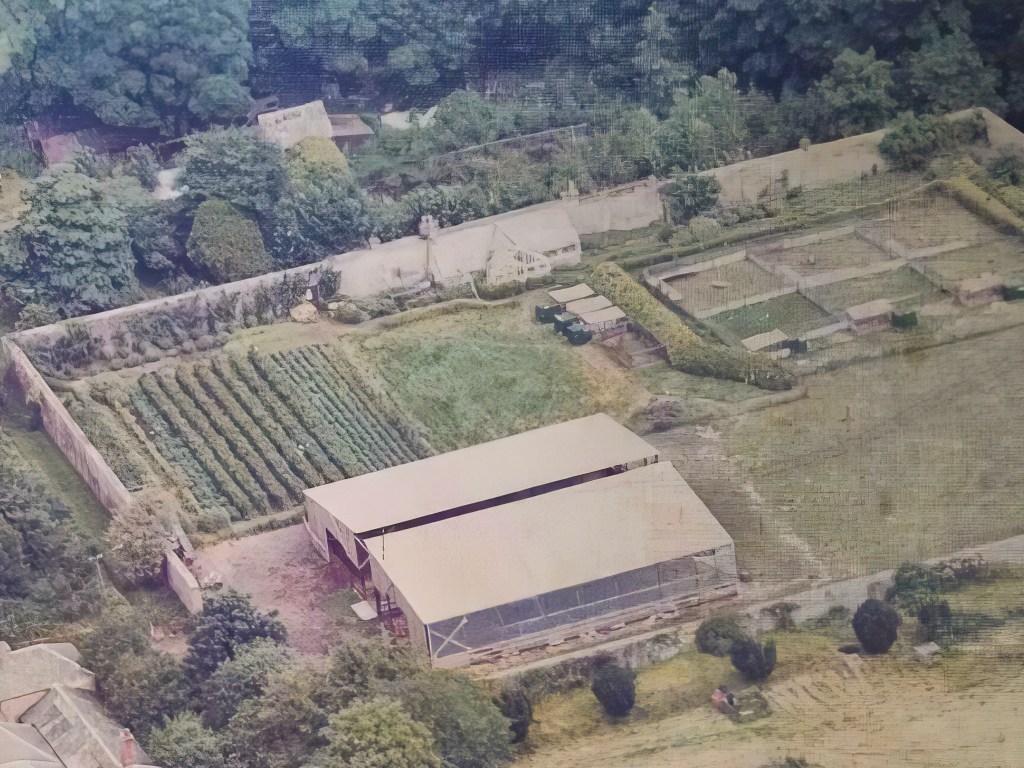
The basic structure of the old Victorian greenhouse, situated by the north wall and equipped with chimneys to provide heated assistance during the winter, appeared to remain intact at least until the 1980s. An old aerial photograph from around 1980 shows it seemingly in good condition.
Sometime between then and the 2010s, however, something caused it to deteriorate to the point that demolition became necessary, possibly with the aim of replacing it with a new productive endeavor. This decline was no doubt exacerbated by an ever-increasing number of broken glass windows. I have since discovered and largely removed the remains of this large, rotting structure, but the glass, inevitably, has proven to be an entirely different problem. Shards of glass in various sizes remain buried in and around the original footprint of the greenhouse. Over time, the whole area had become overrun with nettles, red-berried elder, sycamore, and other invasive species.
In the spring, I decided to tackle this area, at least in a preliminary “phase one” effort. The central sector of the greenhouse site was entirely cleared. Huge amounts of glass were removed (though plenty more remains, waiting to be uncovered), the invasive species were addressed, and with some spade and brush work, I uncovered a concrete base that covers around half the original footprint in a horseshoe-shaped arrangement—visible for the first time in many years.
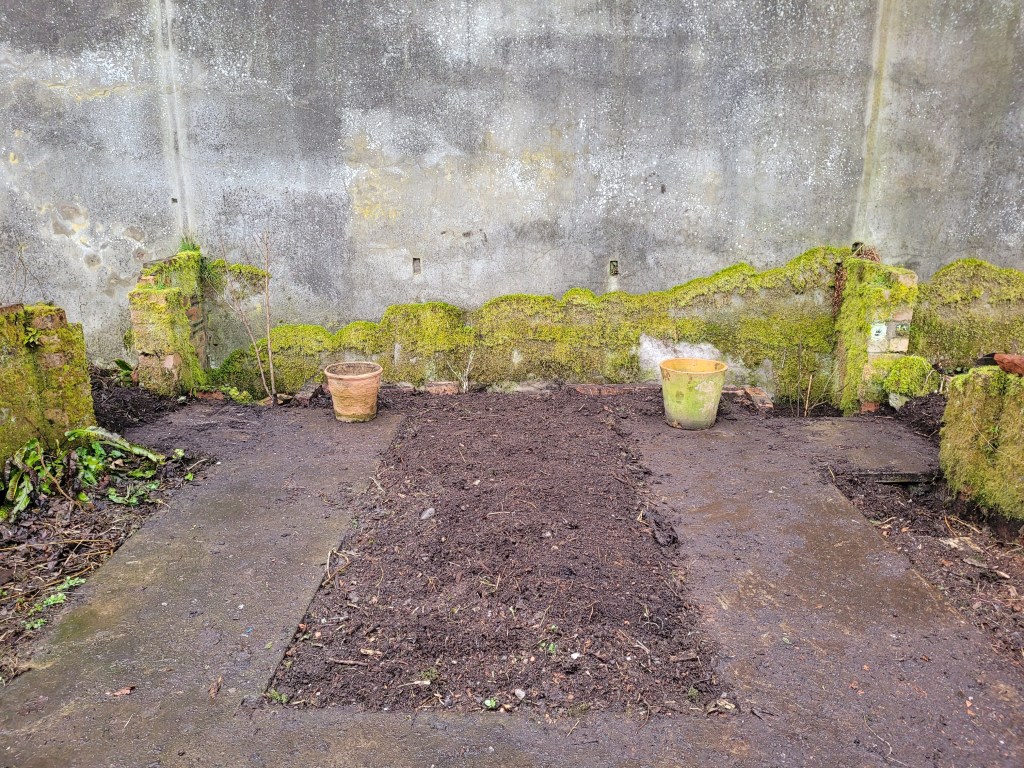
What could this warm suntrap, with its problematic elements, be used for? I had originally imagined rebuilding a greenhouse here—perhaps that will happen one day—but for now, I decided to focus mainly on my first love in gardening: herbs.
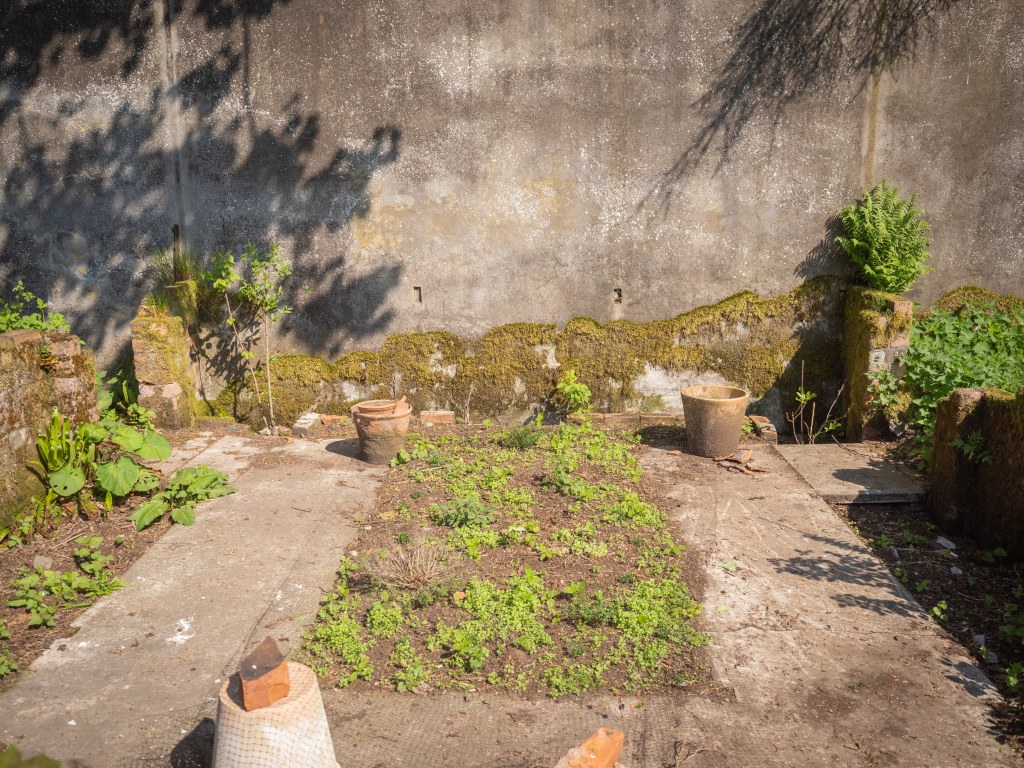
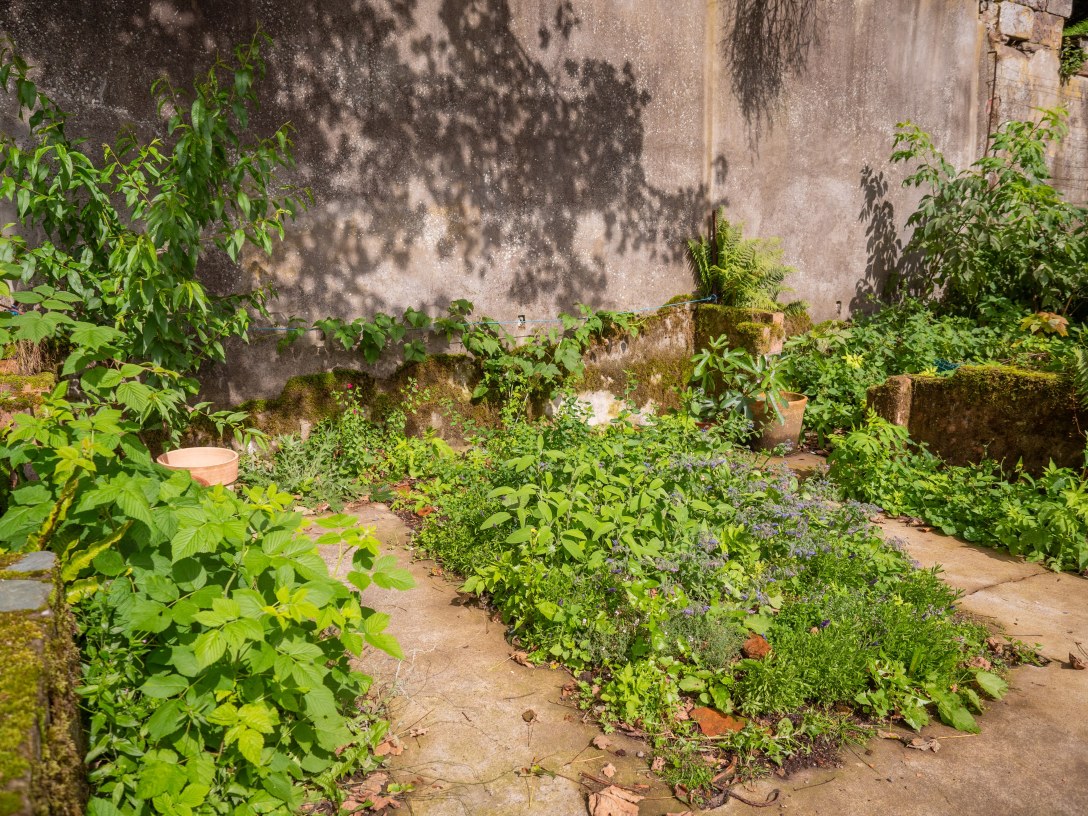
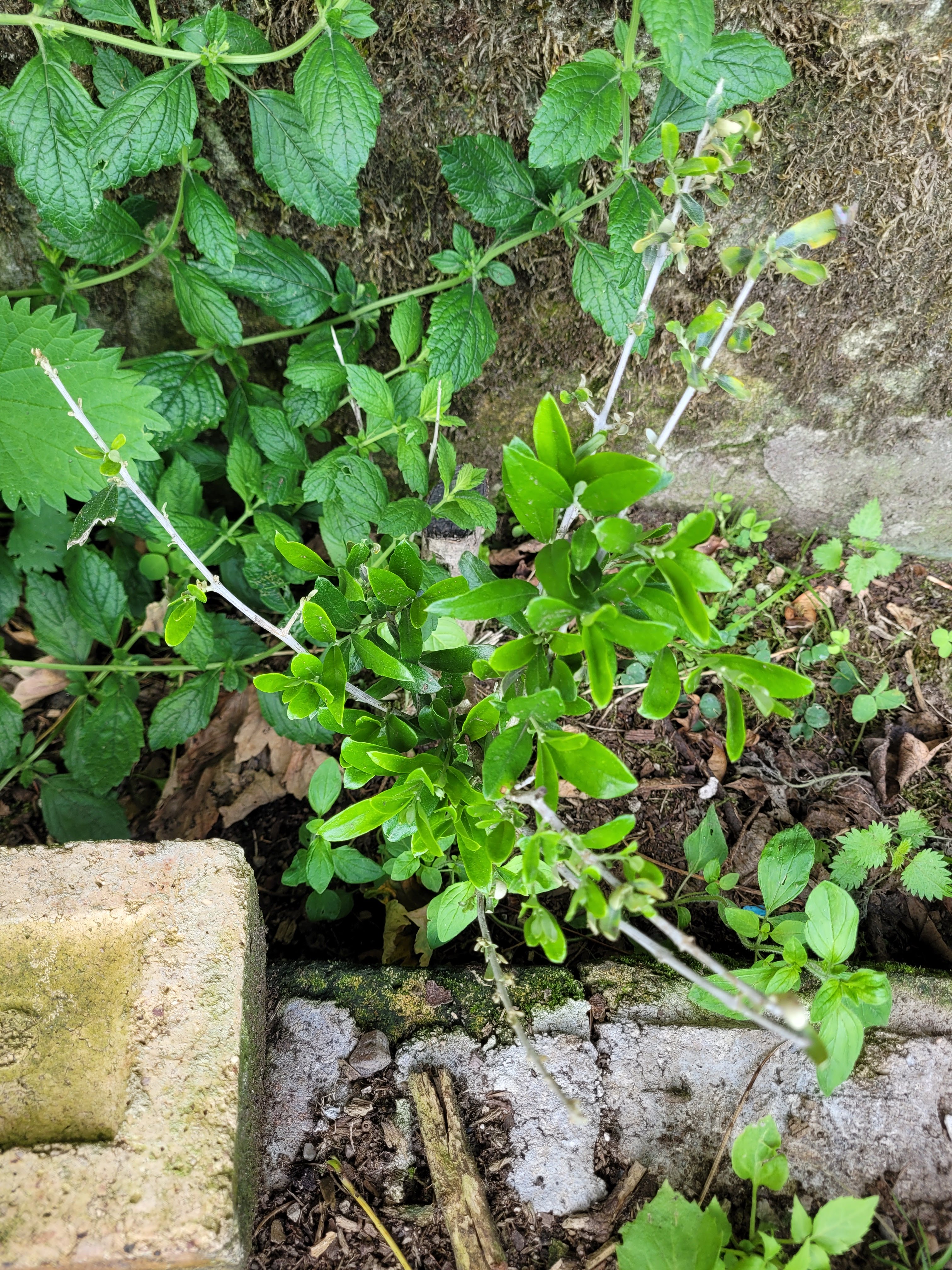
The soil is loose, not particularly deep, but extremely rich from well-rotted generations of invasive perennials, fallen leaves from the towering trees behind the wall, and woody material. I purchased a range of plug plants and sowed some seeds. Additionally, I transplanted into the soil by the wall a young fig tree (Rouge de Bordeaux) that had been living in a terracotta pot, the remains of an olive tree (brought with us from London and coppiced due to dead wood that couldn’t withstand the Scottish winter), and a peach tree grafted with apricot.
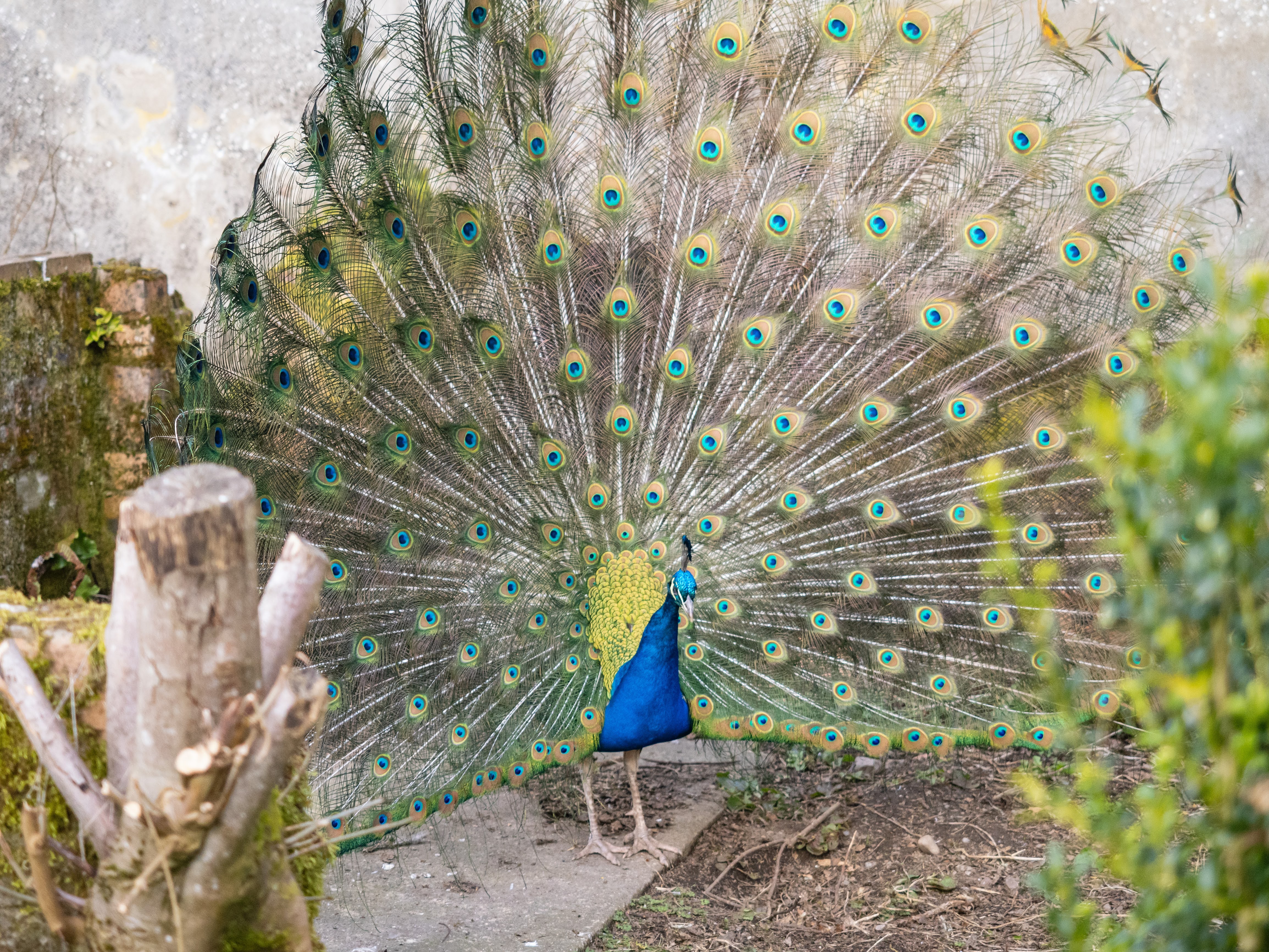
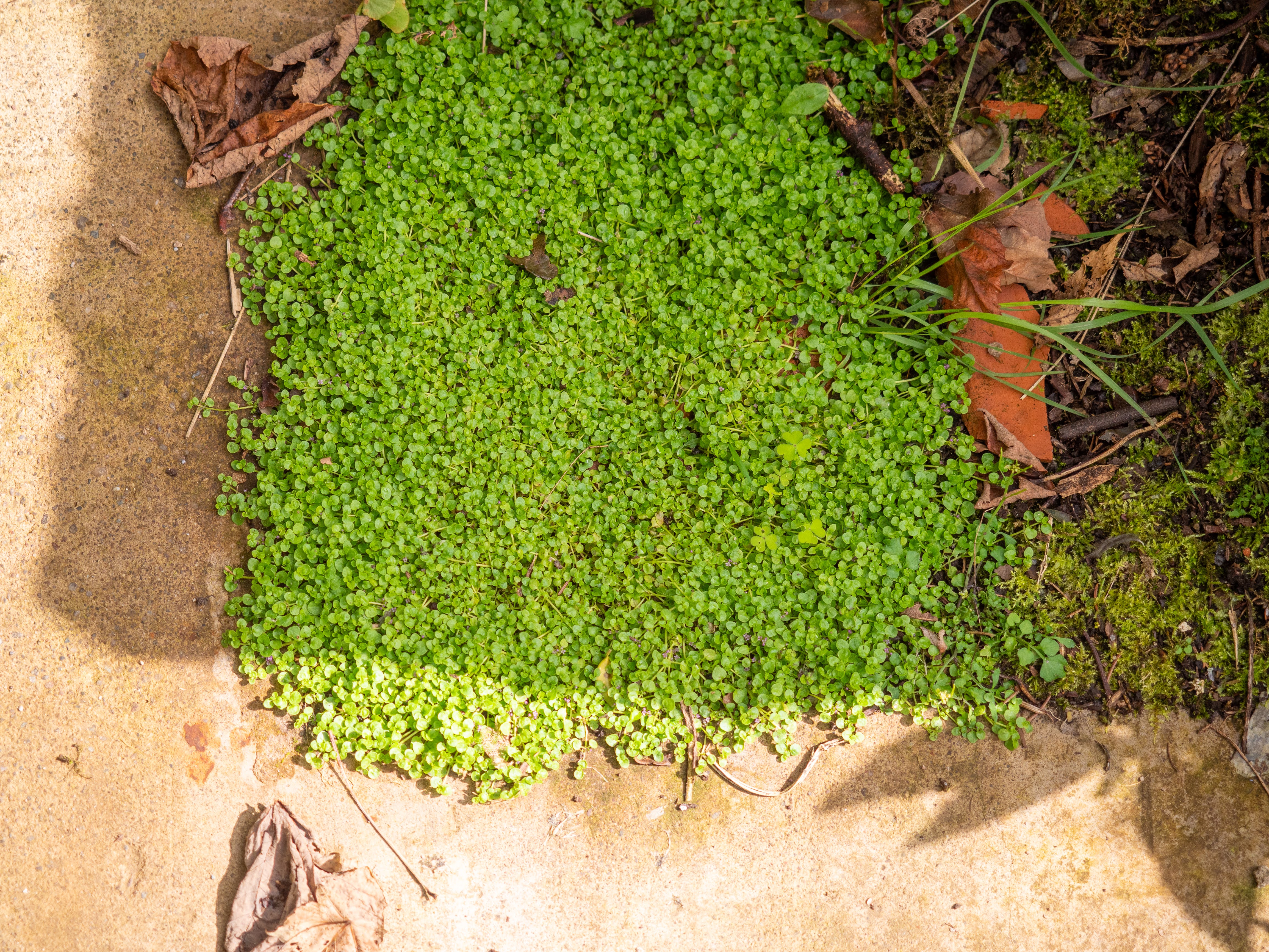
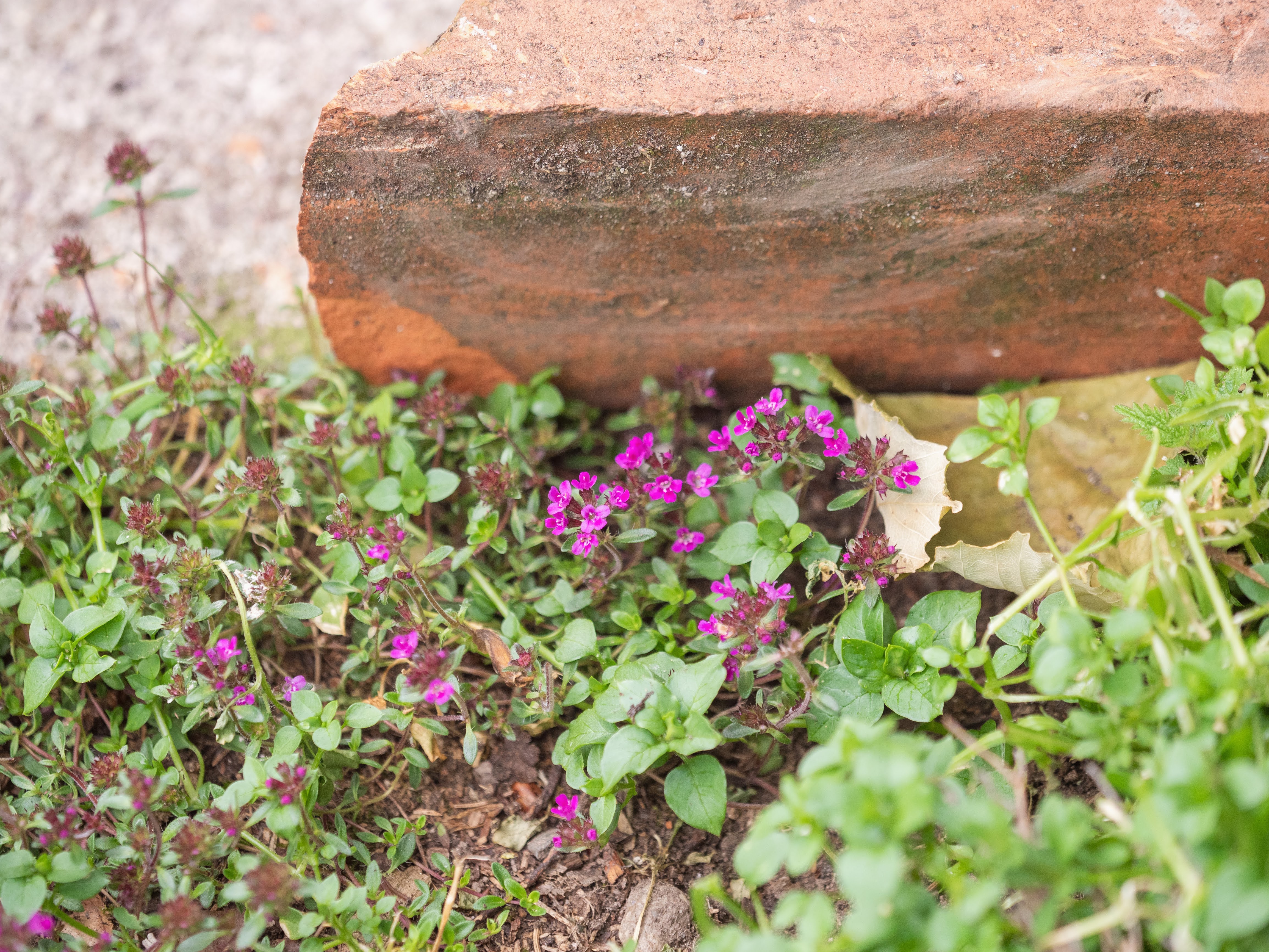
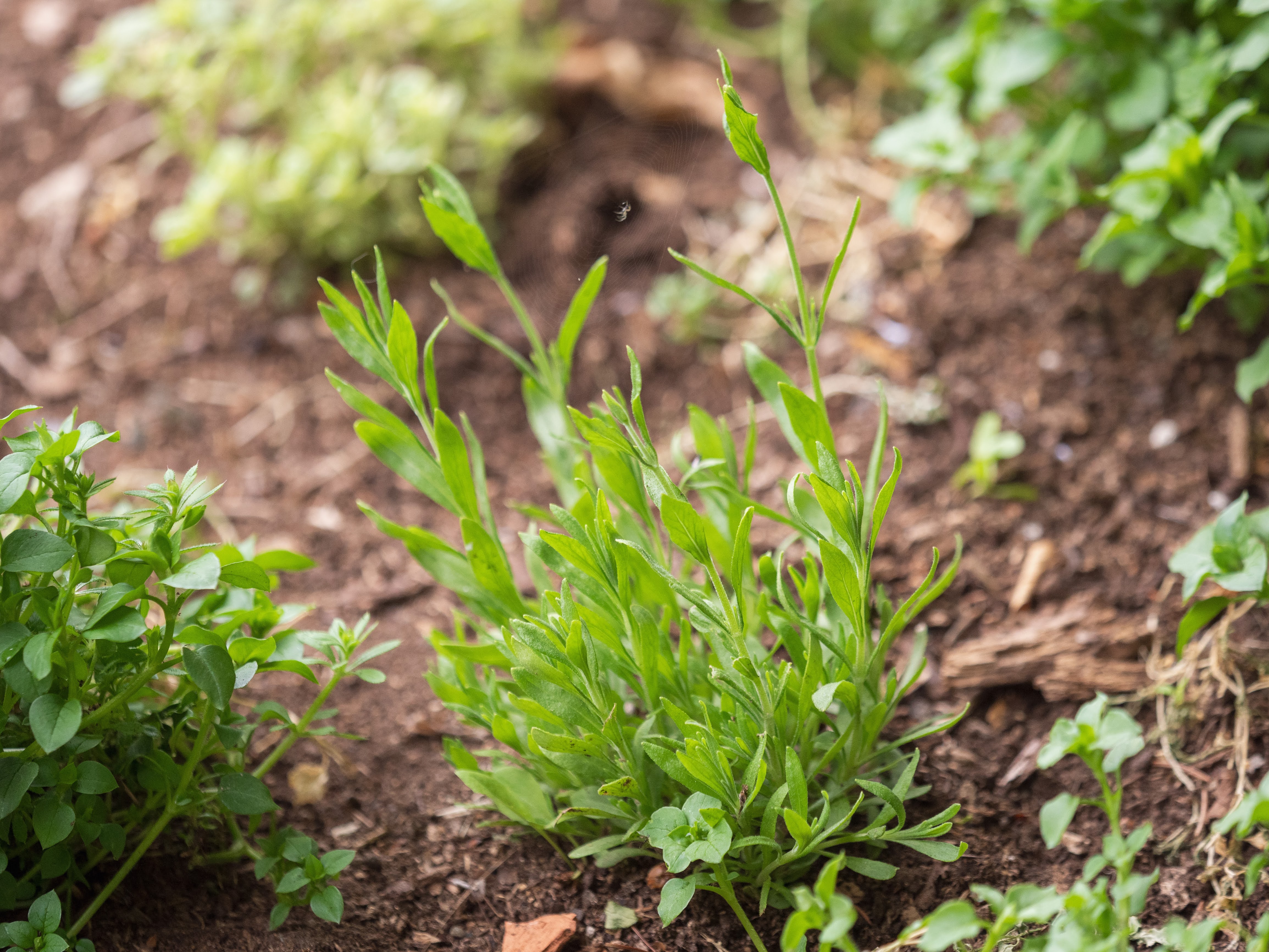
One slight issue is that the huge trees to the north of the wall have large overhanging branches, mainly self-seeded sycamores. It was surprising to see how, around midsummer, they actually created some shade in the middle of the day. In some contexts, this could be beneficial, but here I think maximum sunlight is essential – especially if there is to be any chance of the figs or peaches ever bursting into existence.
Nevertheless, watching this area develop so rapidly during the spring and summer has been one of the highlights of the year. I’m looking forward to continuing this work and expanding it into the ancillary areas, which are still in a state of neglected disarray.
A list of some of the plants introduced in the “Mediterranean Garden”:
| Apricot (Early Moorpark) |
| Blackcurrant Sage |
| Borage |
| Common Sage |
| Curry Plant |
| Fig (Negronne/Rouge de Bordeaux) |
| Hosta |
| Lavender (Hidcote) |
| Lemon Balm |
| Marjoram |
| Mint (Corsican) |
| Mint (pineapple) |
| Olive |
| Oregano (Country Cream) |
| Nasturtium |
| Peach (Redhaven) |
| Raspberry (Black Jewel) |
| Rosemary (Tuscan Blue) |
| Salad Burnet |
| Thyme (Common) |
| Thyme (Creeping Red) |
| Thyme (Lemon) |
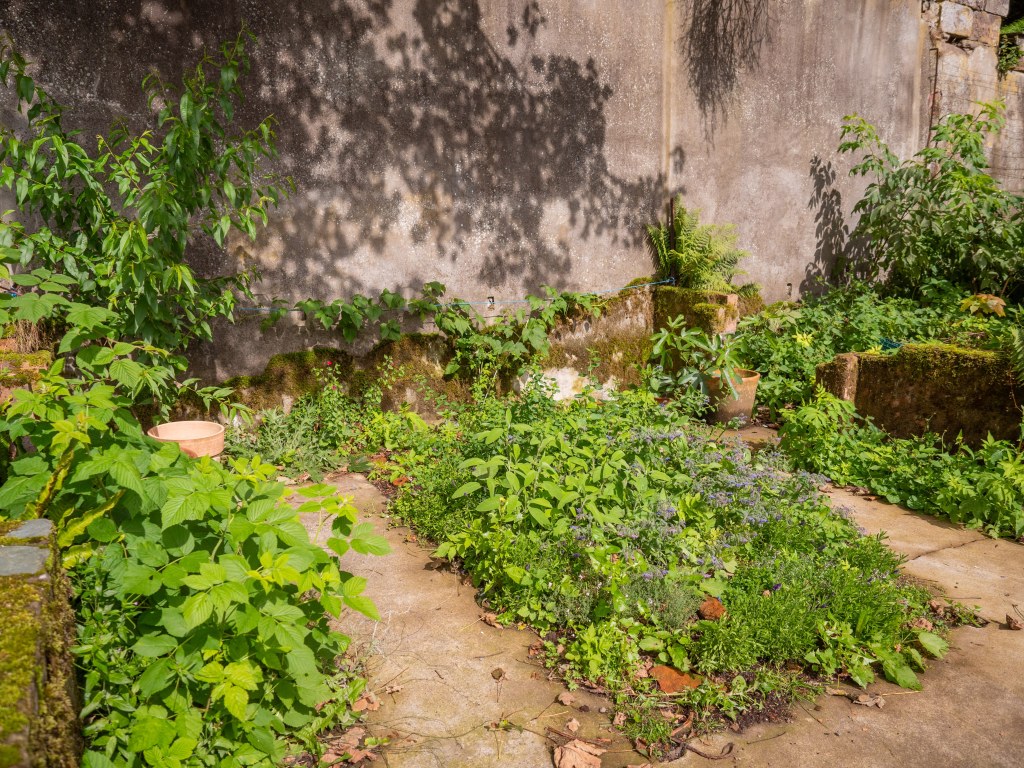

 The Bamff Walled Garden.