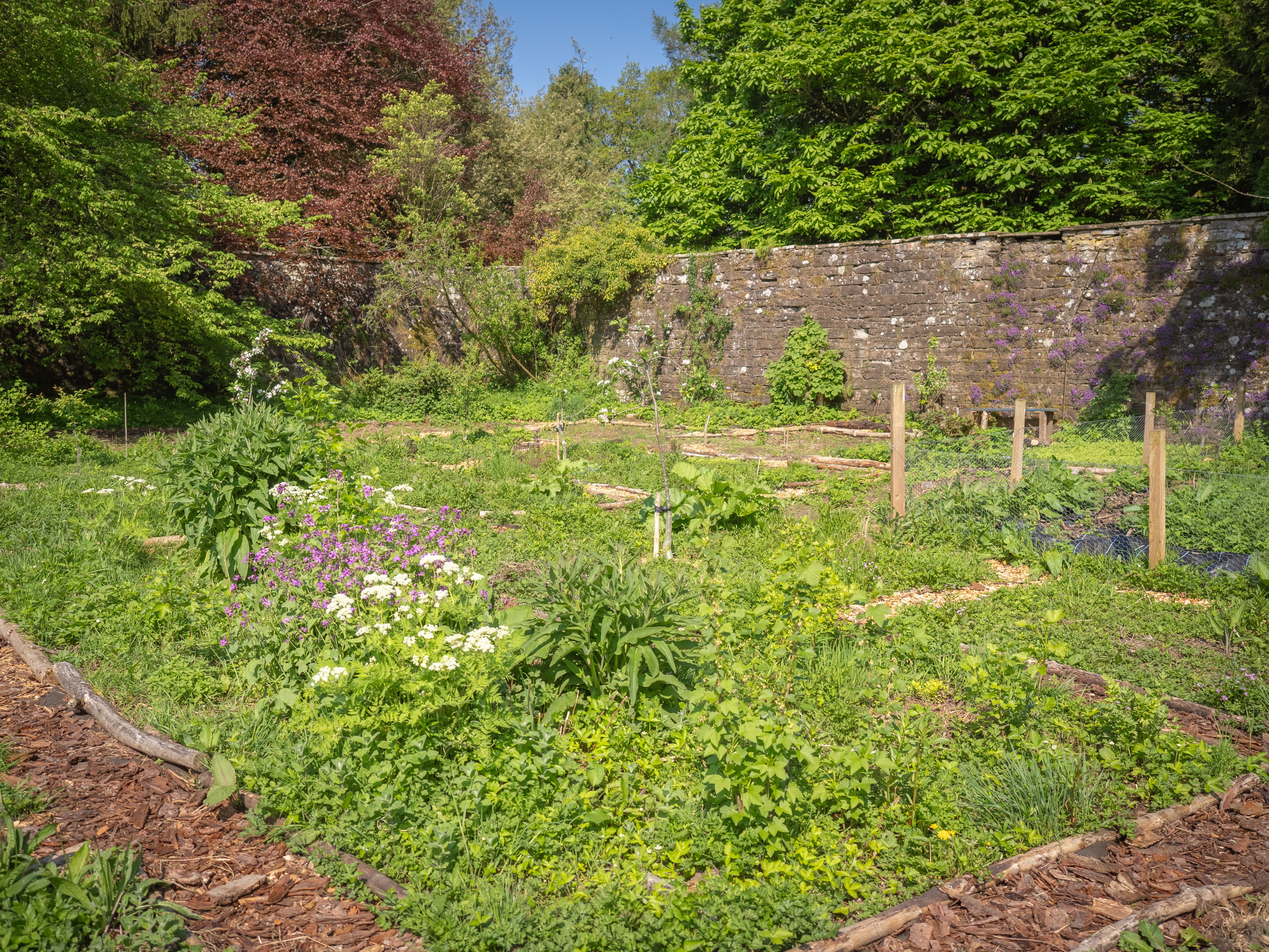
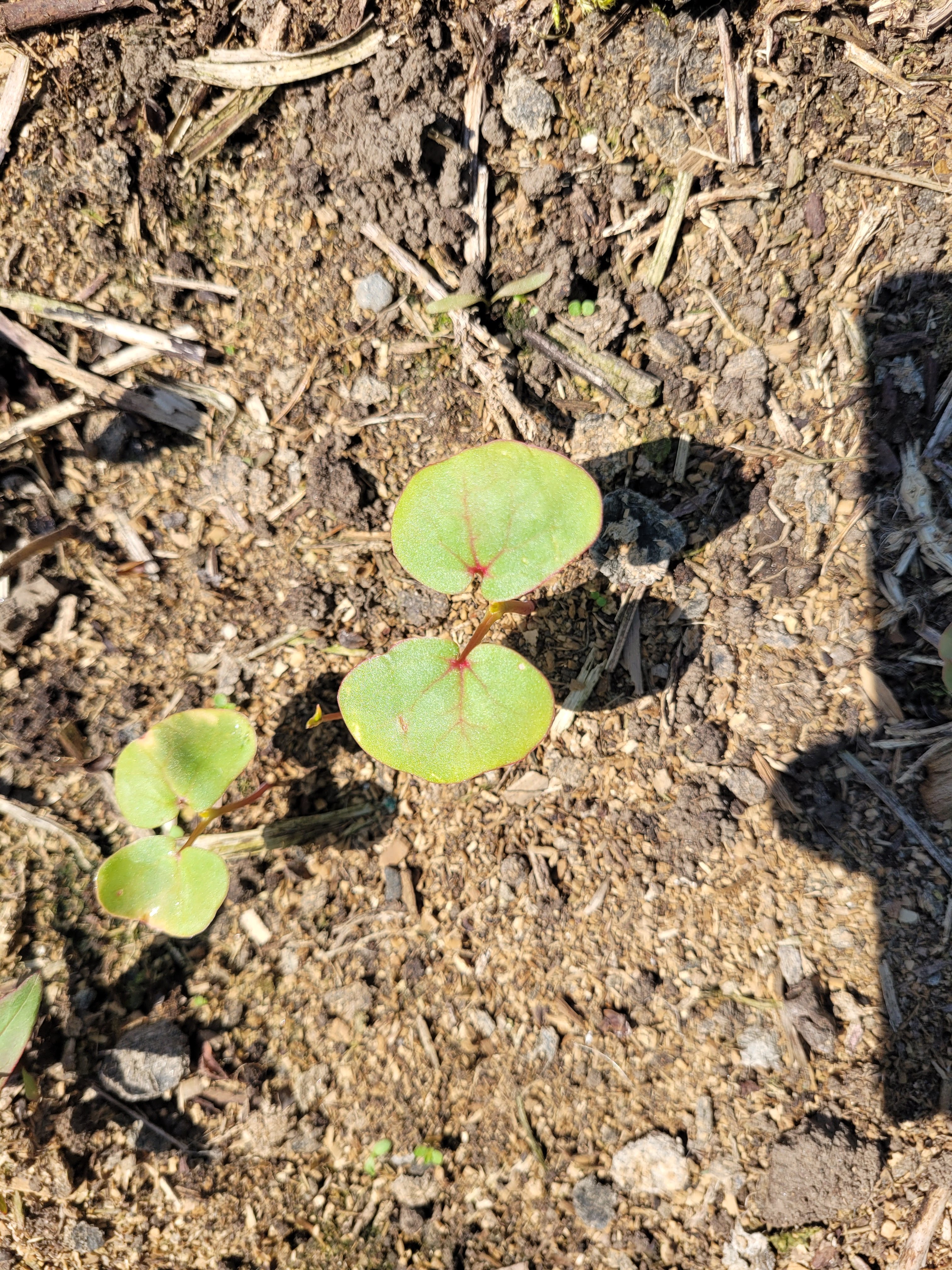
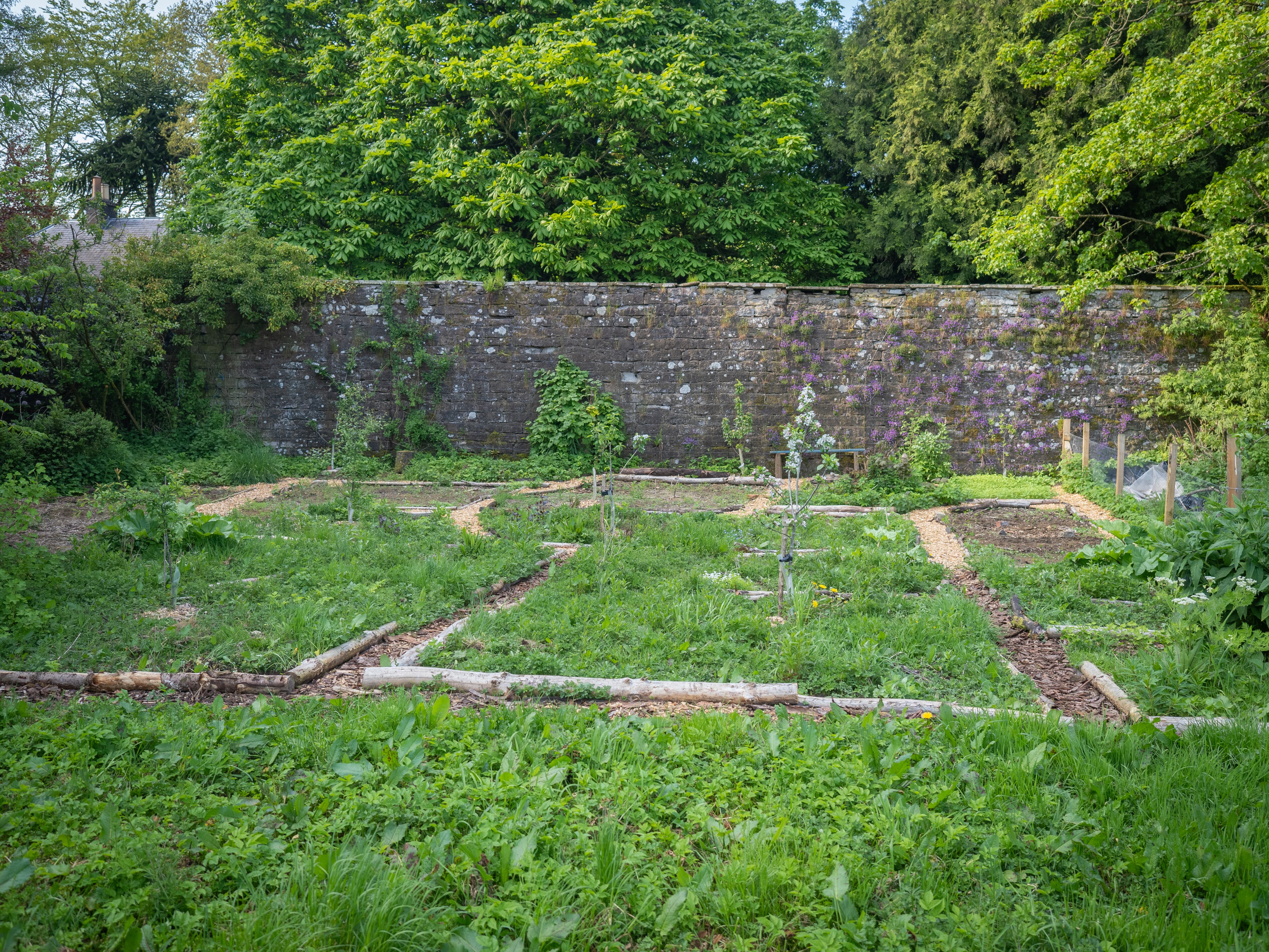
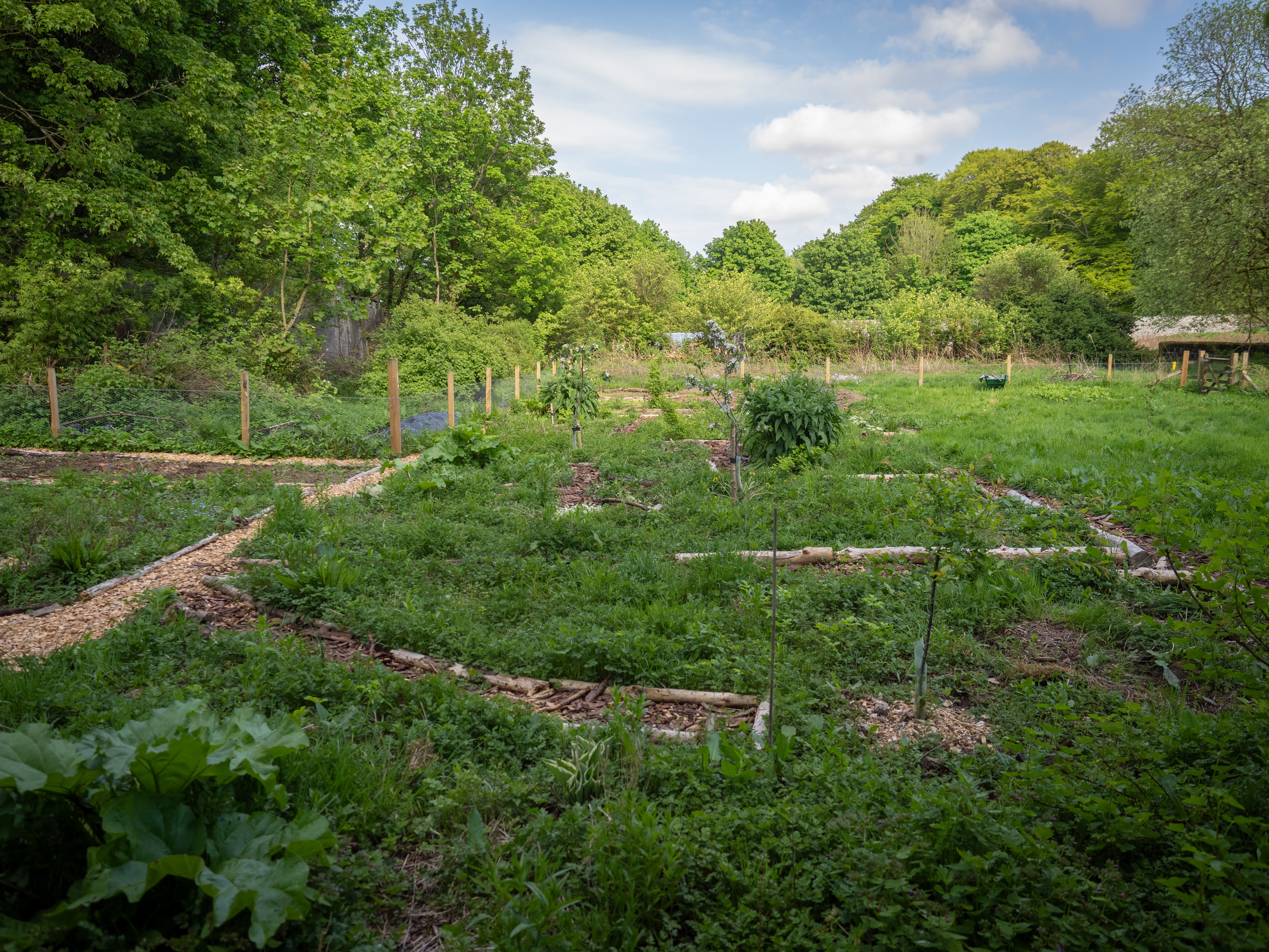
As the pathways developed in the forest garden, a new generation of plants was introduced, with many of last year’s perennials returning. However, a new wave of low-growing weeds, particularly creeping buttercup, has exploded forth from ancient seeds, making the return of self-seeding annual wildflowers less likely. Newly uncovered sections of the garden are being monitored more rigorously than last year to ensure that newly sown annuals – such as attractive and useful green manures, including alfalfa, buckwheat, white mustard, fenugreek, and field beans – are given ample space to grow and in some cases self seed.
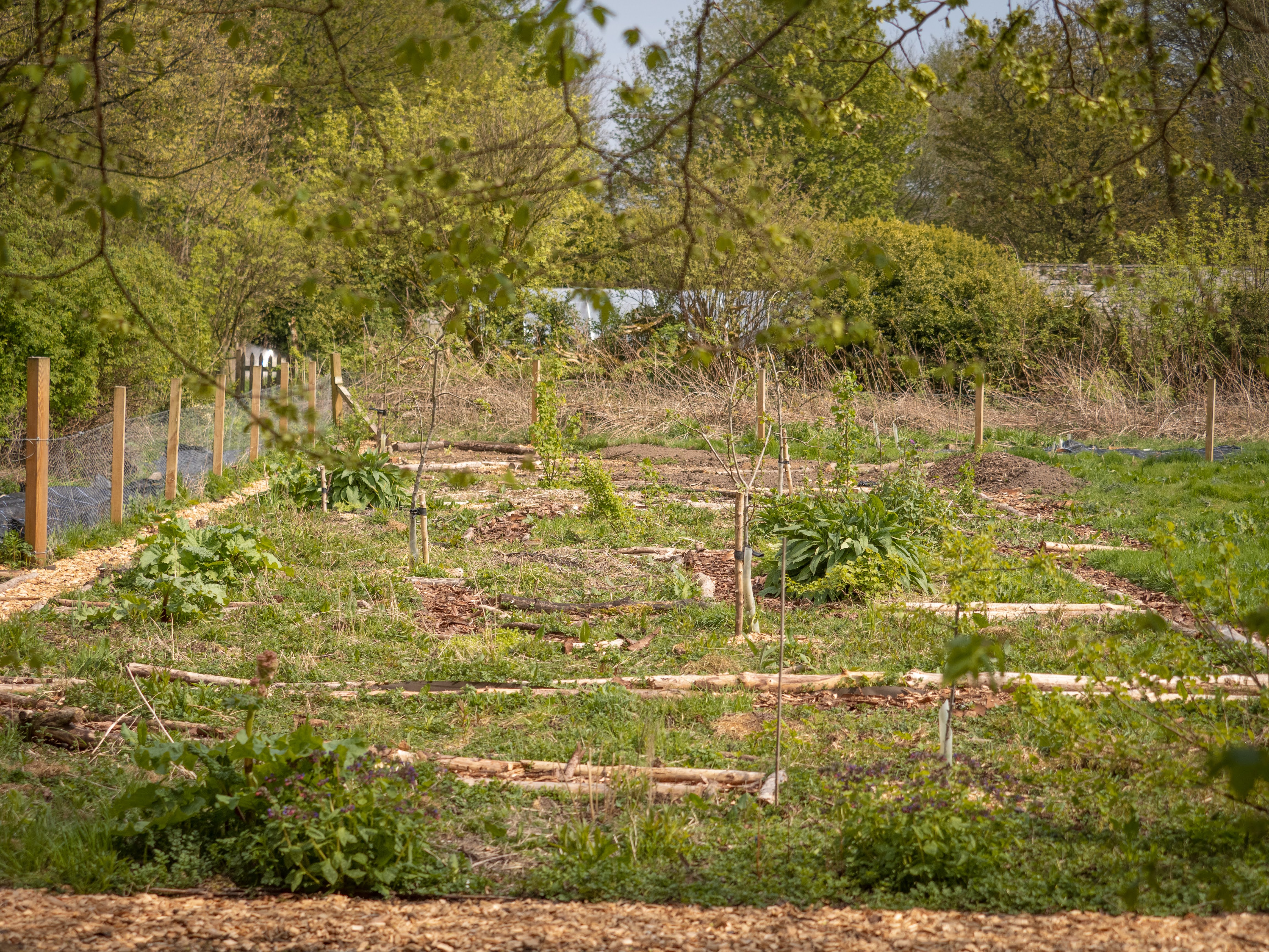
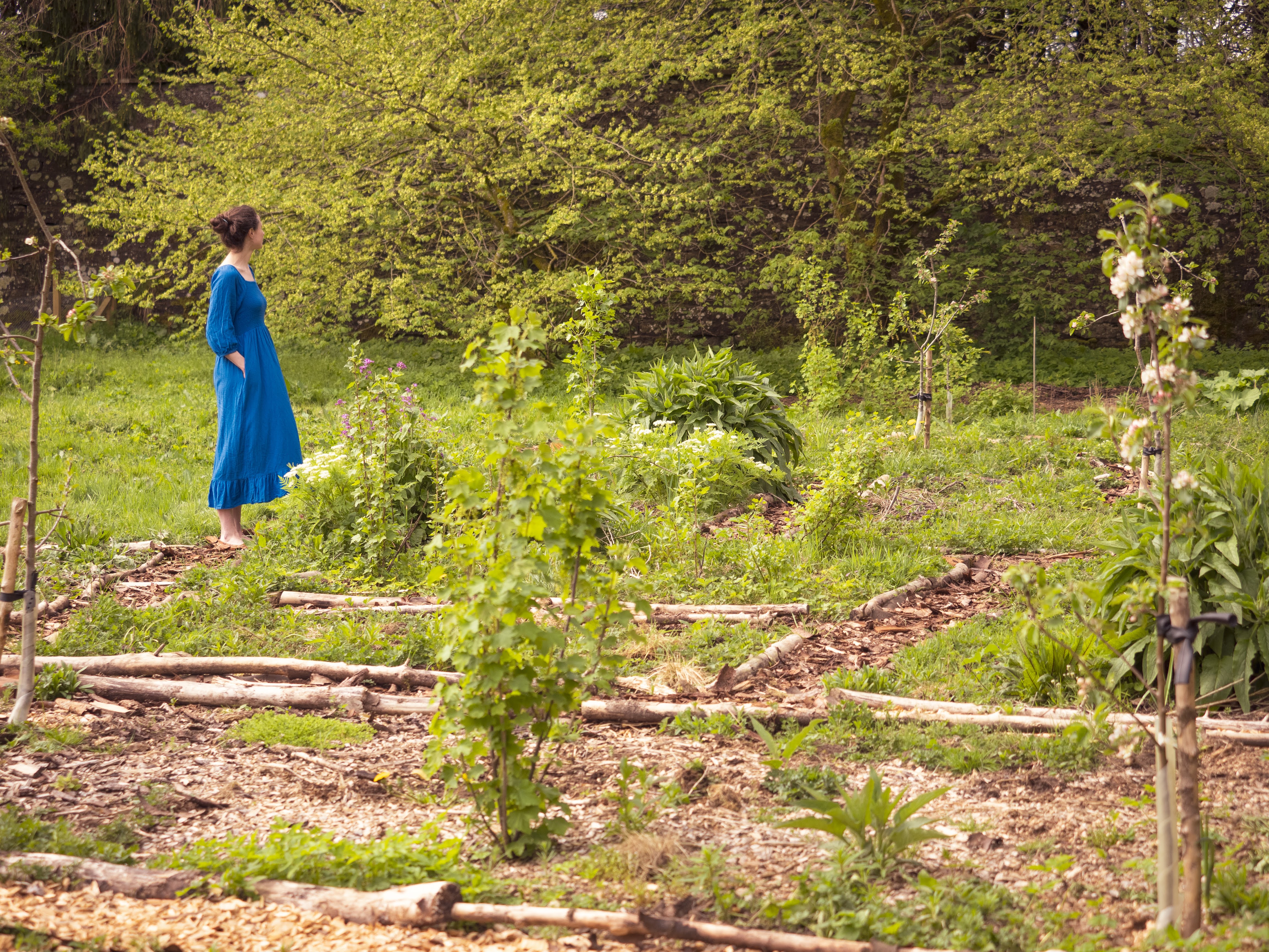
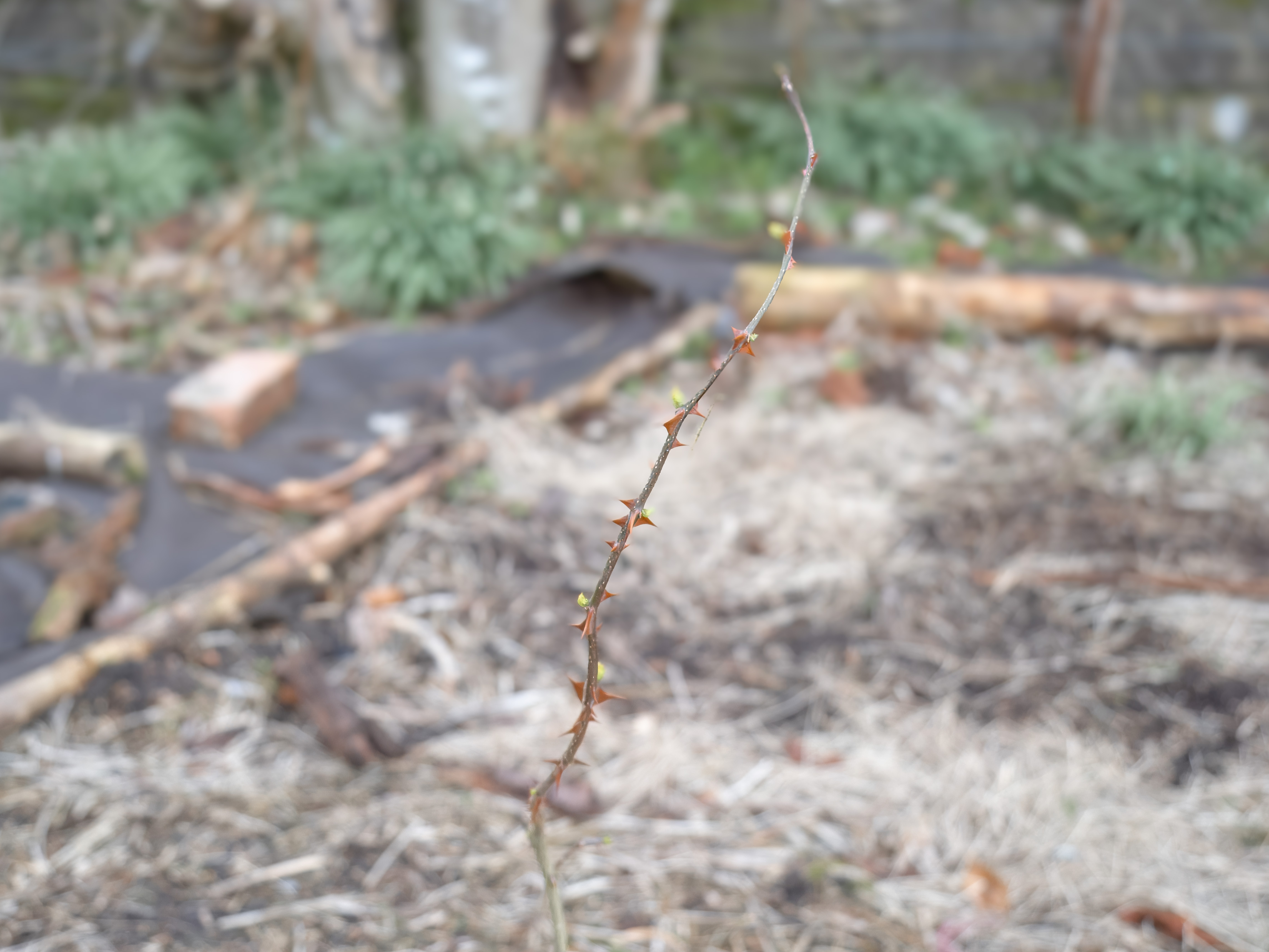
New fruiting trees/shrubs were added: a Conference pear, Lapins dwarf cherry, Lemonade Bush, Darwin’s Berberry and a Szechuan Pepper tree. The Conference pear, along with another at the far eastern end of the garden, was planted mainly for pollination purposes, as the other pear trees (Gorham and Concorde) are only partially self-fertile and benefit from the presence of another variety from their “pollination group” – in this case, groups 3–4. The berberry, Lemonade Bush and pepper trees are examples of species grown in other food forest garden projects in the UK, and apparently some have had some success in getting pepper trees to bear fruit in Scotland. Perhaps we’ll have to wait a year or two to see if any of these succeed here.
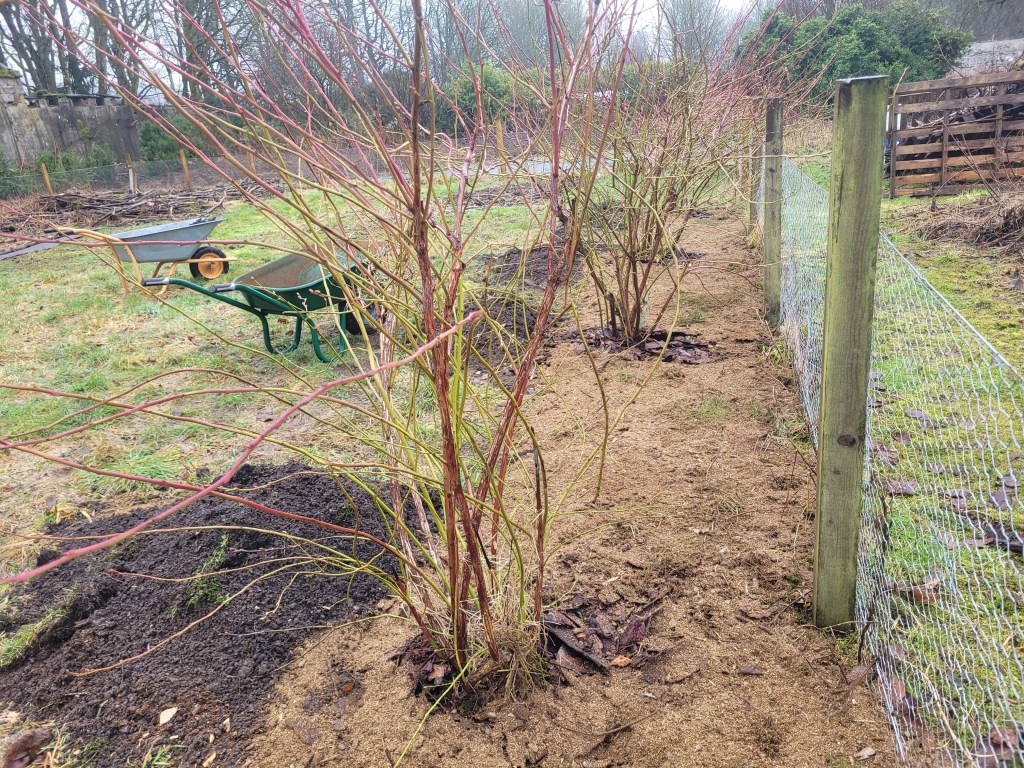
A nearby farm decided to relinquish its blueberry-growing enterprise and began selling off thousands of container-grown blueberry bushes at a price worth less than the large plastic buckets they had lived in. Seizing the moment, a number of bushes were squeezed into the back of a pickup truck and began a new life in the walled garden. This wasn’t necessarily a sensible idea but more a case of taking advantage of an opportunity to acquire cheap, mature, and healthy plants.
Blueberries require very acidic soil conditions, so their future here is not guaranteed. Soil measurements revealed a variety of results, with most veering towards neutral, though slightly acidic in some areas. Additionally, the bushes had grown up in a polytunnel environment and have now been rudely relocated to the great outdoors. It will be a bonus if they survive – if not, never mind.
As always, spring emerges slowly here. The combination of altitude, latitude, and the peculiar gradient that funnels cold air into the garden makes the season feel especially drawn out compared to other locations, even those not far away. One of my early spring flowering favorites has to be the Pulmonaria. It’s so heartening to see bees enjoying the gorgeous pink and lilac-purple flowers, which sit above the handsome mottled leaves. Traditionally used as a medicinal herb, Pulmonaria’s alternative name, “Lungwort,” comes from its historical use in treating breathing conditions, among other ailments. All sorts of new spring bulbs have been planted for 2025, so the spring garden next year should look distinctly different.
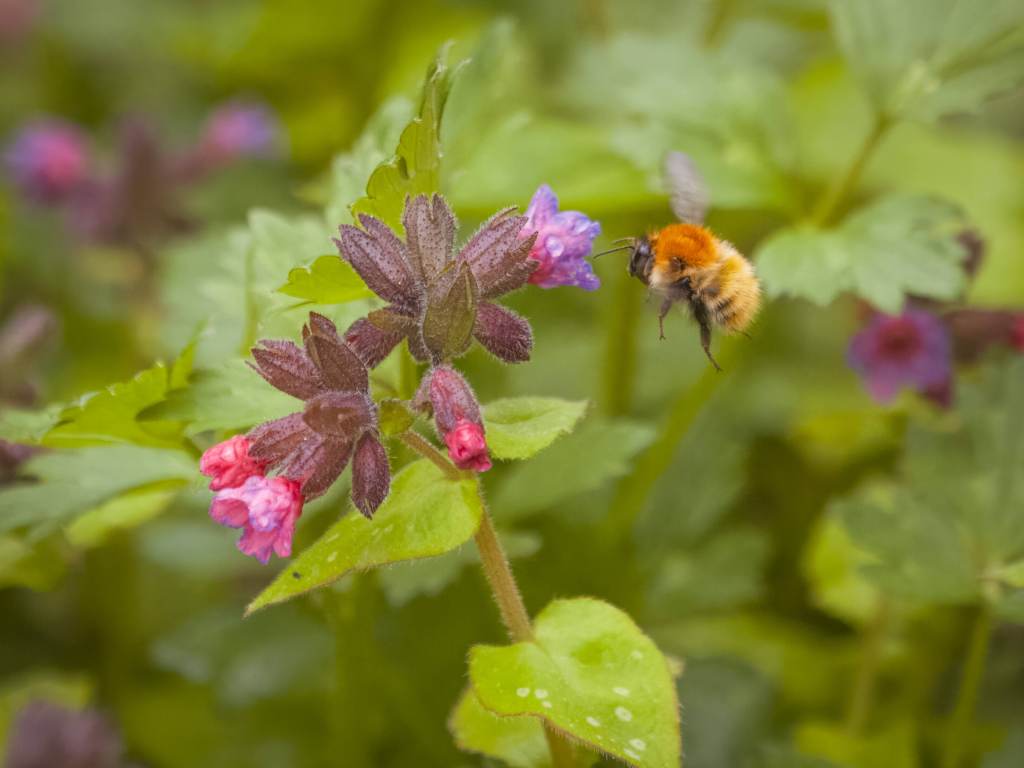
Pulmonaria and Carder Bee
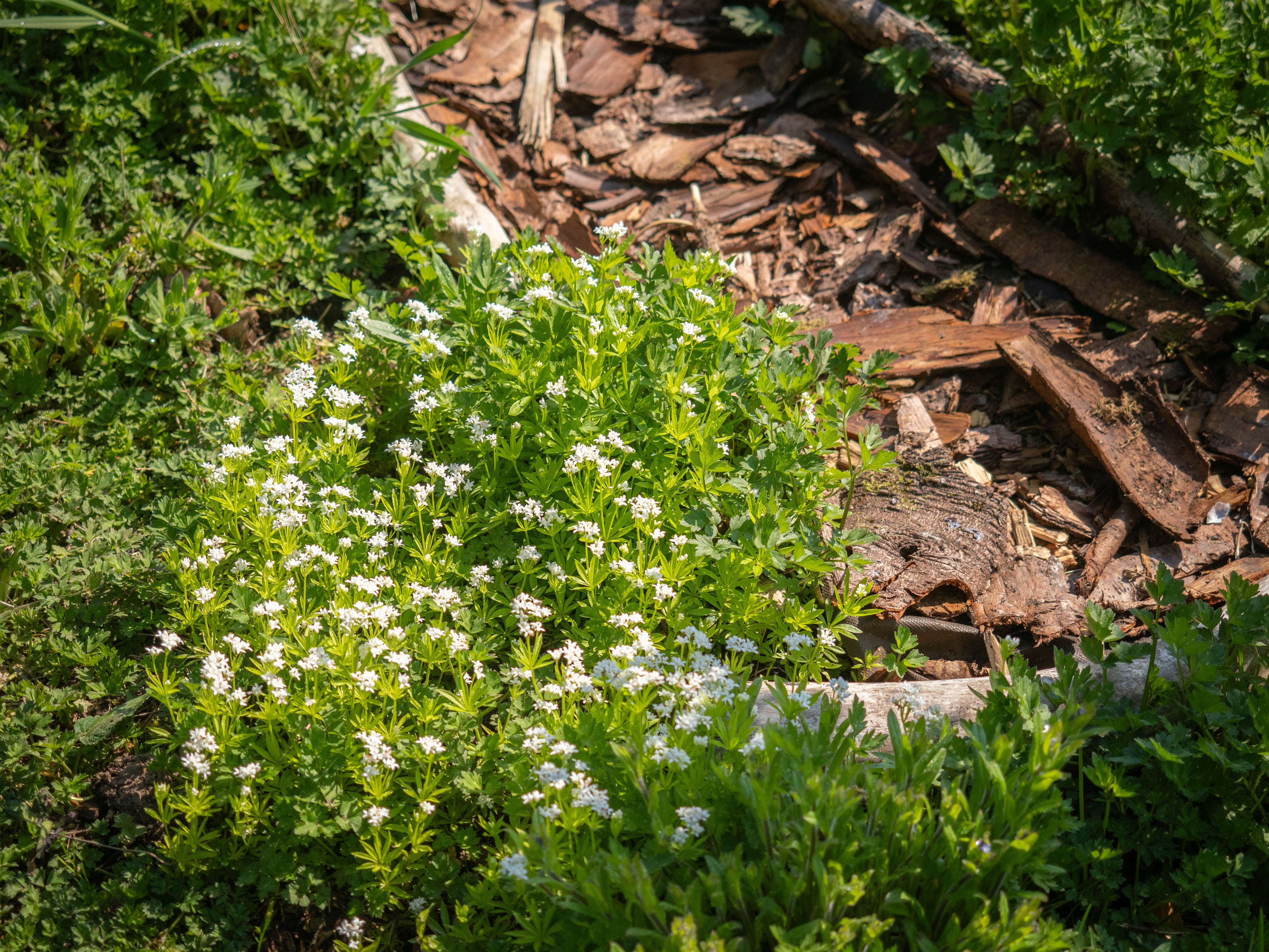
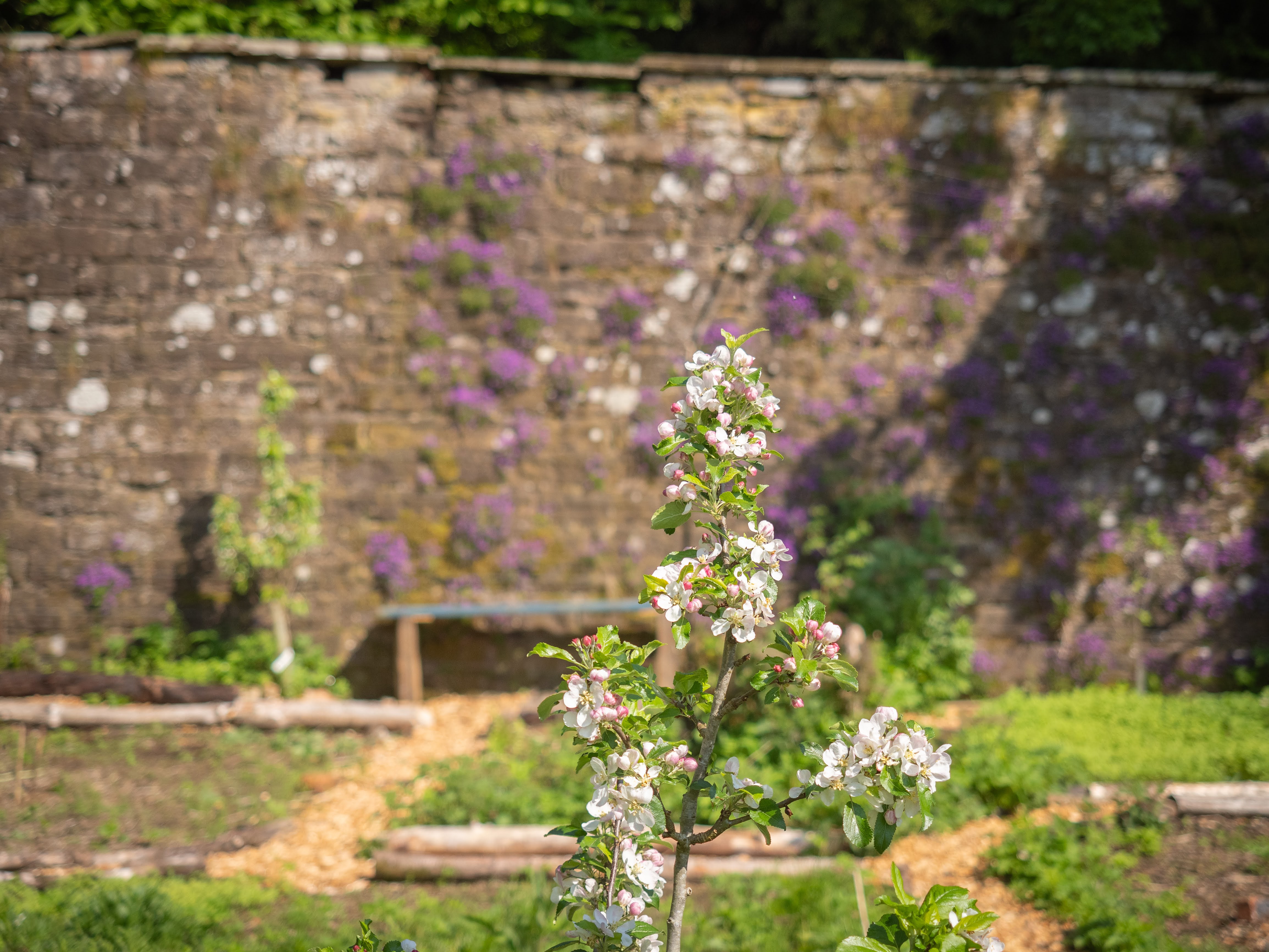
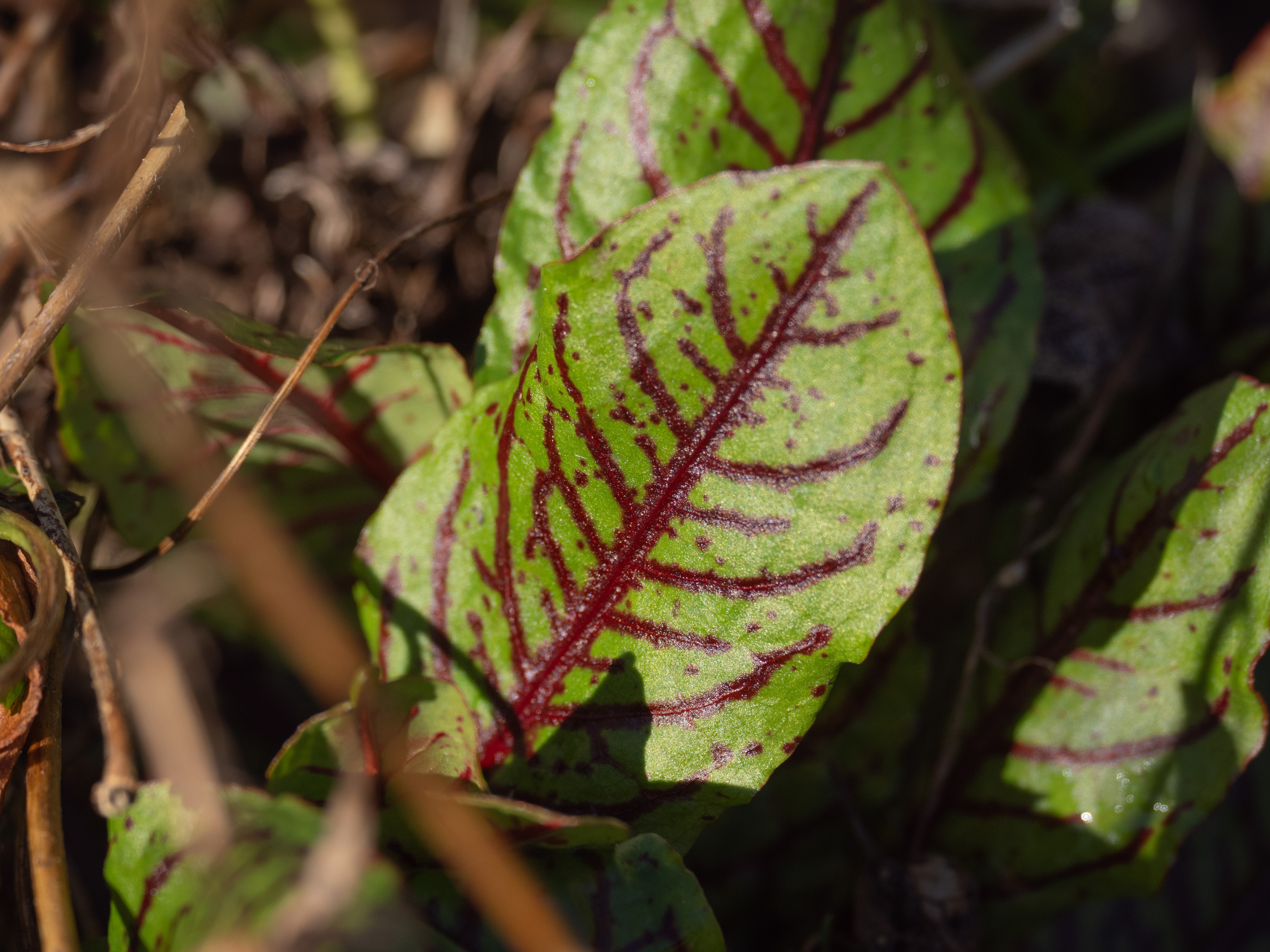
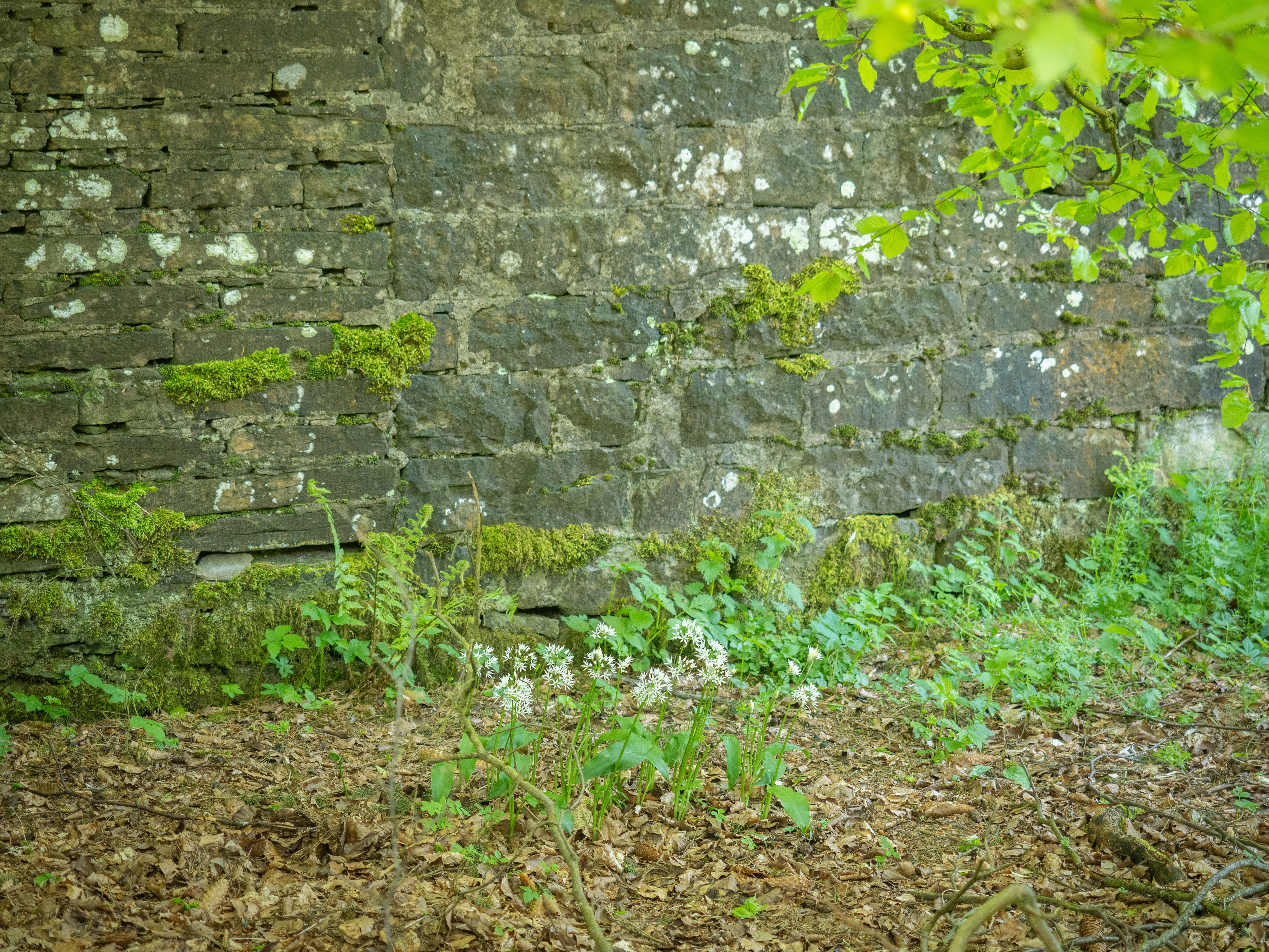
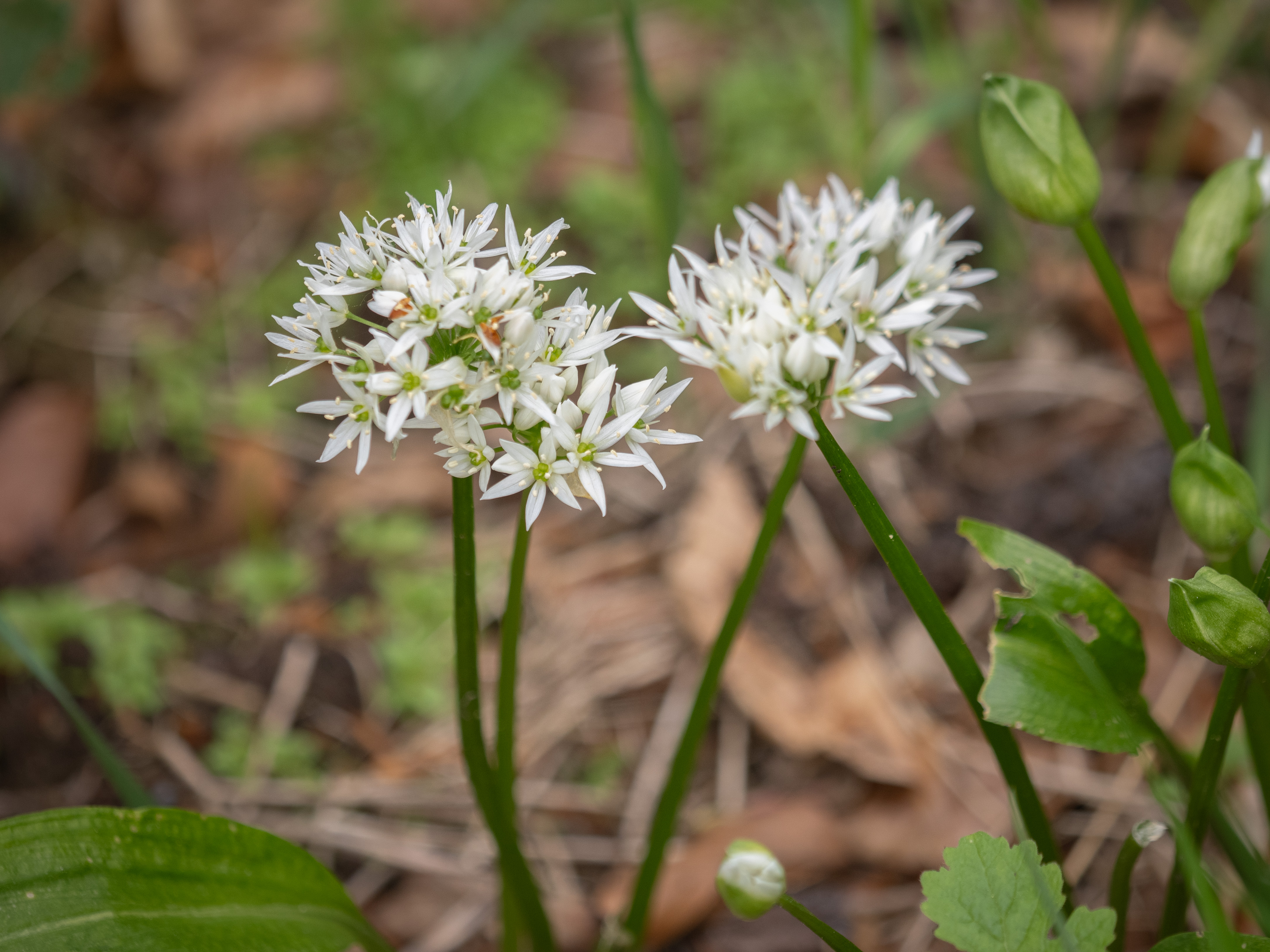
Lovage shoots up, various apples and the Gorham pear blossom, comfrey and rhubarb emerge, the wall cress explodes with purple, and the perennial sweet woodruff produces its delicate white flowers. Of course, all the weeds return with a vengeance! In other, shadier areas, wild garlic bulbs that were planted last year are emerging in numerous locations. Dozens more have been added, so the bounty emerging in spring 2025 should be even more generous. Also emerging are the other various perennial alliums, including Egyptian walking onions, Welsh onions, Babington’s leek, and chives. More bulbs are also being added, as I would like to see a rapid expansion of these types of plants in the coming years for their culinary, aesthetic, and companion planting properties.
A hosta emerges, planted last spring, but I’ve decided to add a few more around the forest garden, as I read a slightly tenuous assertion that they might benefit fruit trees as companion plants. The text from a “Russian soil scientist”, supposedly the source of this discovery, is nowhere to be found online. However, since hostas are hardy and interesting plants, providing such delicious leaves to eat – lightly fried or in the wok – I’m happy to see an abundance of them growing here.
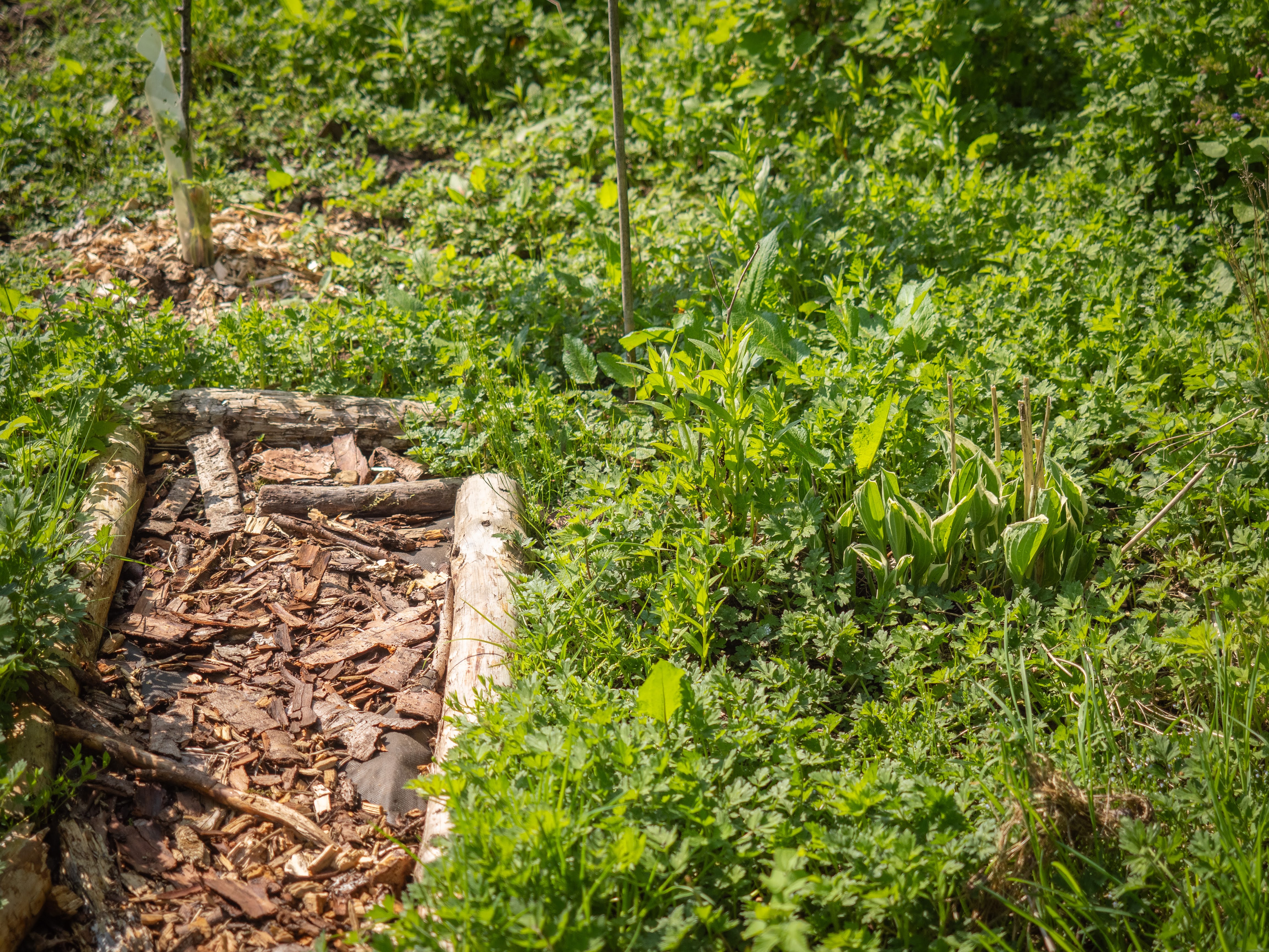
Ground cover is an interesting challenge, as creeping buttercup seems to want to dominate everything. Sadly, this species has little “use” in a garden like this – except, of course, for its basic properties as a ground cover plant, protecting the soil, and acting as a pollination facilitator when in flower. Beyond that, the plant is inedible and obstructs the progress of many other plants if they are not robust or tall enough to circumvent its densely packed bulbous roots. Nevertheless, there are competitors. Wild (and cultivated) strawberry is spreading in numerous locations with extra assistance. Sweet woodruff is being given a helping hand. Lemon balm and various mints need no assistance with outcompeting the buttercup, and also abundant are other ground cover weeds, such as the preferable chickweed. And some new introductions are also being experimented with: Chinese bramble, Himalayan creeping bramble, and Arctic bramble. If these succeed (which is rather likely with the Chinese bramble), then a bounty of lovely edible berries should become an annual reality on the lower levels of the forest garden floor. The buttercup will, nevertheless, need to be manually controlled in certain locations.
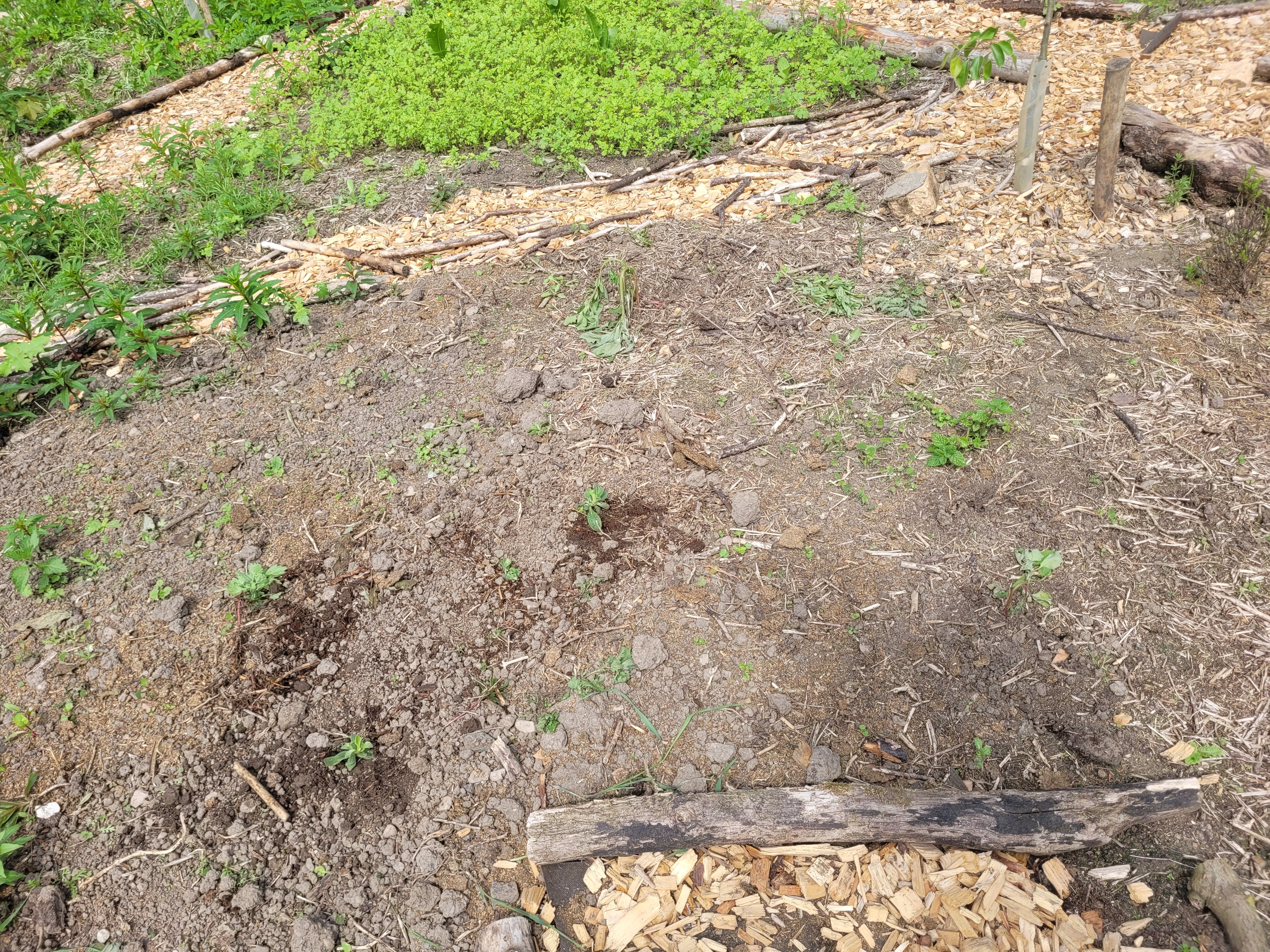
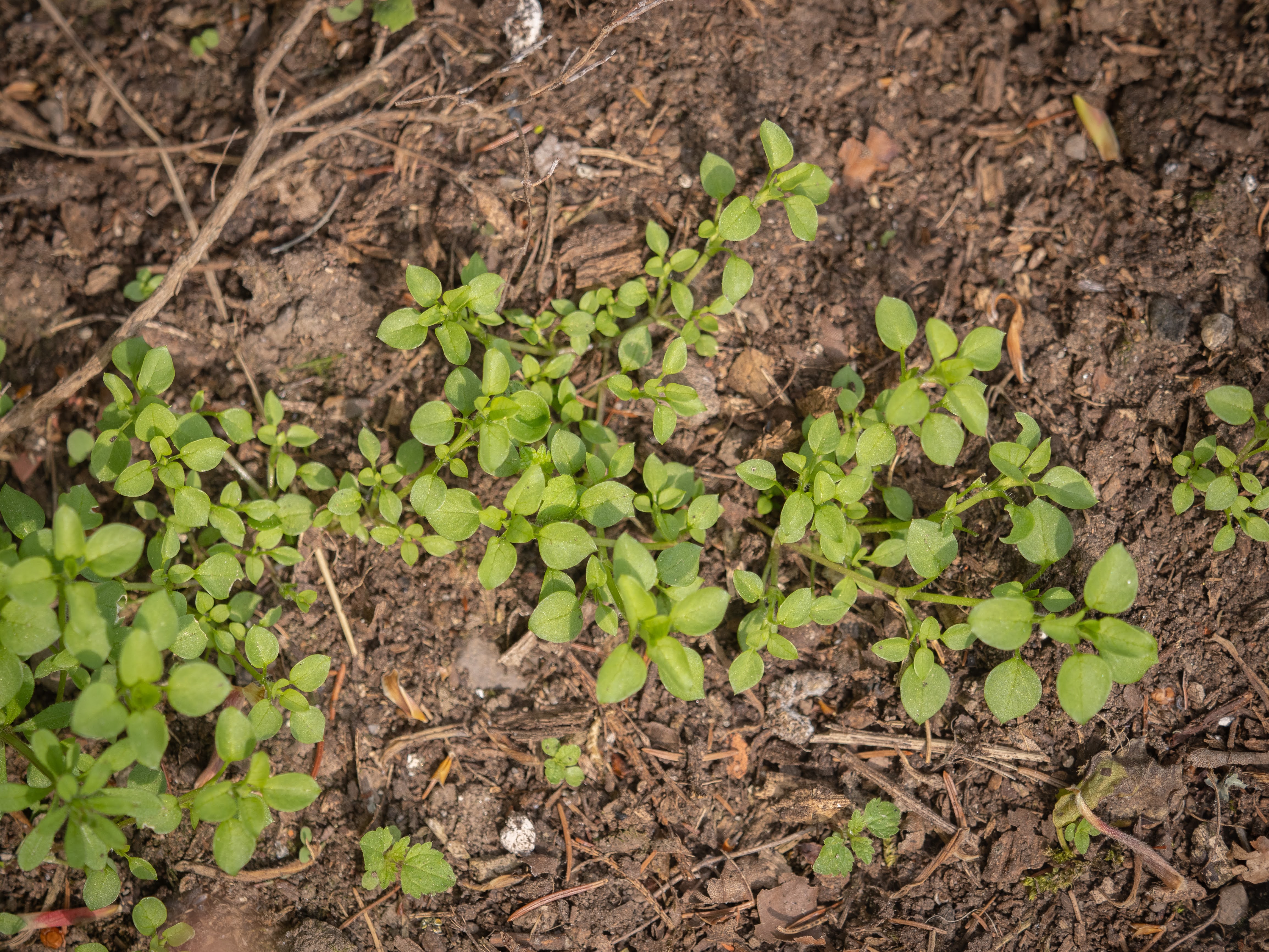
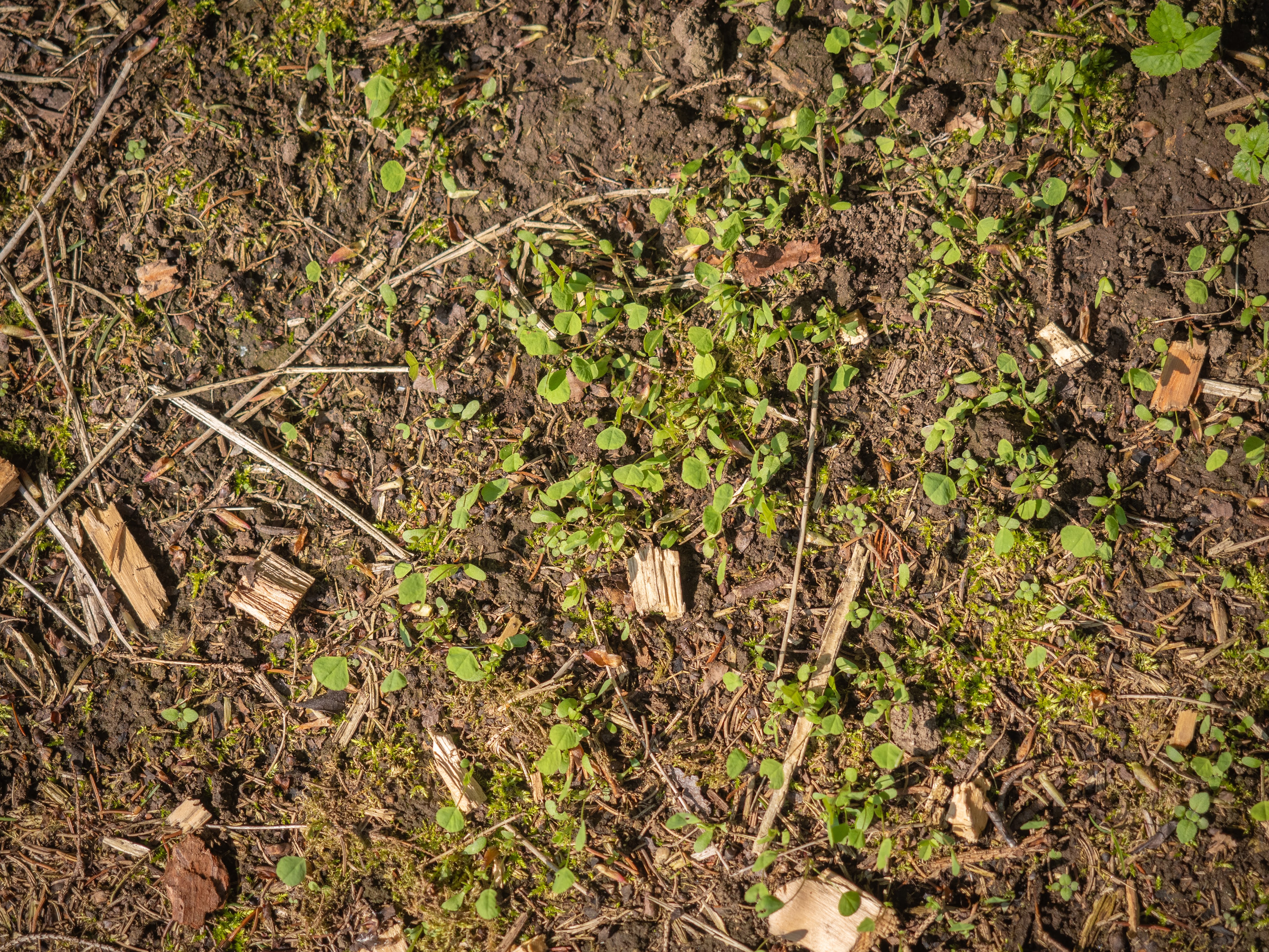
Weeding is an occasional endeavour. Limiting the spread of nettles, ground elder, buttercup, cleavers, dock, and willow herbs is the main priority, though not to an obsessive degree, as their presence is, to some extent, also appreciated. Some of these are useful plants, either for culinary purposes (such as the delicious young ground elder) or because they benefit other plants (for example, the dynamic accumulation provided by the dandelion). That said, there are, or should be, limits as well.
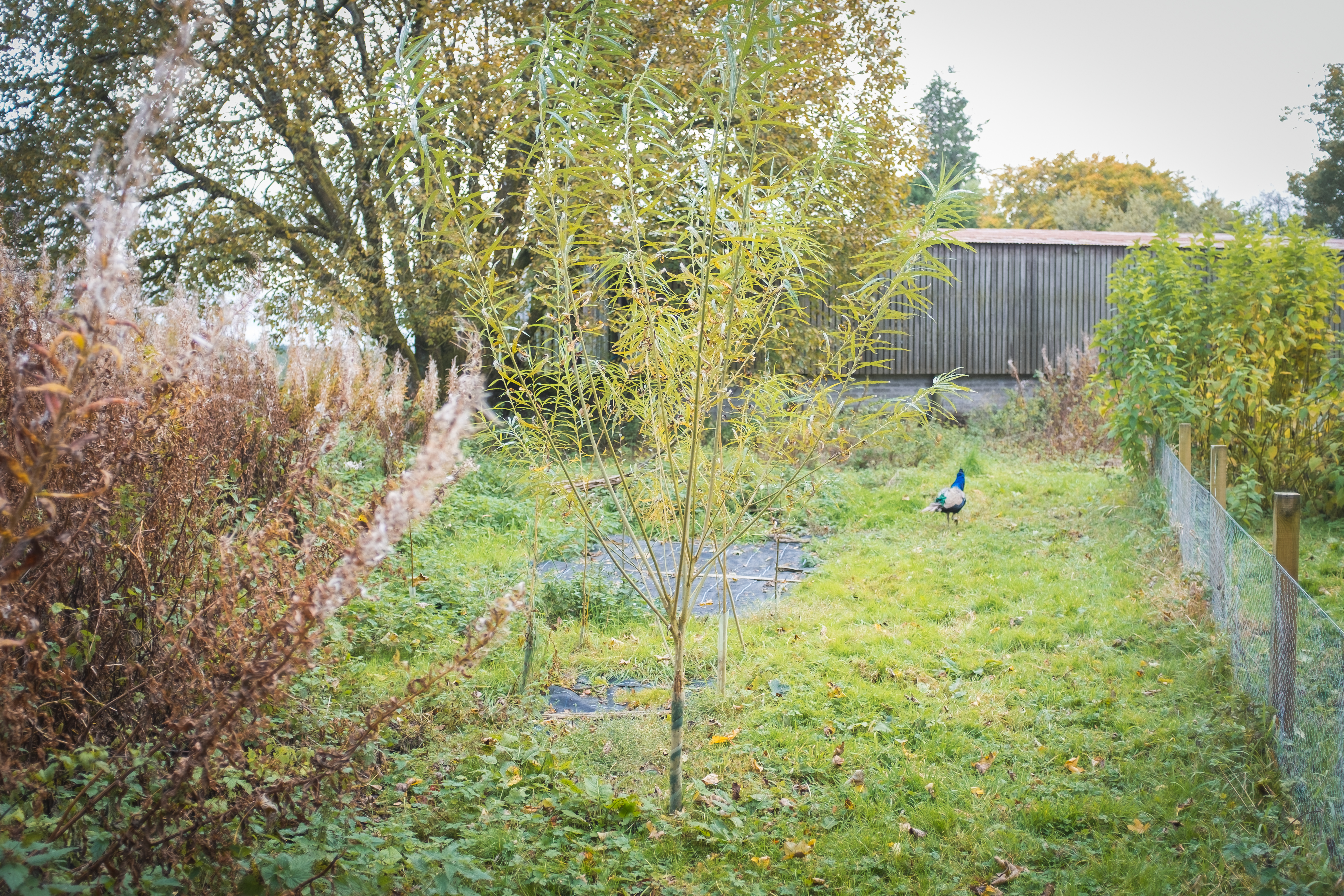
East of the forest garden, the Salix viminalis willow, planted last spring, bursts with vitality, providing a bounty of healthy new growth, which is in turn planted into the ground to expand its numbers. This area marks the beginning of a potential new future project focused on the growth and propagation of trees for rewilding and harvesting.
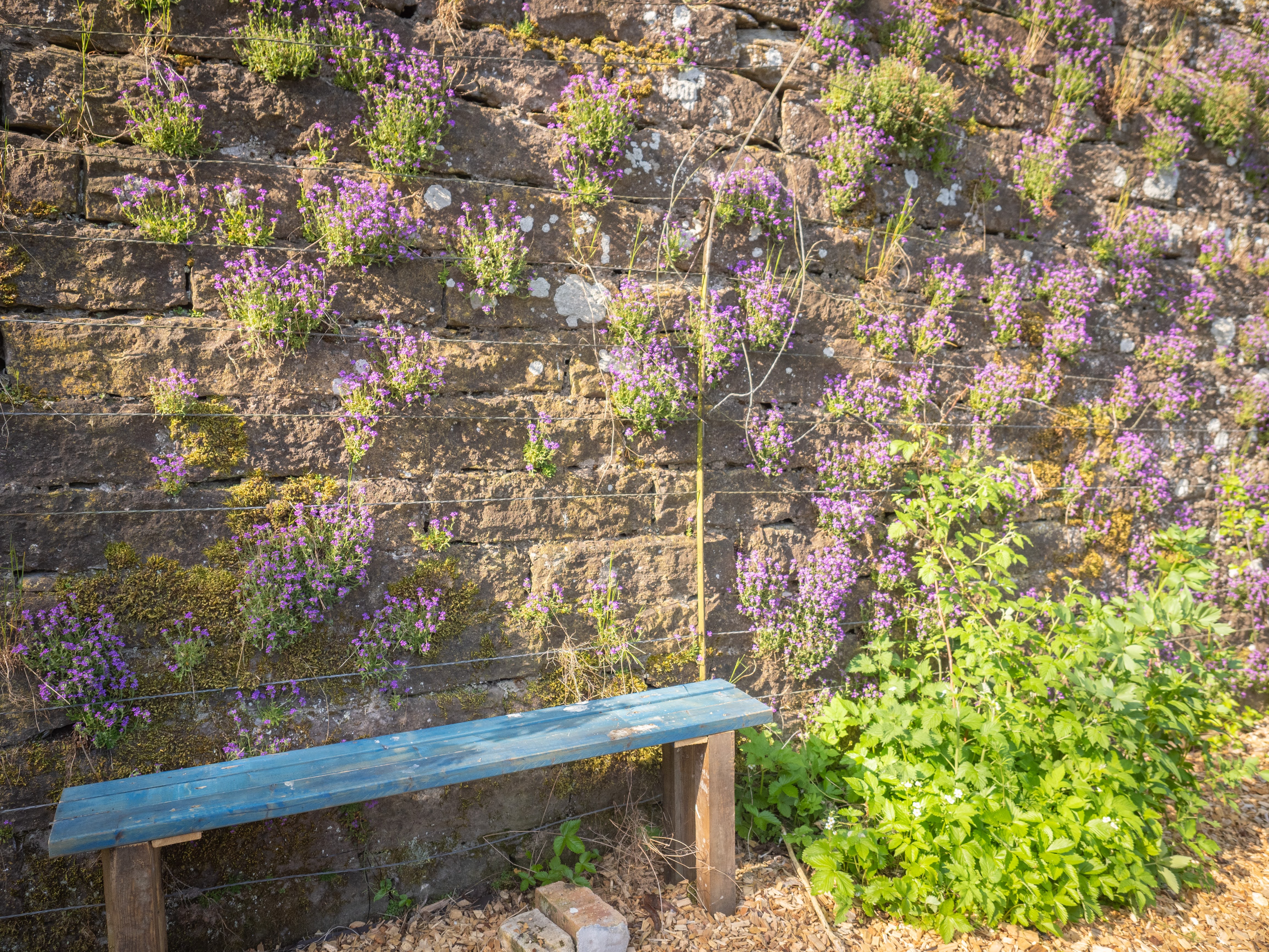
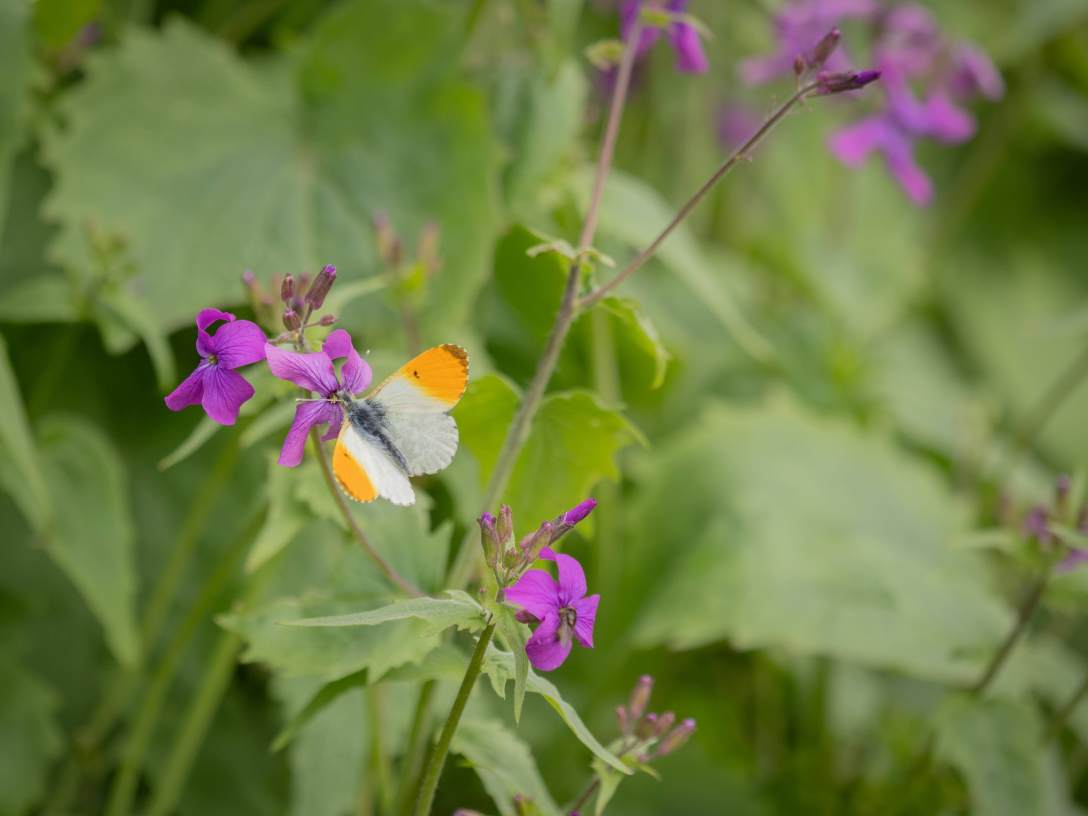
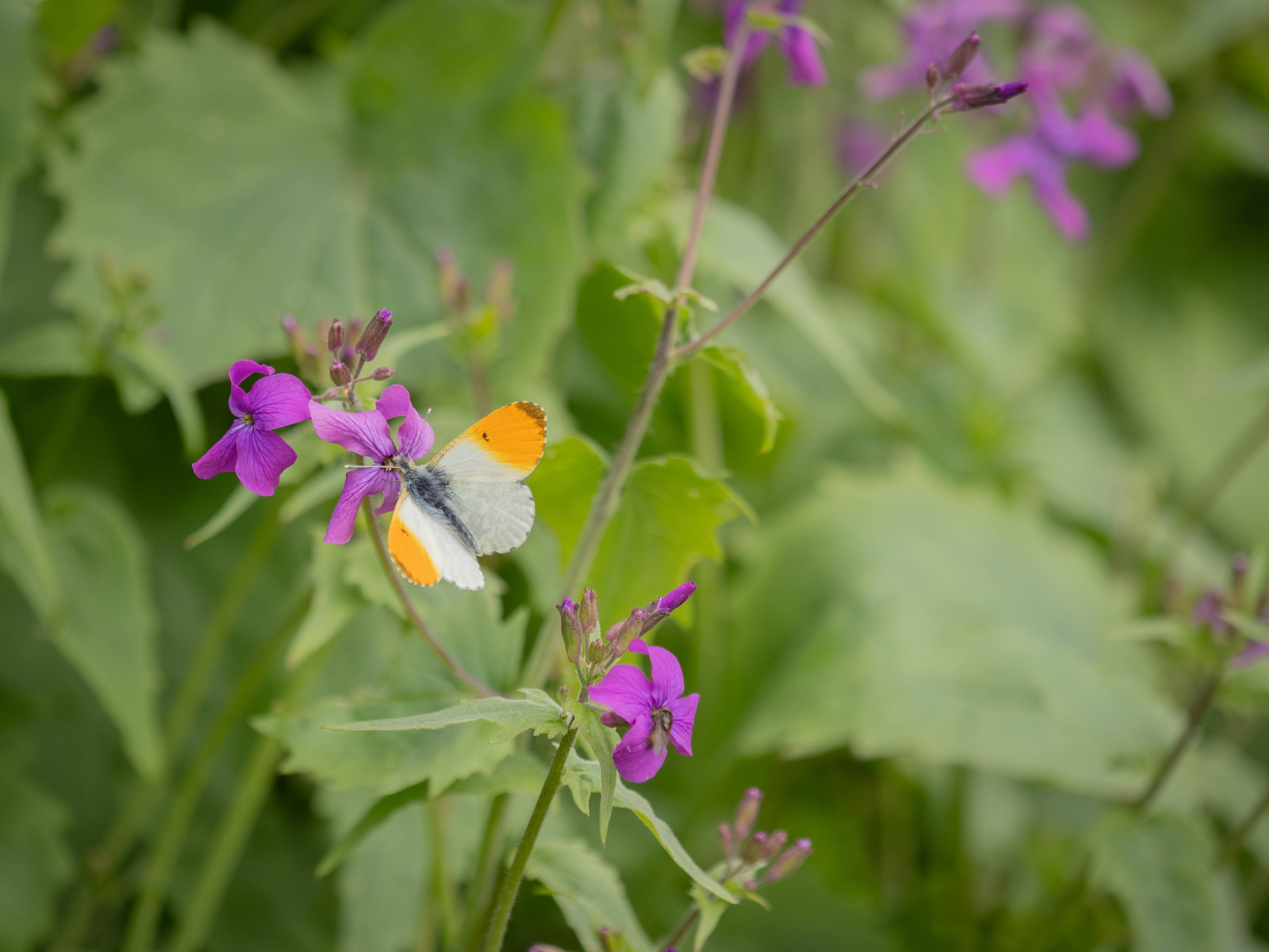
A new butterfly visitor appeared: the Orange Tip, enjoying the flowering Sweet Cicely, Wall Rock Cress, and the Honesty, emerging from seeds collected elsewhere at Bamff.

 The Bamff Walled Garden.