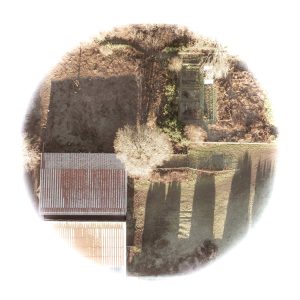
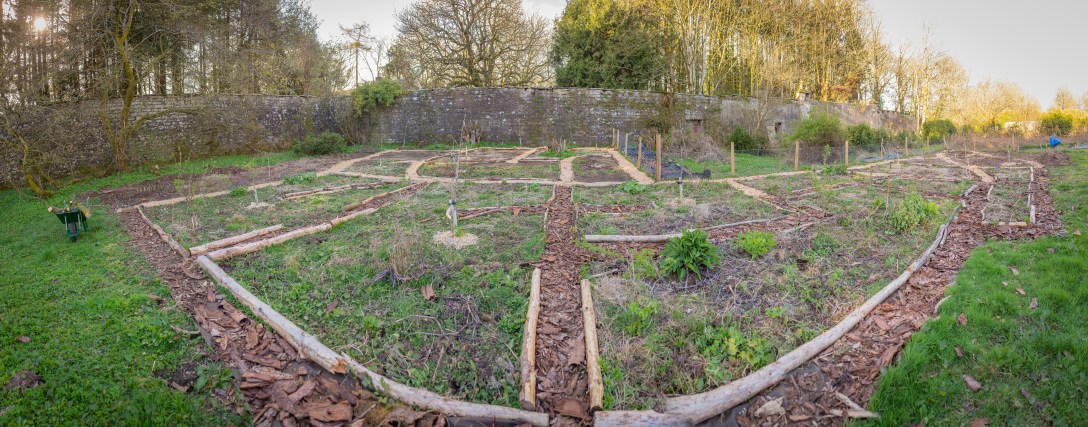
Aside from the buried plastic from yesteryear’s gardening attempts, the current sea of plastic-woven mulch sheets is the most disheartening thing I’ve experienced in this garden project so far. Many others use these, even in “permaculture” projects, but the sense of unease at the use of this plastic material—from both an ecological and a pollution perspective—has been increasingly tangible. Following on from last year’s removal of some, I made a decision in February to remove them entirely from the forest garden area.
The reason for their use was to help suppress resident weeds while also providing opportunities to plant trees and other perennials, as well as protecting the soil underneath during a transitional phase. Now, I somewhat regret this approach for the following reasons:
- The weed seed bank here is irrepressible and extremely dense in this particular area of the garden—from the lowest-growing creeping buttercup to the tallest-growing rosebay willow and many species in between. These sheets may help repress a few perennial species, but many of their seeds can remain viable for decades. Once uncovered, it’s simply not possible for the garden to somehow emerge “weedless.” But then again, why is that even necessary? It depends on what one wants to grow, but if perennials are the main aim of this garden, then robust perennial plants of interest should have the chance to compete (with some, such as applemint, competing very successfully!). Occasional intervention should be enough to deal with any excess of unwanted visitors—or at least, I hope. Plus, many “weeds” are, of course, edible and useful in other ways. It felt increasingly desirable to have a forest garden project that wasn’t overly manicured and manufactured but had elements of wild chaos too—and, at its heart, an experimental spirit.
- I may now have to accept that the presence of these sheets has likely released microplastics into the soil, especially as they heat up in intense sunlight. This, combined with the fraying of the edges, has littered some areas with little plastic fibers. All horrifying.
- The encouragement of plastic use—with its environmental impacts during production—is obviously something to avoid in any context as much as possible. But plastic use is everywhere in gardening and agriculture. Another obvious example: the polytunnel.
Having said all this, I found it hard to imagine many alternatives until I discovered suppression sheets made of biodegradable corn starch, which look and feel like plastic but are made of organic materials. Some are produced in possibly better ways than others, but I decided to go down the route of never acquiring any plastic sheets again. However, the vast area I wanted to suppress—still only a relatively small fraction of this garden sector—would require an expensive investment in this kind of alternative material (or any other “eco” alternatives), especially if thicker sheets were needed. Nevertheless, I decided to experiment with both thin and thick corn starch sheets.
I could also have sourced an endless amount of cardboard (which, to some extent, I already have, especially with the help of the local bicycle shop and their huge boxes). However, finding the necessary amount for such a large area remains a challenge. It also requires the laborious task of removing all toxic elements from each box and finding a way to prevent it from blowing away in the wind. Some forest gardeners use cardboard as part of a sheet mulching method with compost on top to develop an area (something I also implemented last year on a small scale). However, sourcing enough compost to cover a vast area presents another challenge, as importing large quantities of compost feels wrong on multiple levels, and producing that much oneself seems almost unachievable—especially when the priority should be replenishing the annual vegetable beds.
Nevertheless, I will continue with smaller, localized suppressions where needed, using a form of organic sheet mulching with woodchip on top. This is particularly appealing as the introduction of woody materials on the surface eventually fosters beneficial mycorrhizal fungal activity. My composting efforts (located near the polytunnel) will remain dedicated solely to the vegetable beds and containers.
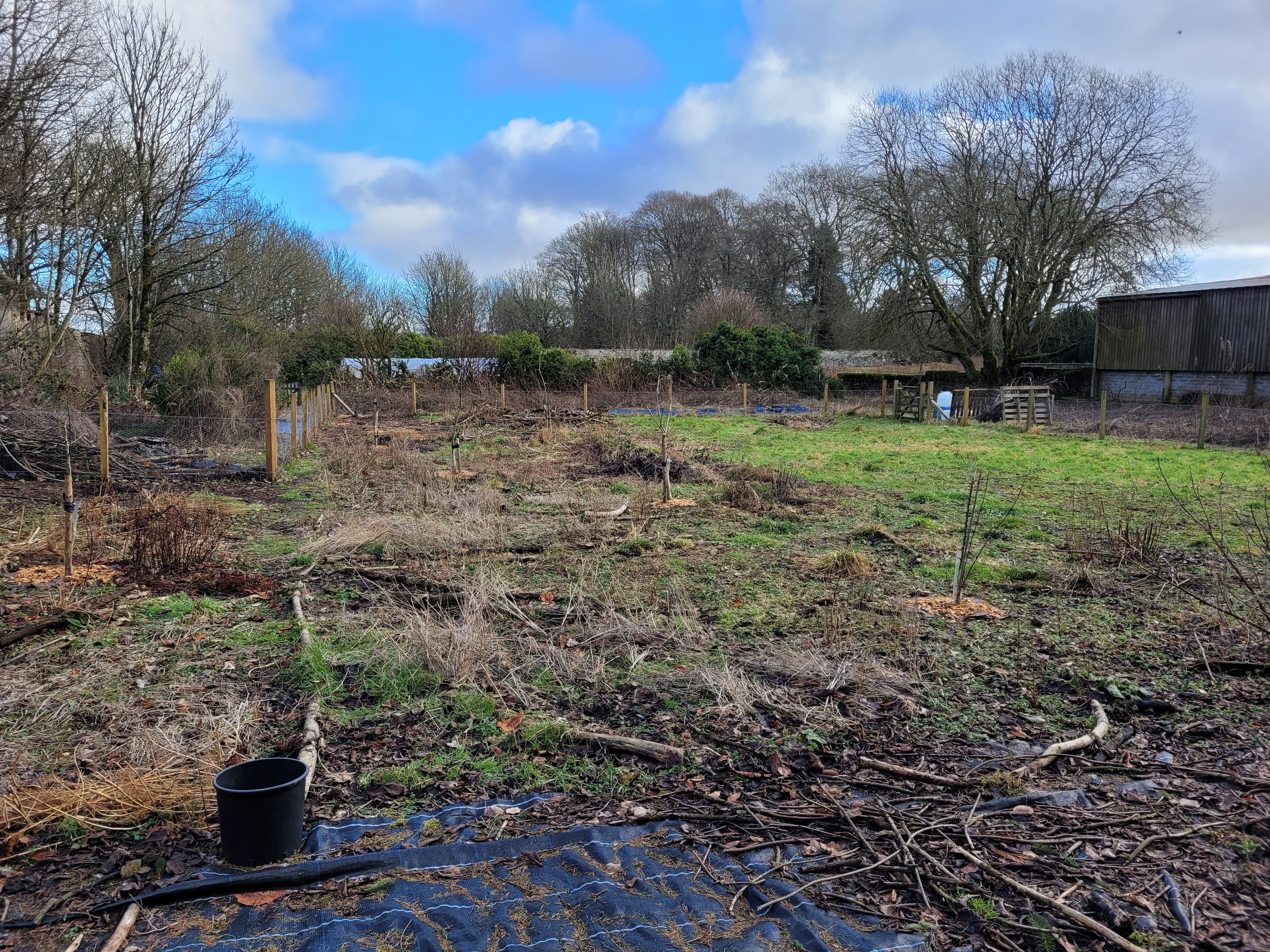
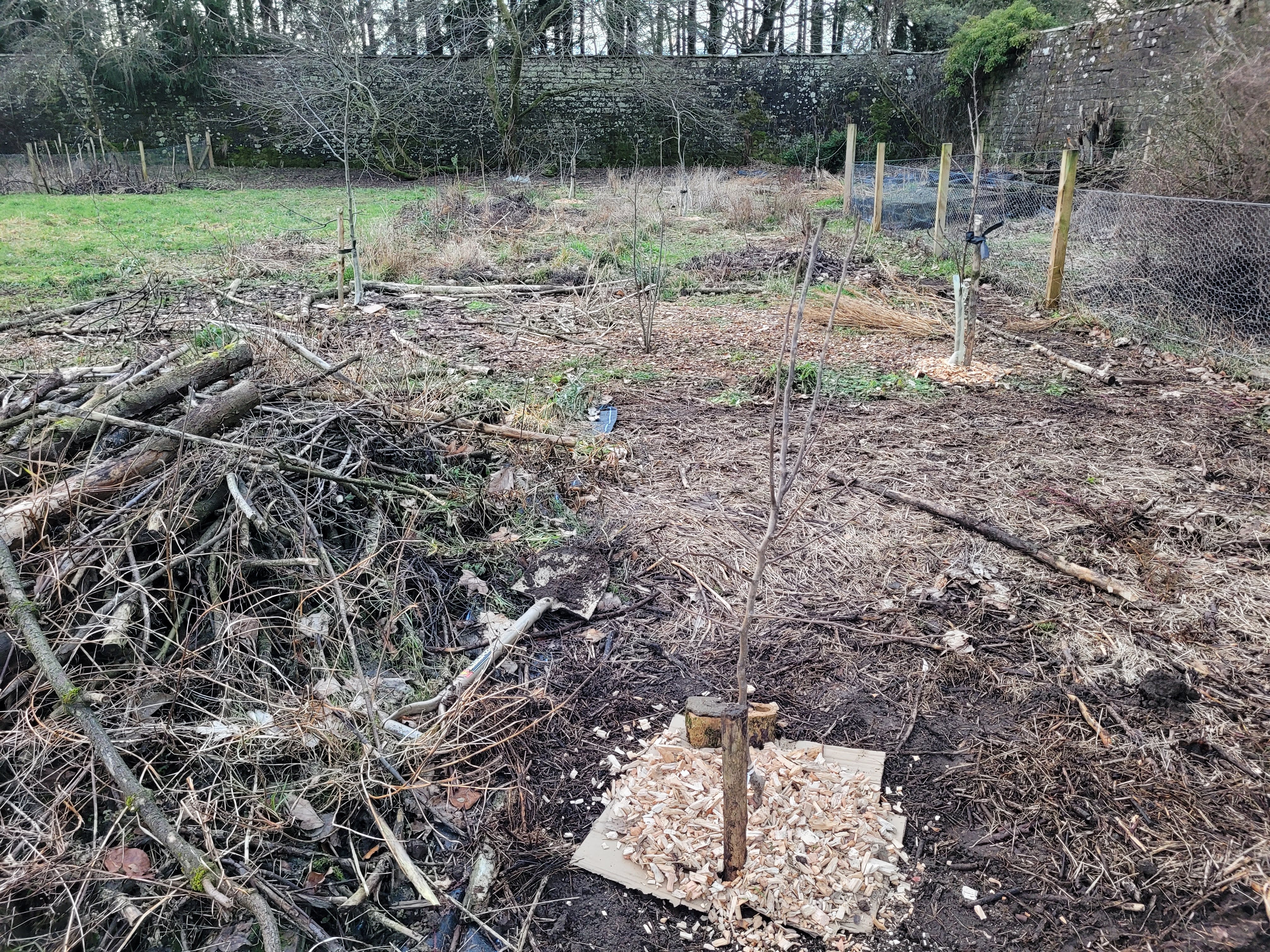
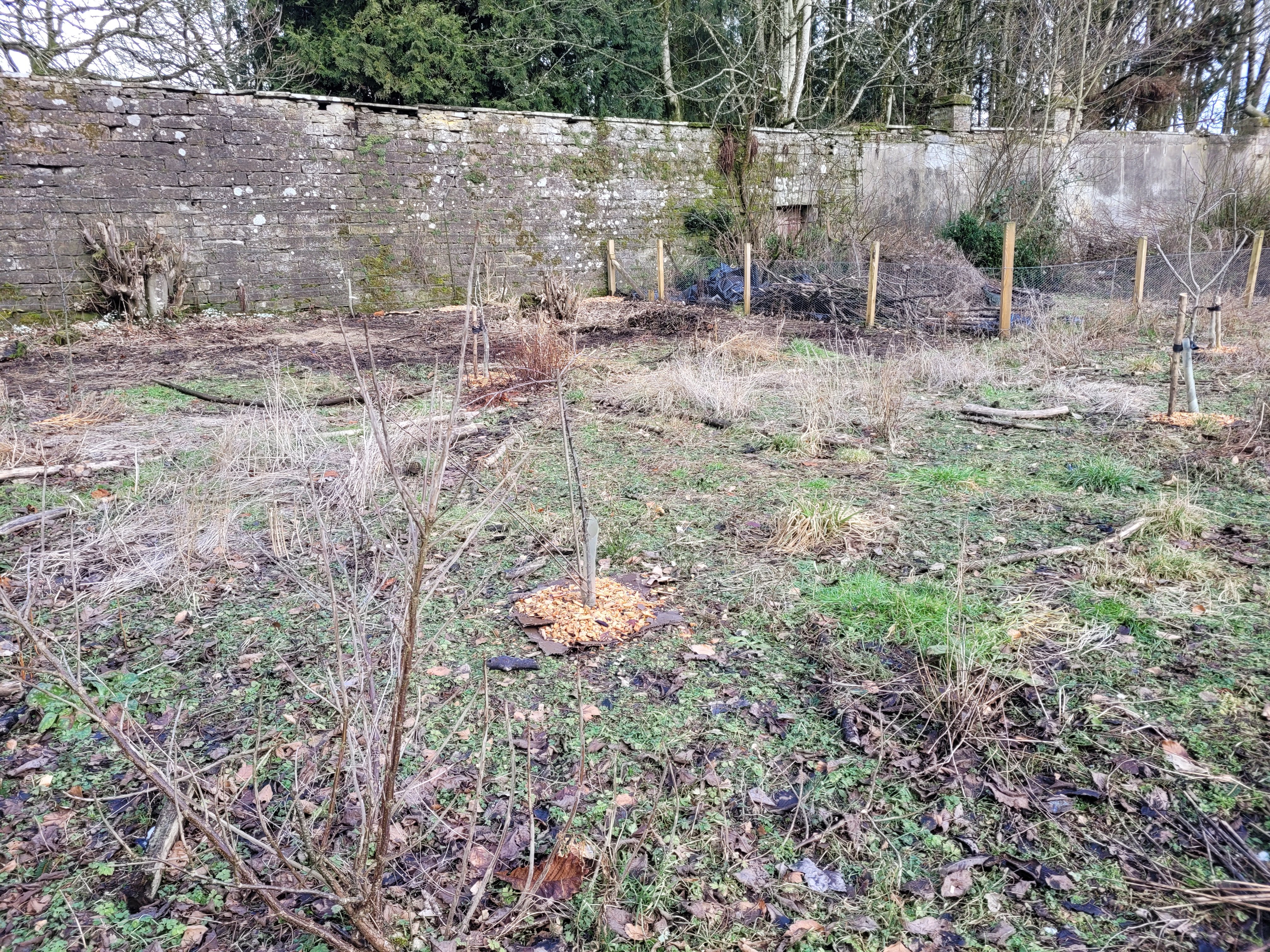
Anyway, I dragged the nasty plastic sheets away (though they’re still currently in the garden on peripheral areas) and decided what to do next – which was to slightly throw caution to the wind and start planting lots of things, and embarking on a routine of occasional weeding.
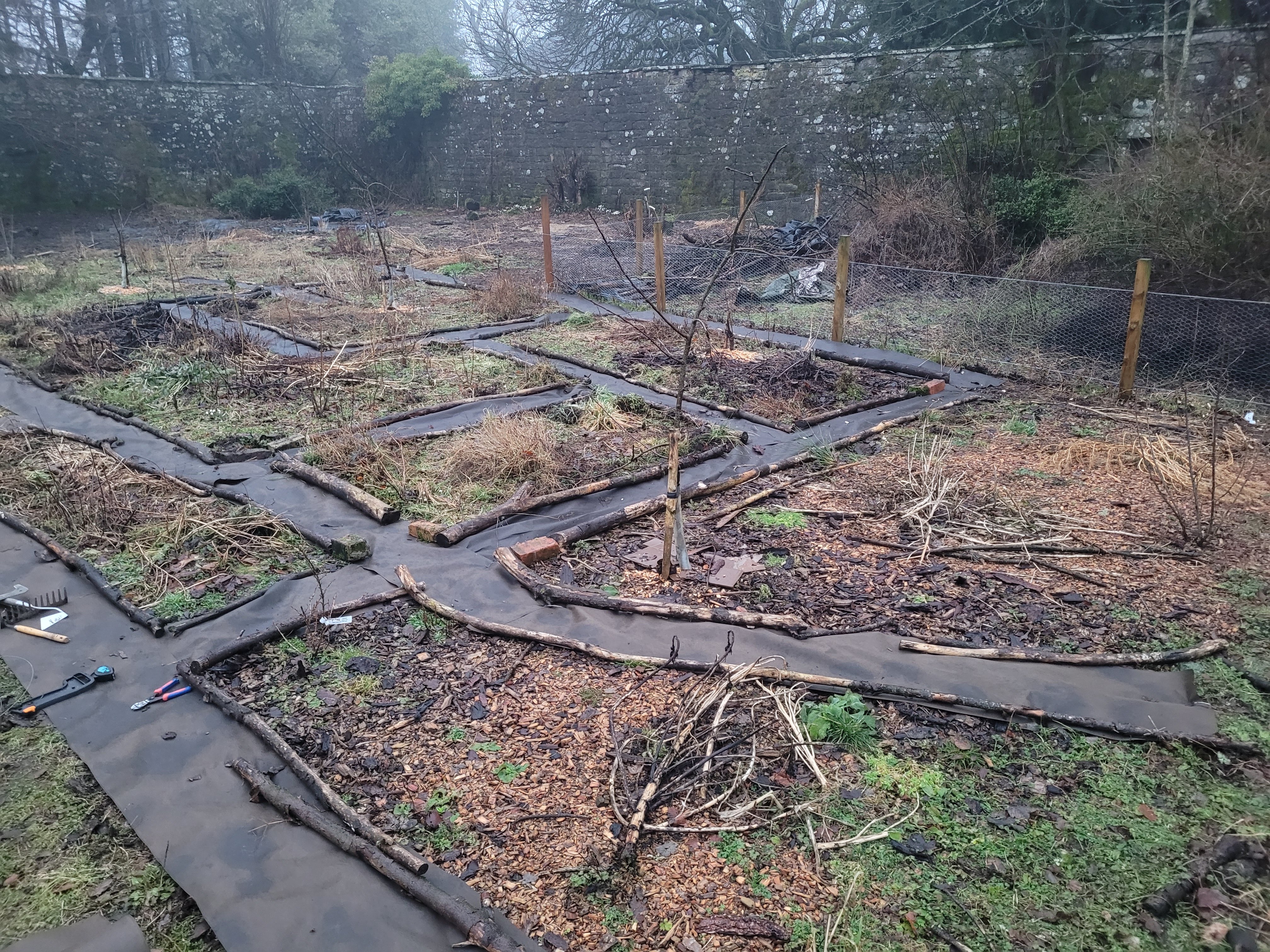
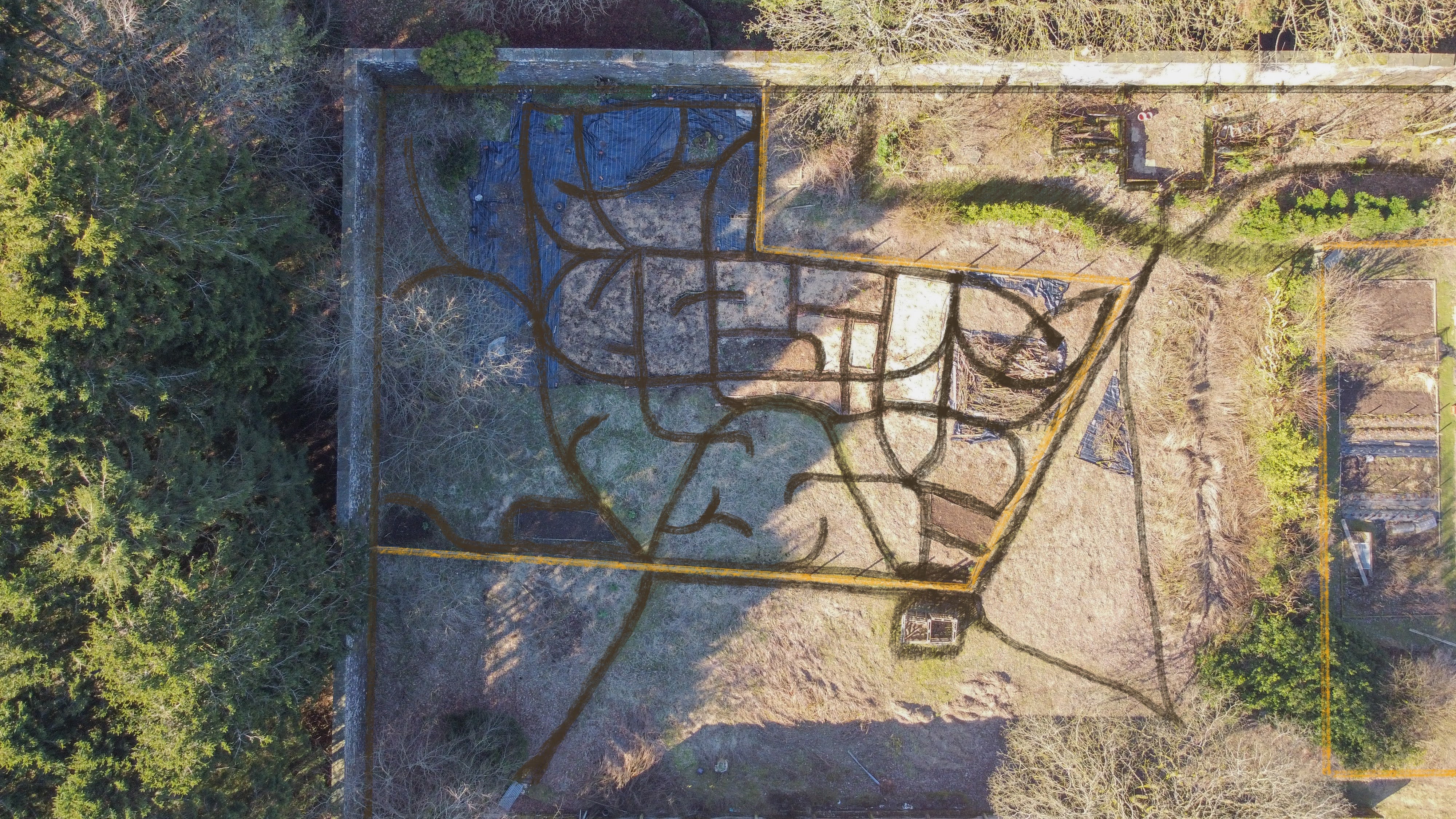
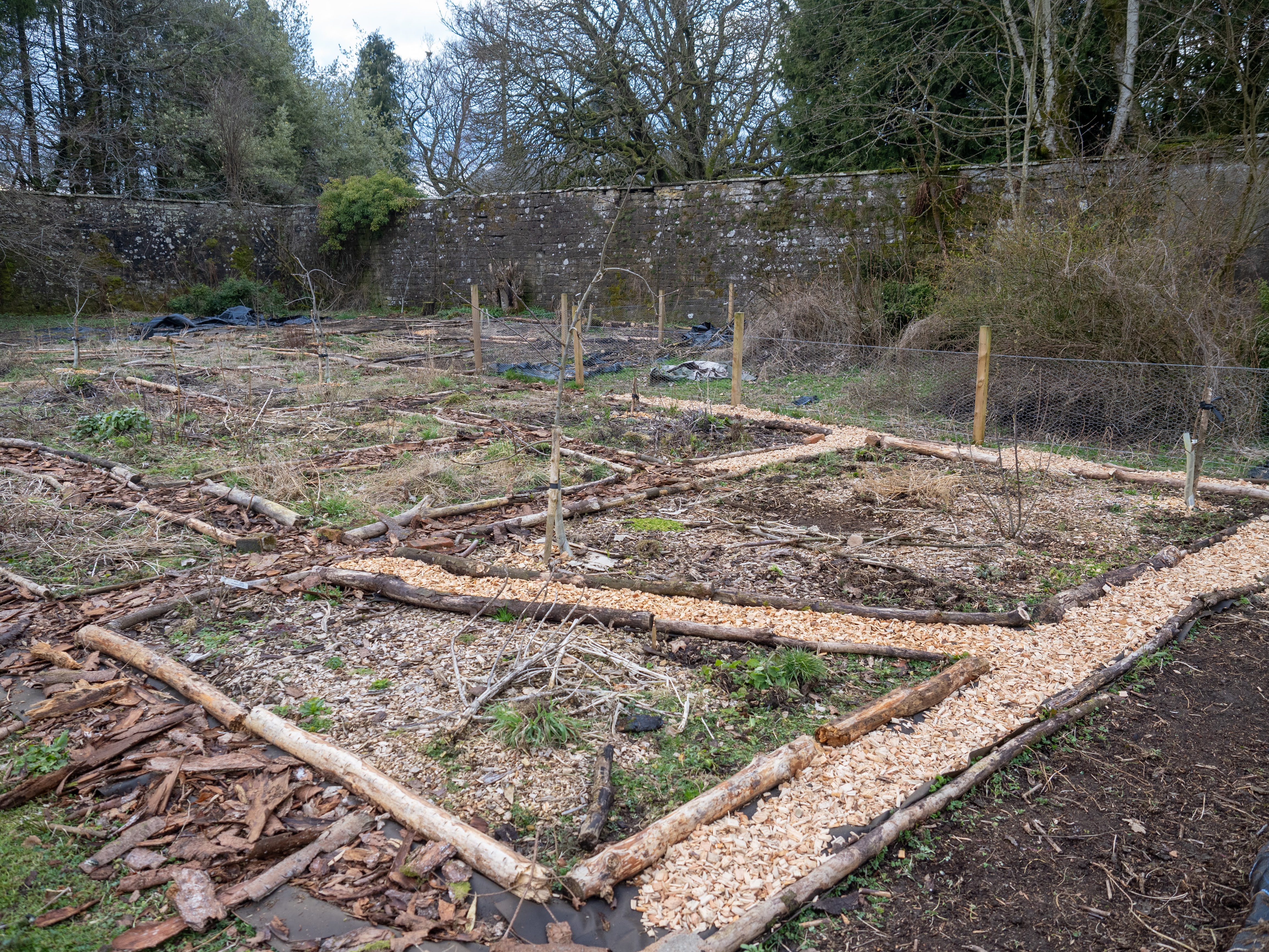
The corn starch sheets arrived, but by this time I wasn’t certain what their best use would be. For the thickest material, I decided to reinforce the pathways I had designed last year and begin adding those that only existed theoretically under the old mulch sheets. On top of these, I added wood bark and wood chip. When completed, it looked great! But was I deluding myself?
The gardener/author Alan Carter advises rather emphatically against using membrane sheets of any kind for path suppression, as creeping weeds will take root in them, creating mats of weeds such as creeping buttercup. I had also witnessed something similar with species like wild strawberry plants rooting into the plastic mulch sheets. Still, I was willing to give it a go. Let’s see how well this fares in the coming months.
Carter’s preferred method of creating pathways is to dig trenches and fill them with woody debris from the garden, then top them with woodchip. The soil dug up can be used for raised vegetable beds. I incorporated this method too, as it was nice to do a bit of hard labor! More importantly, the woody debris gradually rots, providing the surrounding soil with an absurdly wonderful abundance of fungal and microbial activity – which many perennials adore, especially the roots of nearby fruit trees. Next year, I’ll expand upon this method, as it feels like the most sensible, beneficial, and body-building method of all.
The excess soil from path creation was indeed put to good use elsewhere, in a number of new vegetable and flower beds (including one especially made for my flower loving daughter) which sprang up near the polytunnel.
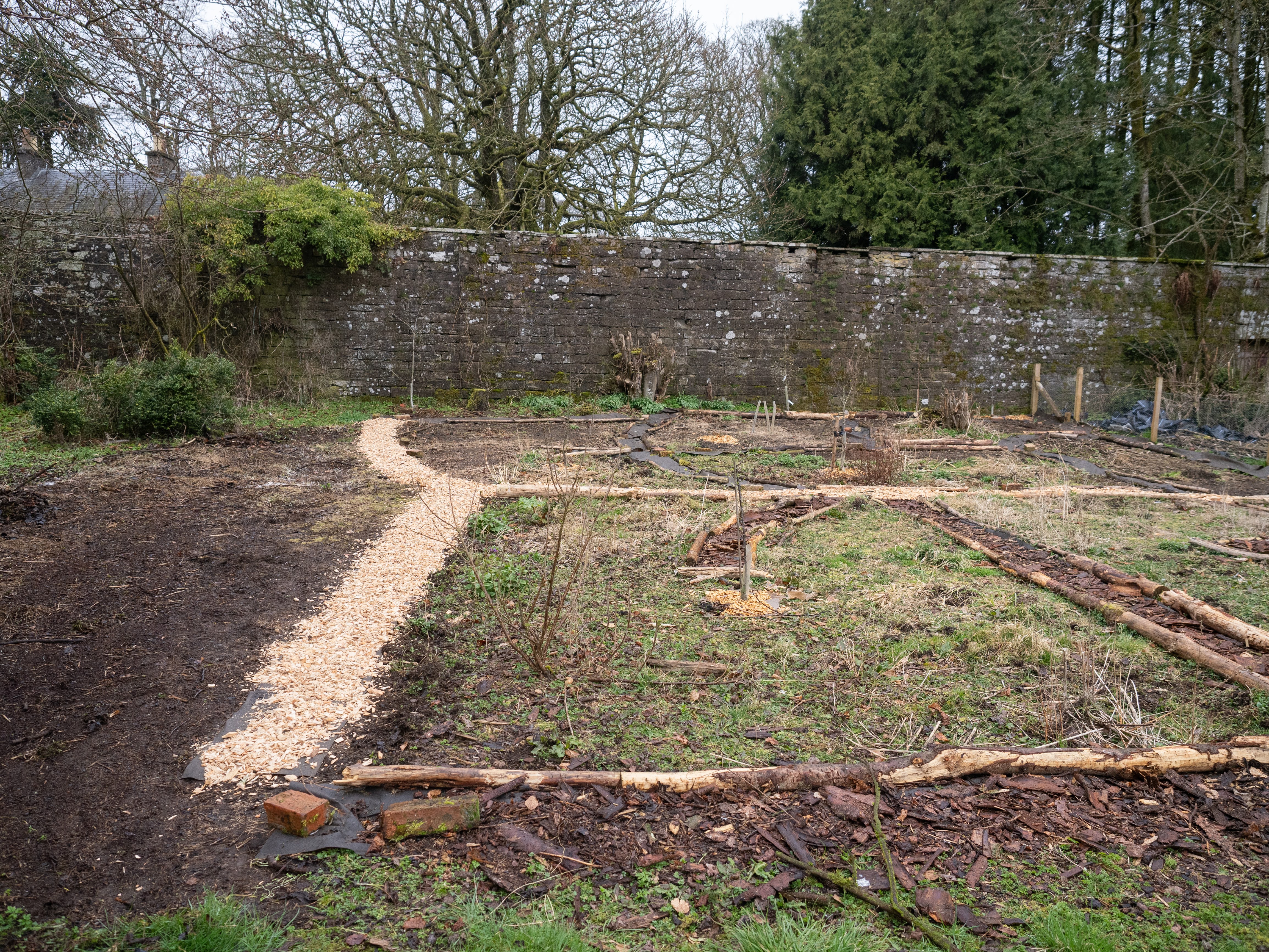
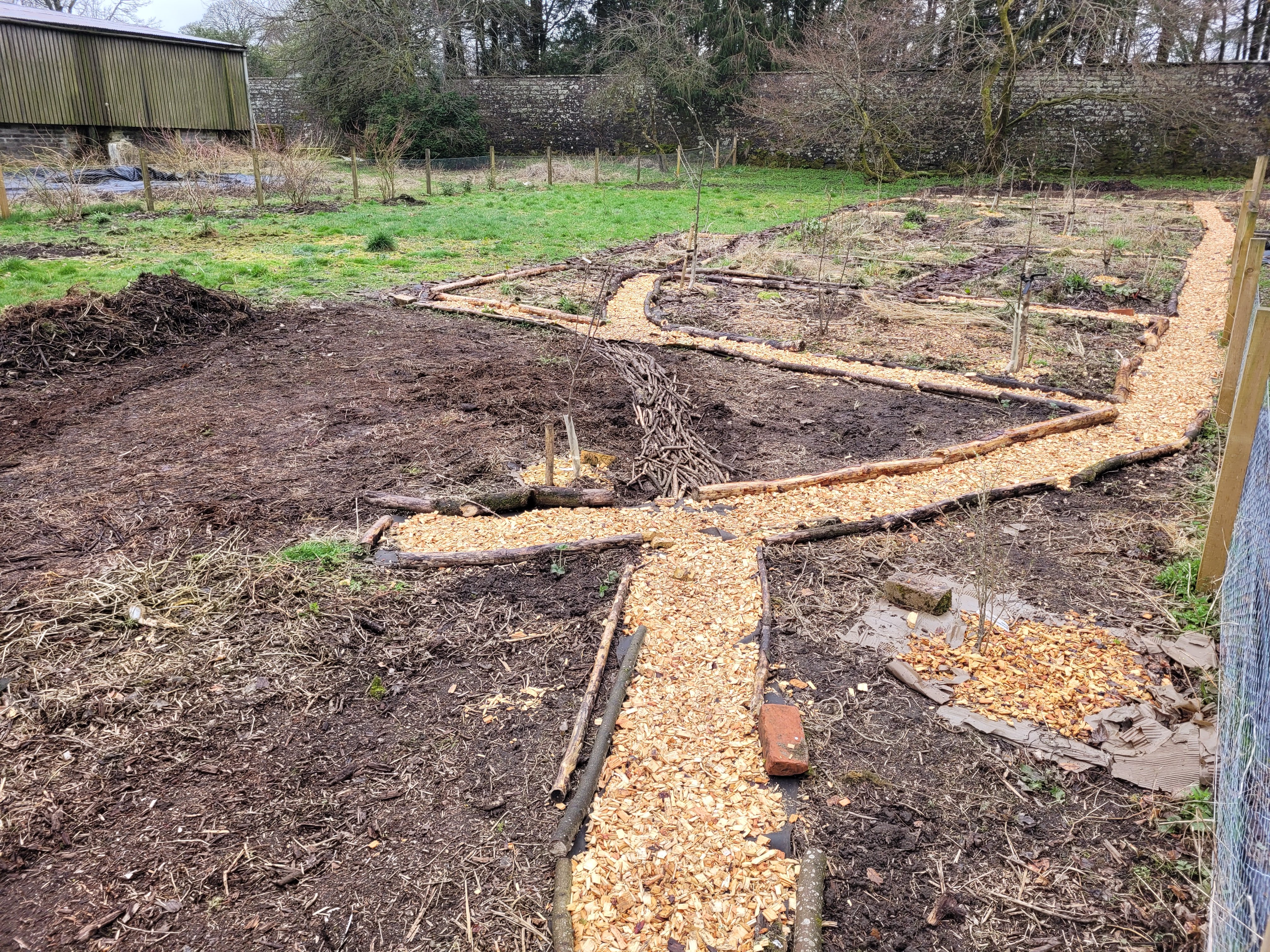
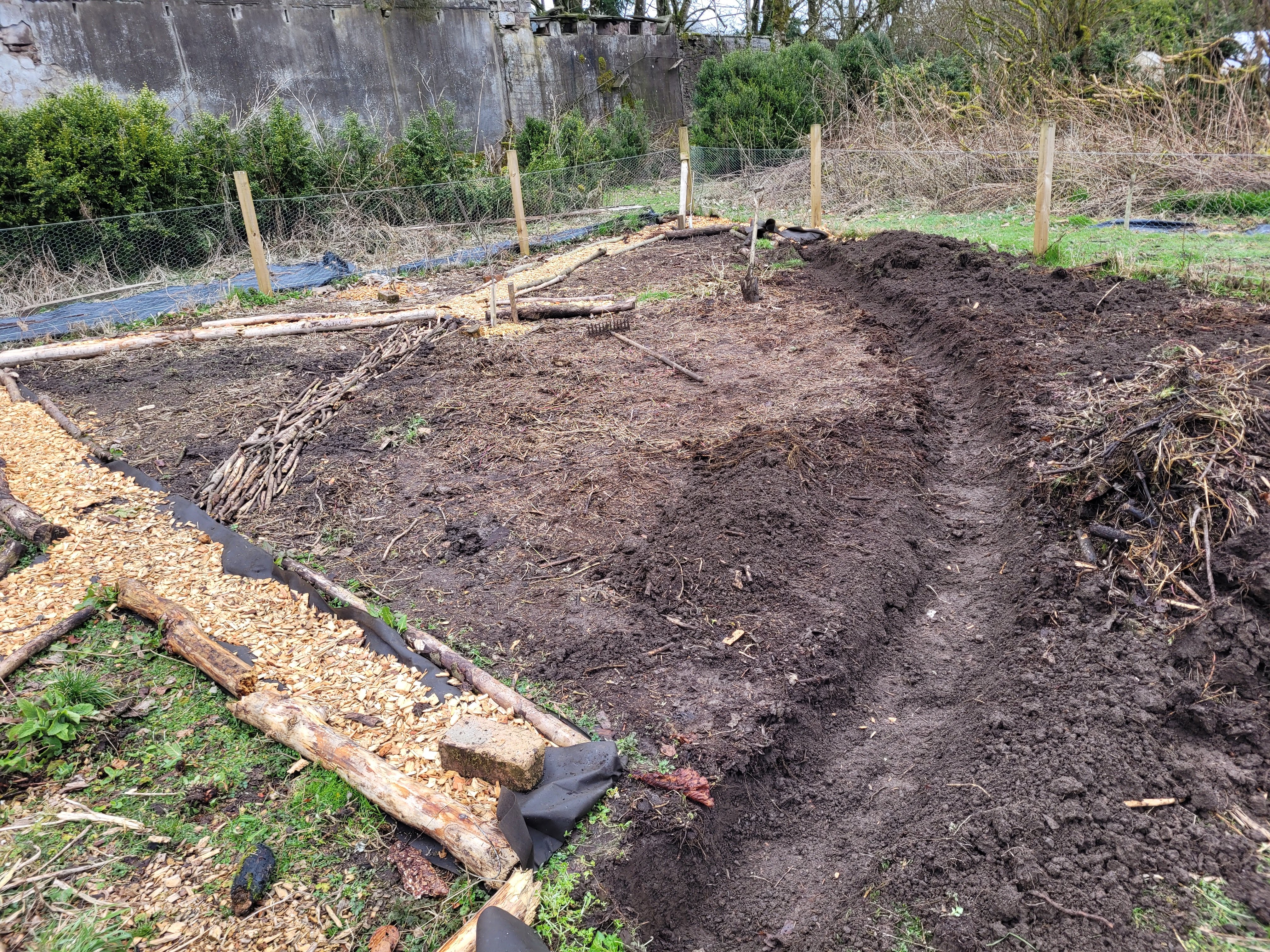
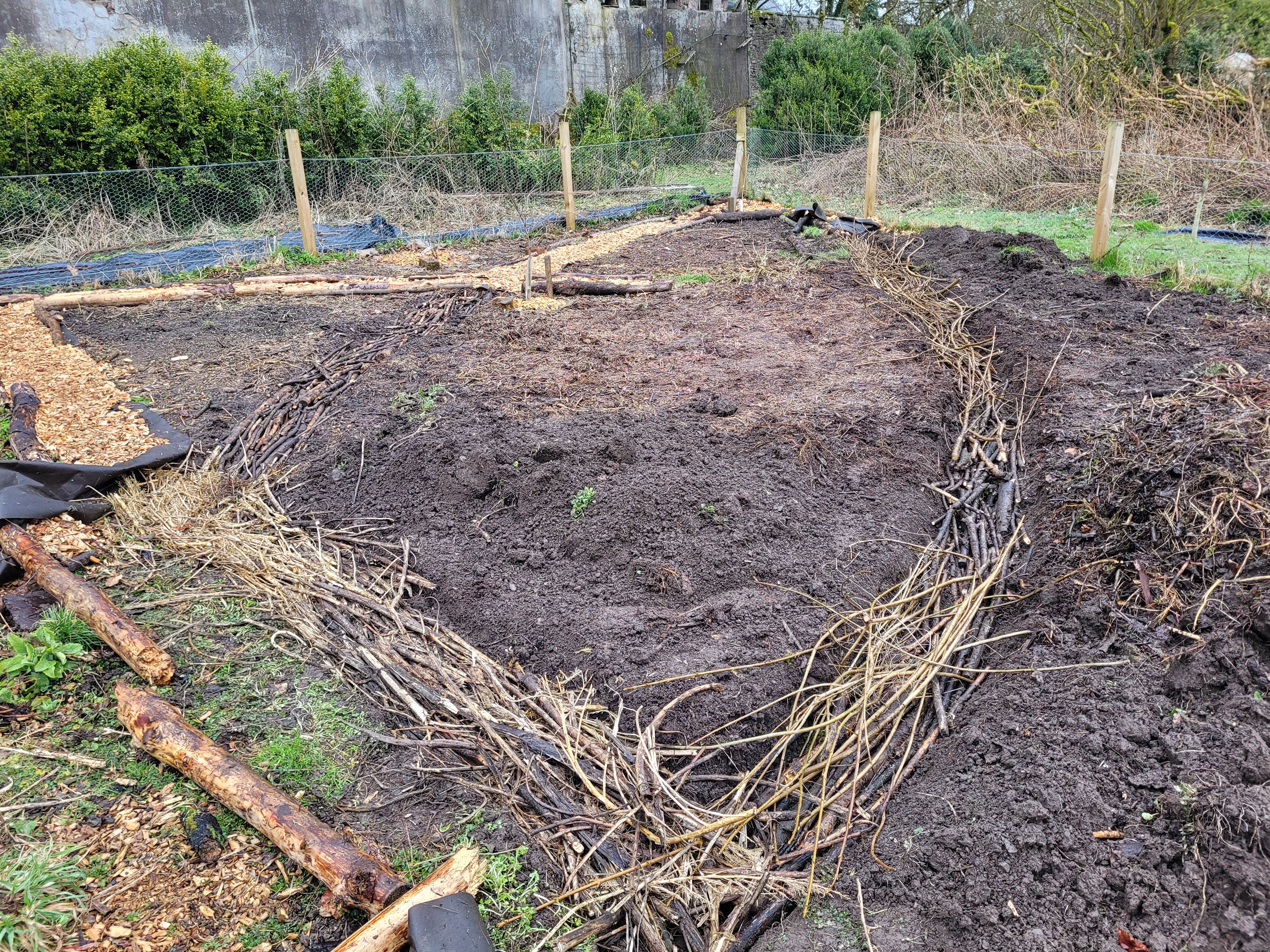
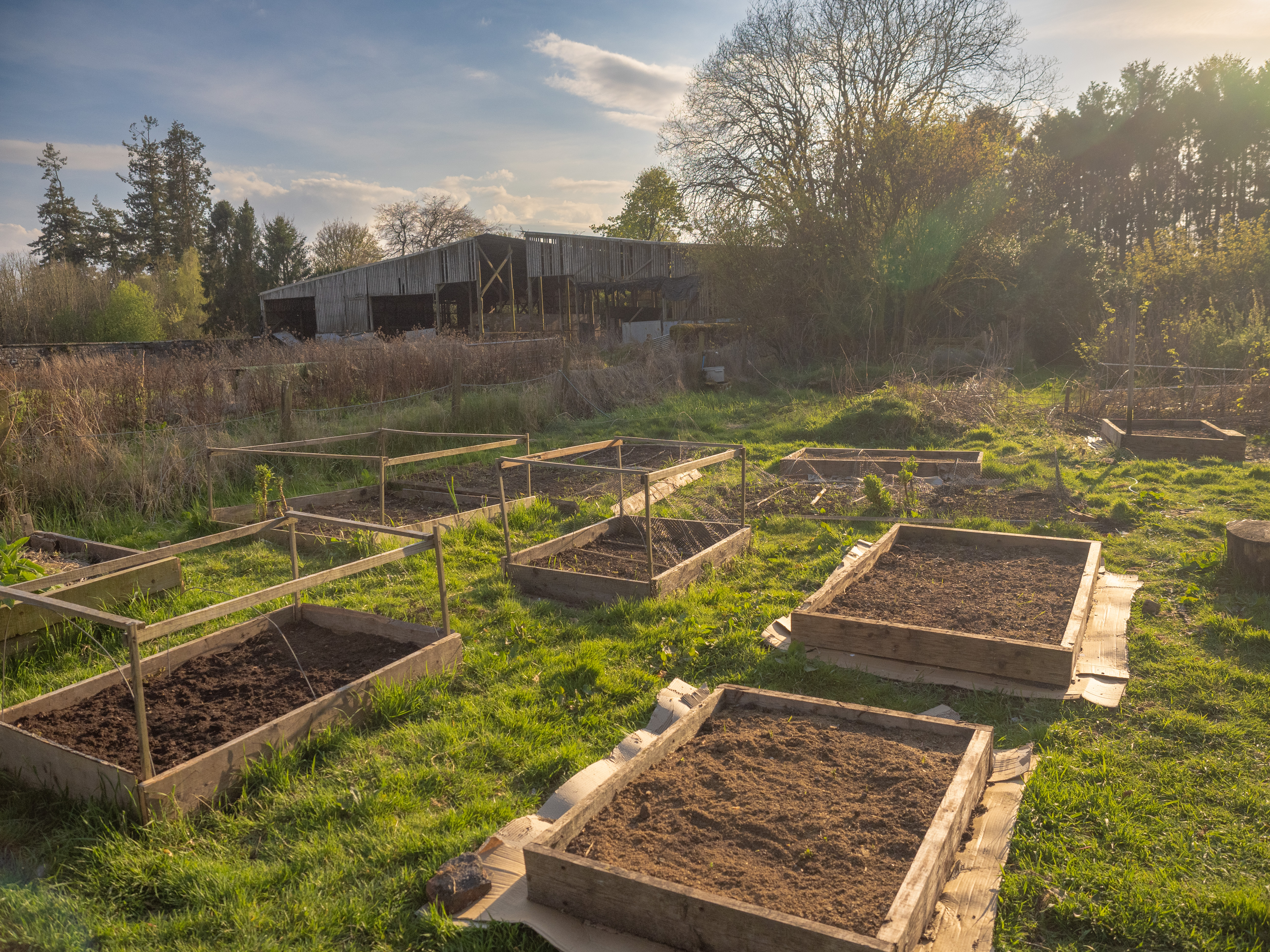
With the thinner starch sheets, I ultimately couldn’t think of anything better than using them in a triple layer with cardboard and woodchip to mulch around small fruit trees and areas adjacent to vegetable beds elsewhere in the garden.
The development of pathways is an important part of many gardens—they provide access, aesthetic interest, and even entertainment. By creating organic pathways that are ultimately ephemeral, they can morph over time, sometimes disappearing or reappearing somewhere entirely different. Or maybe the future garden will become far wilder, with only stepping stones here and there to access the fruits, flowers, and leaves for harvest.

May 2024

 The Bamff Walled Garden.