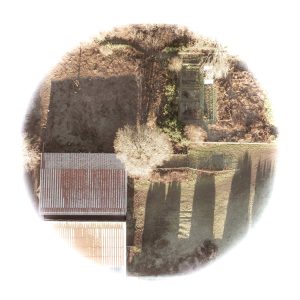

Update on the Rough Ground quadrant.
The rough ground quadrant was, just a couple of years ago, still being used as a cow and sheep pasture in conjunction with the cattle sheds. The livestock were permanently removed from the walled garden in summer 2021 leaving an initially mostly bare terrain – with some nettles populating fringe areas, and dock popping up here and there. But as plants and weeds took hold during 2022 – this landscape has evolved dramatically with rapid stages of succession.
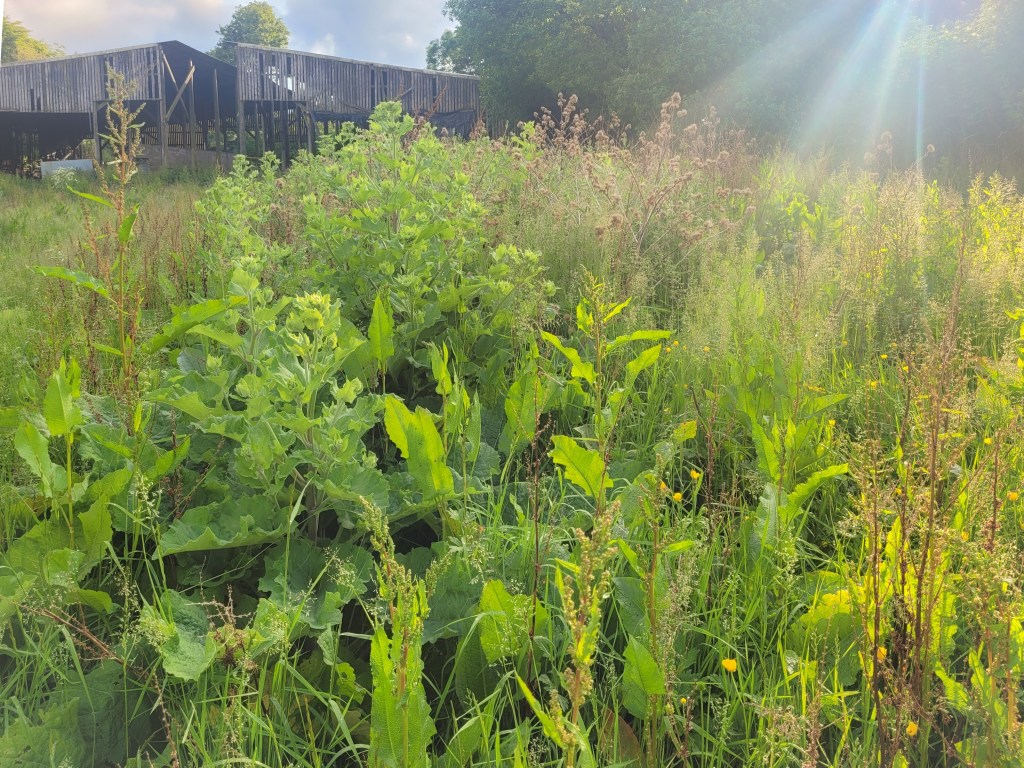
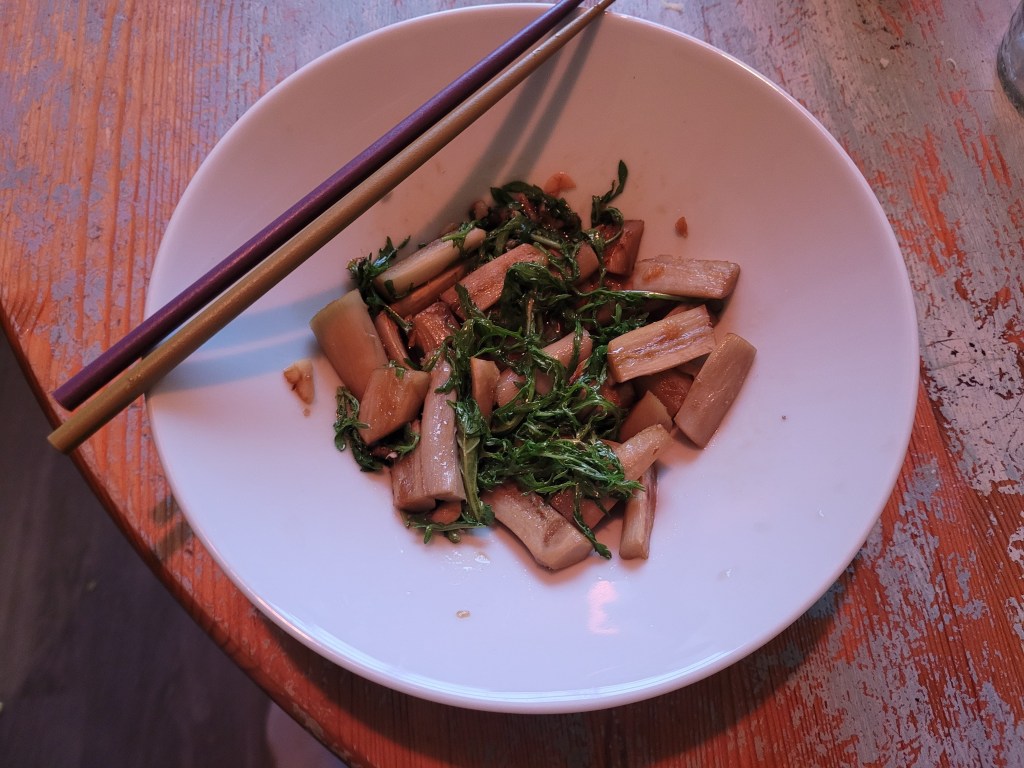
One of the most prolific newcomers is probably burdock. Its burrs, brought in as seeds stuck to the sheep’s woolen coats, were suddenly everywhere last winter – and often stuck to my clothing after practically every single visit to the garden – so now they have spread even further. Although the burrs can be annoying – the plant is magnificent – and delicious. Both young roots and young stems are wonderful cooked. I made a dish with the roots inspired by japanese cuisine – and a tapenade with stems, their scent perhaps resembling a sweetly aromatic version of artichoke hearts. But quite unlike anything really.
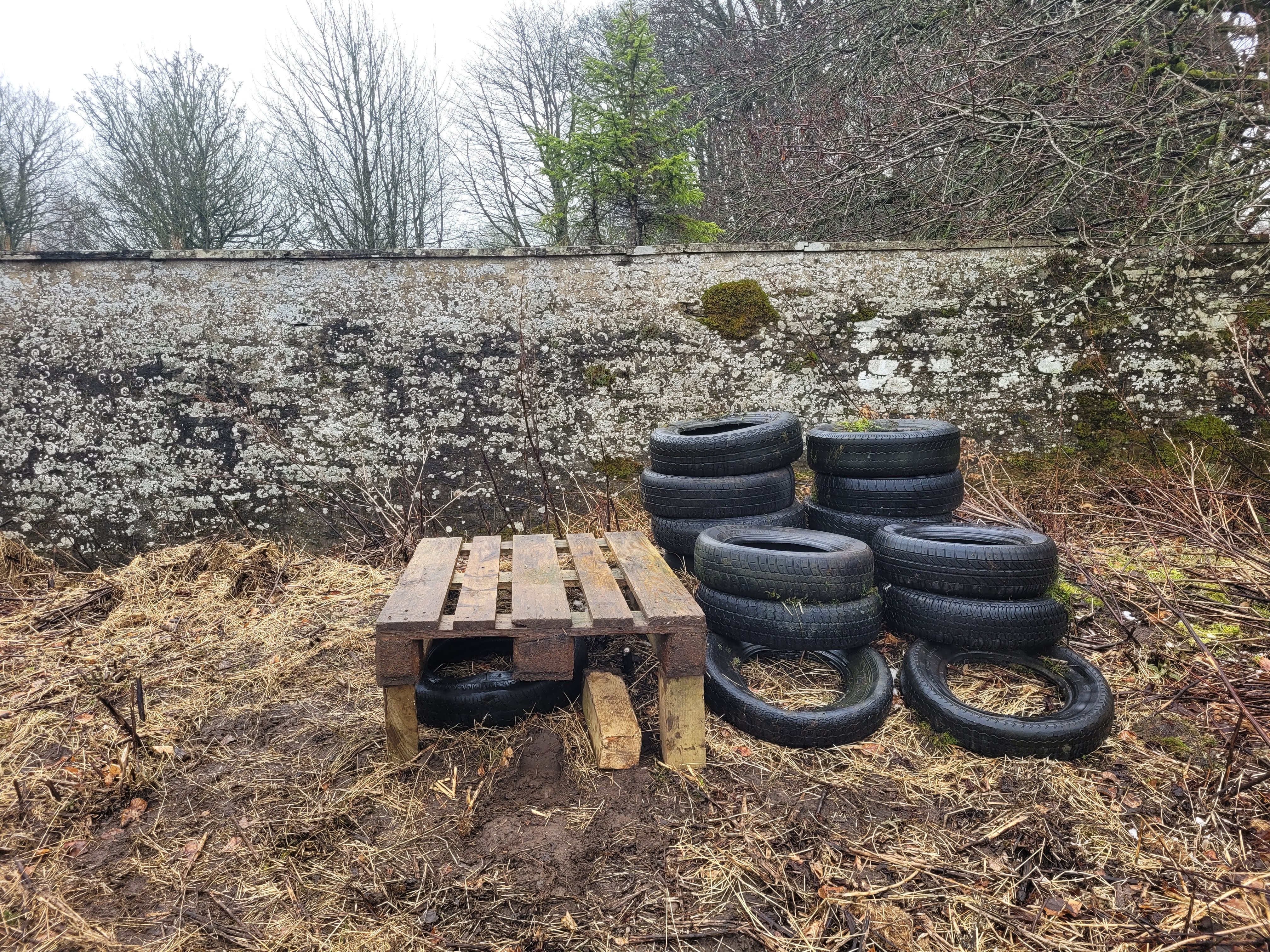
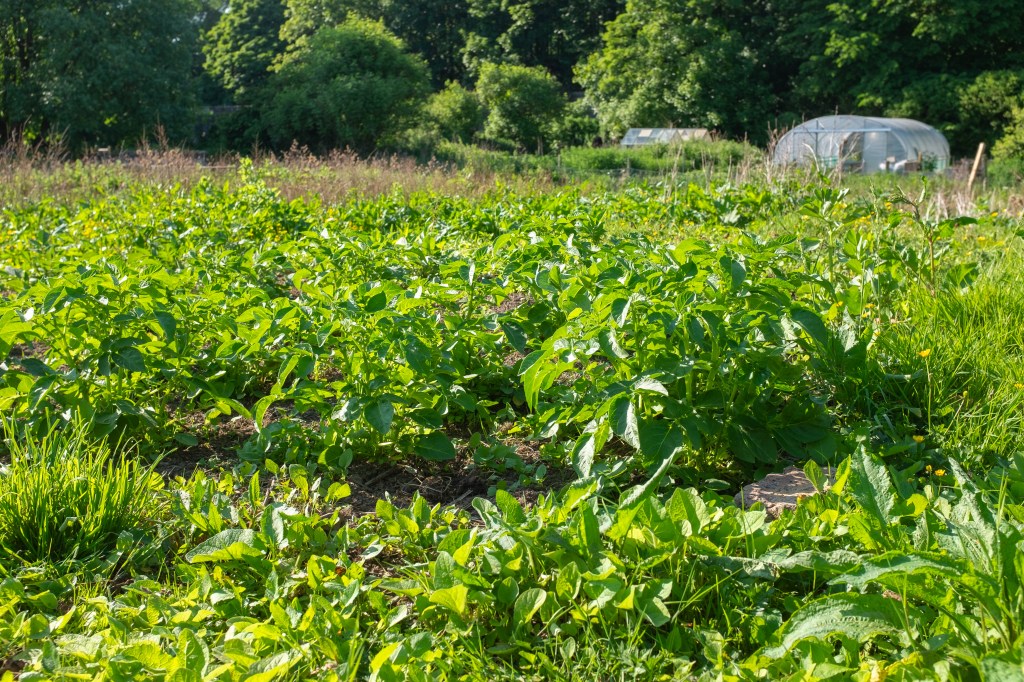
Up on the mound of topsoil in the southeast corner (known as “Tattie Mountain”), potato plants proudly grow (sarpo mira, maris piper and java) – surrounded by young dock plants, burdock and nettles, which are regularly scythed. A pile of tyres and wooden pallets have been placed here simply for sitting on – it’s a great vantage point for the entire walled garden.
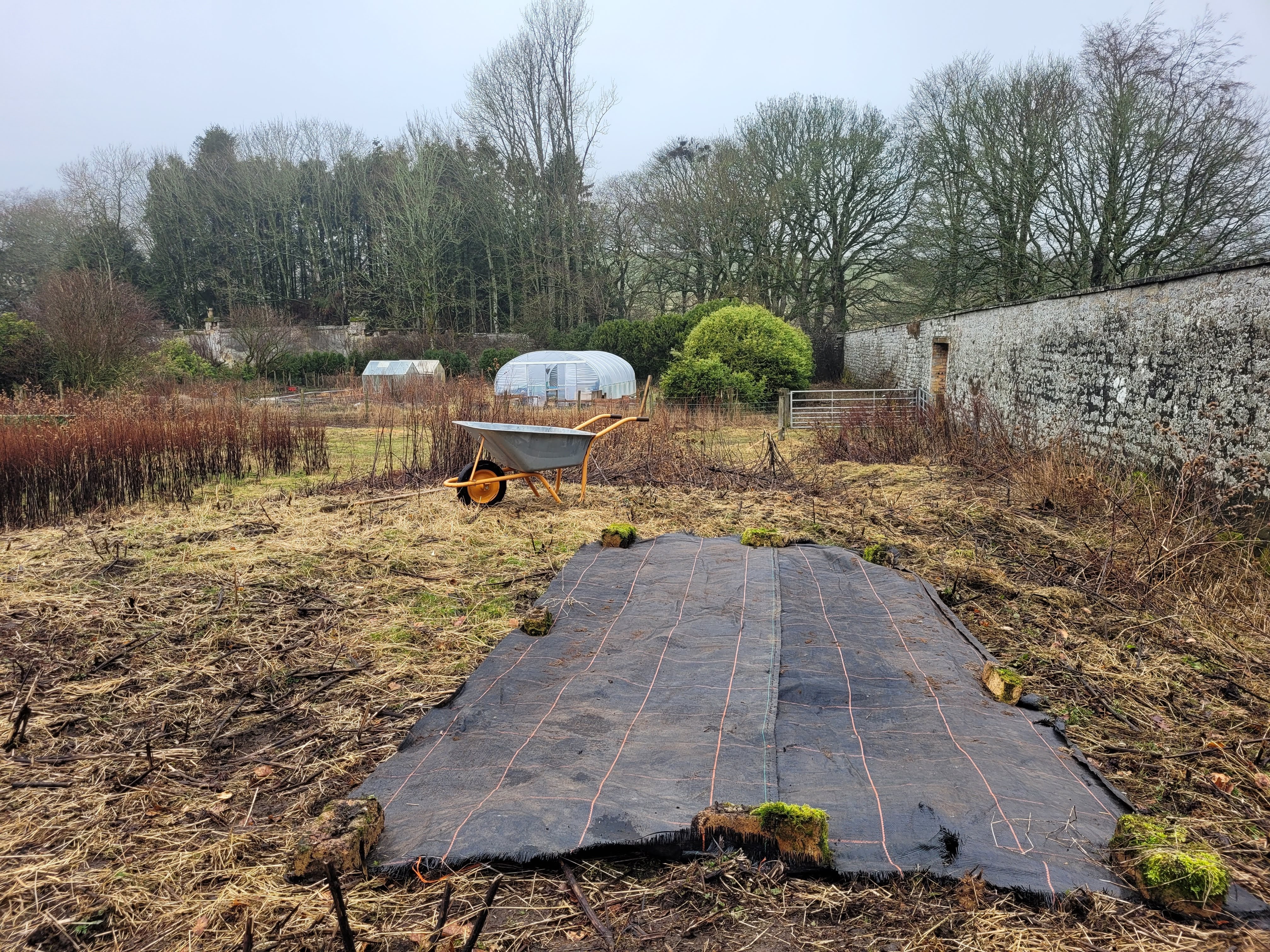
Down below, towards the centre, sits last year’s “phase one” of creating a large hugel-kultur style growing bed – piles of logs and branches that will need a copious amounts of compost and soil to complete it. One day this will progress further. Also one day there may be a neighbouring pond – perhaps some call ducks and chickens nearby – maybe a guard goose!
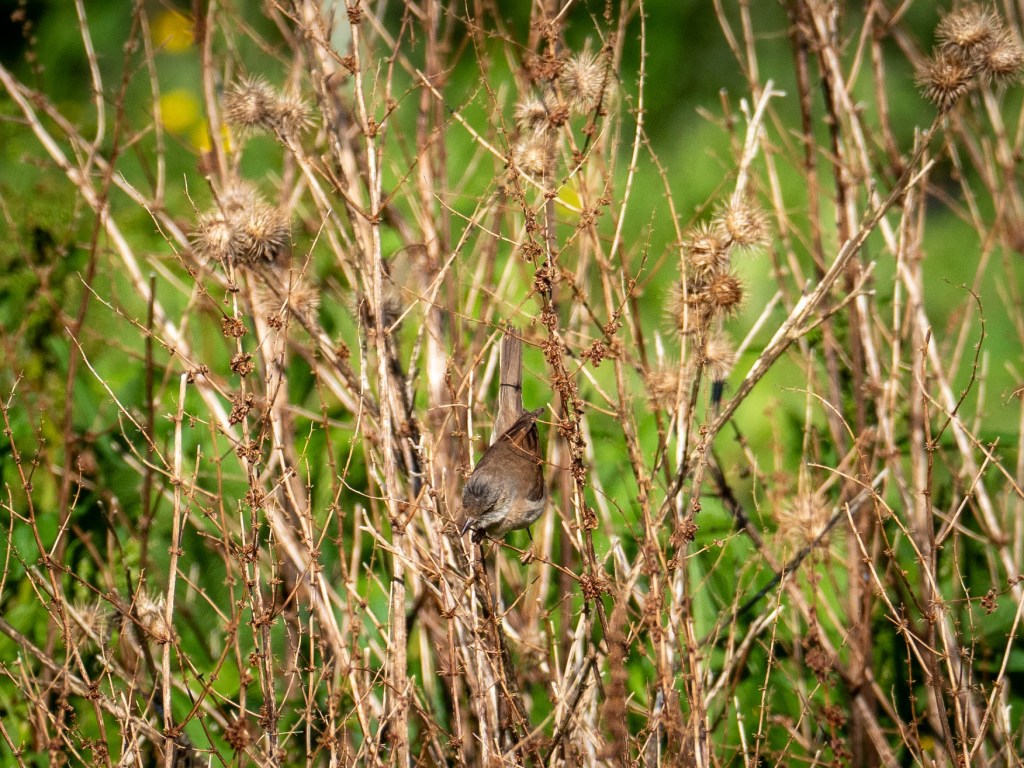
But the future plan I have my eye on the most here, is all about experimentation with grain growing. Quinoa is being grown already, but only on a tiny scale. It would be interesting to try perhaps oats, millet, rye or even bere – an ancient form of barley. I’ve began looking into how one might process or mill these grains. I might initially try patches of these grains up on the topsoil mound, maybe produce a few kgs of oats and millet, but the birds will also be extremely interested – as vibrant bird activity is already a prominent feature of the walled garden. And rightly so! Seeing flocks of goldfinches swoop into the dock and burr seed heads in the winter, or whitethroats similarly in the summer is so joyous. Nevertheless, some netting will be needed to protect crops, and hopefully a harvest would therefore be ultimately permissible.
But perhaps there is a larger objective to all this: to one day imagine grain growing at Bamff on a much larger scale, ideally somewhere up into the south facing slopes – alongside polycultural forest garden strips and tree alleys. This all depends on how government approaches food production in a future Scotland – and if support for these kinds of activities emerge then maybe Bamff will have a group of residents who work and live on the land – helping to take food resilience and self sufficiency to another level entirely. New residents will need new property to live in – and so will we, as in the next few years we will vacate our flat in Bamff House and move to the walled garden. The exact location for our new house is planned to be somewhere within the footprint of the cattle sheds.

 The Bamff Walled Garden.