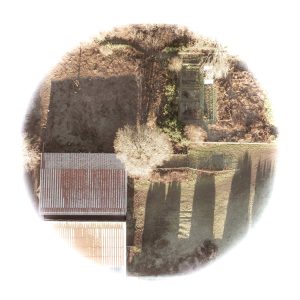

Update on the Market Garden quadrant.
The market garden is the quadrant dedicated primarily to veg growing. Chris Potter, the ex Bamff gamekeeper, has been growing his own veg and strawberries on a small allotment style patch here for decades – I then moved in next door with my polytunnel project which was created last May. No dig beds tentatively also emerged during last year – joined by about double the amount in spring this year.
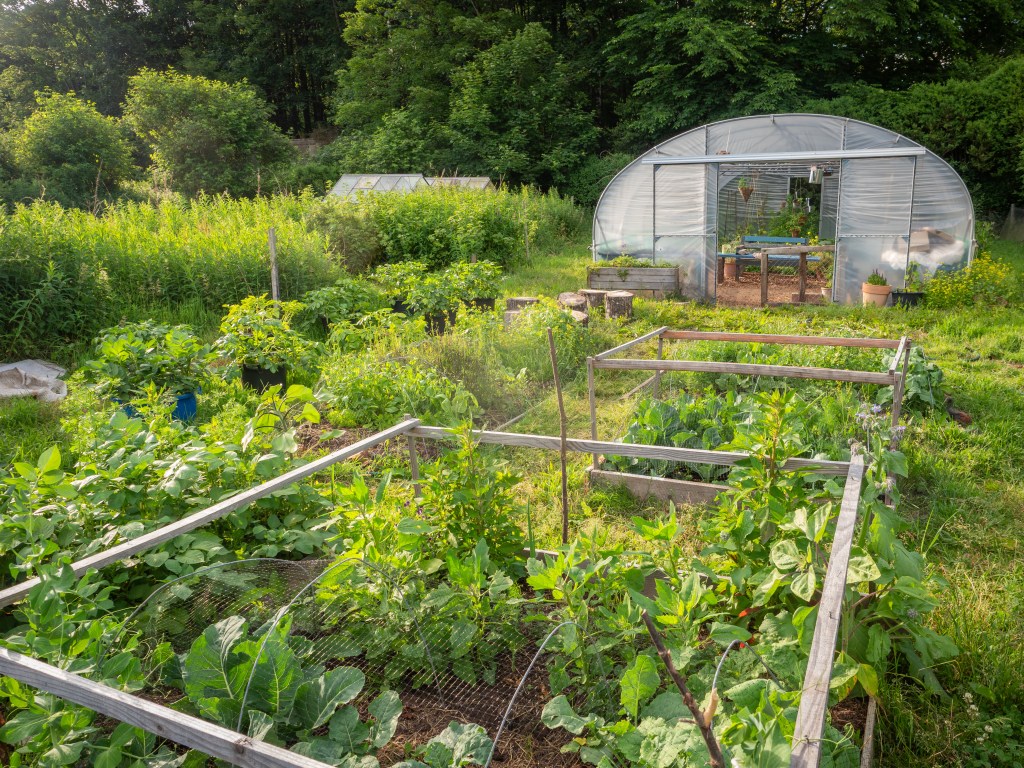
Why do I refer to it as a “market garden”? Well, there may be some movement towards a small commercial enterprise stemming from this area, focussing probably entirely on customers at Bamff itself: mainly for ecotourists and also for some events. Passers-by may also perhaps be interested on occasion. So it absolutely won’t be a big effort to sell around Perthshire and beyond in competition with (many) others, but just something extremely localised.
Although, there will always also be an aim to provide produce to local food projects and food banks – which will ideally take priority over paying customers. The economics of it all still needs some thought.
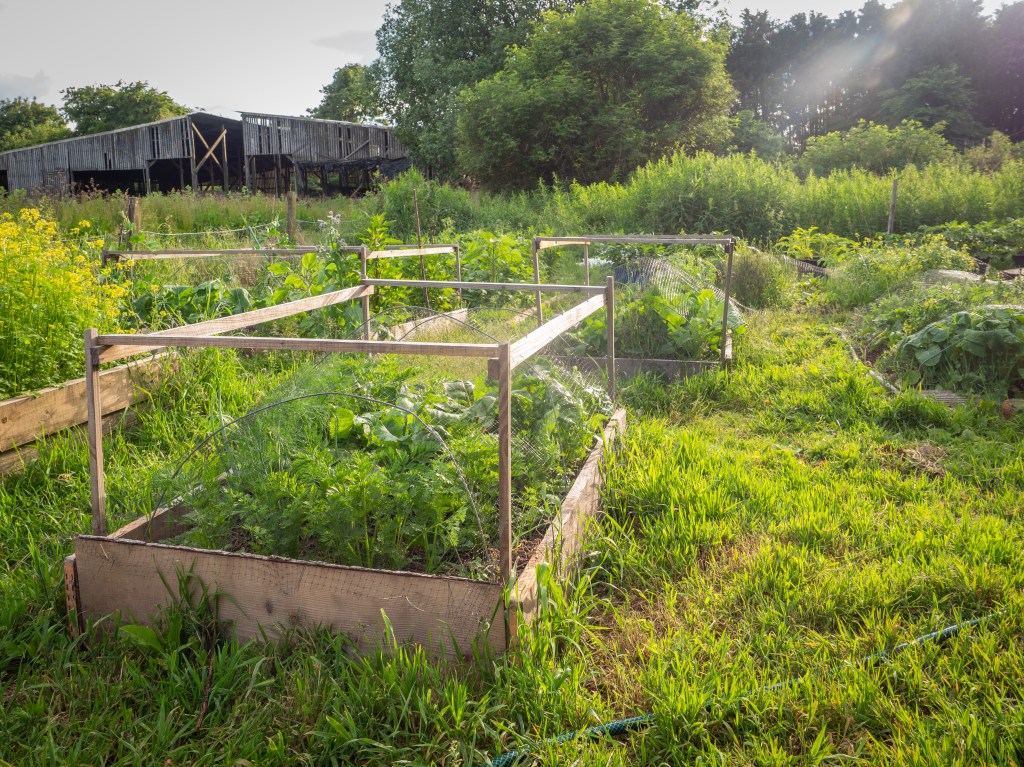
This idea has developed further as a result of seeing this year, in huge contrast to last year, such a massive abundance of plants growing so healthily from spring and into summer – particularly in the outside veg beds – which certainly leads me to want expand even further for next year. These beds have far healthier examples of carrots and beetroots as well as various greens, herbs and alliums, than those from last season. I also simplified the protective netting – using hand-me-down metal hoops (thanks Aunt Sue!) bent into arches, and single pieces of netting placed over them, unlike last year’s more awkward square frame construction. New beds have been made using the classic no-dig method of thick cardboard (from the local bike shop) and compost; last year’s mushroom compost, plus some of the garden’s existing old cow manure, and soil from an old compost bin, but these contain some weed seeds.. I’m finding that weed seeds are not a huge deal in this context, as removing them when they sprout into life isn’t such a terrible chore. One other advantage this year: there don’t seem to be any rabbits in this particular area…for now.

Behind the polytunnel a new bed was formed exclusively for the growing of jerusalem artichokes – though soon after I decided that a variation of “three sisters” planting should be pursued, as described in my previous post (to recap: an ancient Cherokee practice normally involving corn, beans and squash all growing together). Two other equivalent patches were also created in the forest garden area.
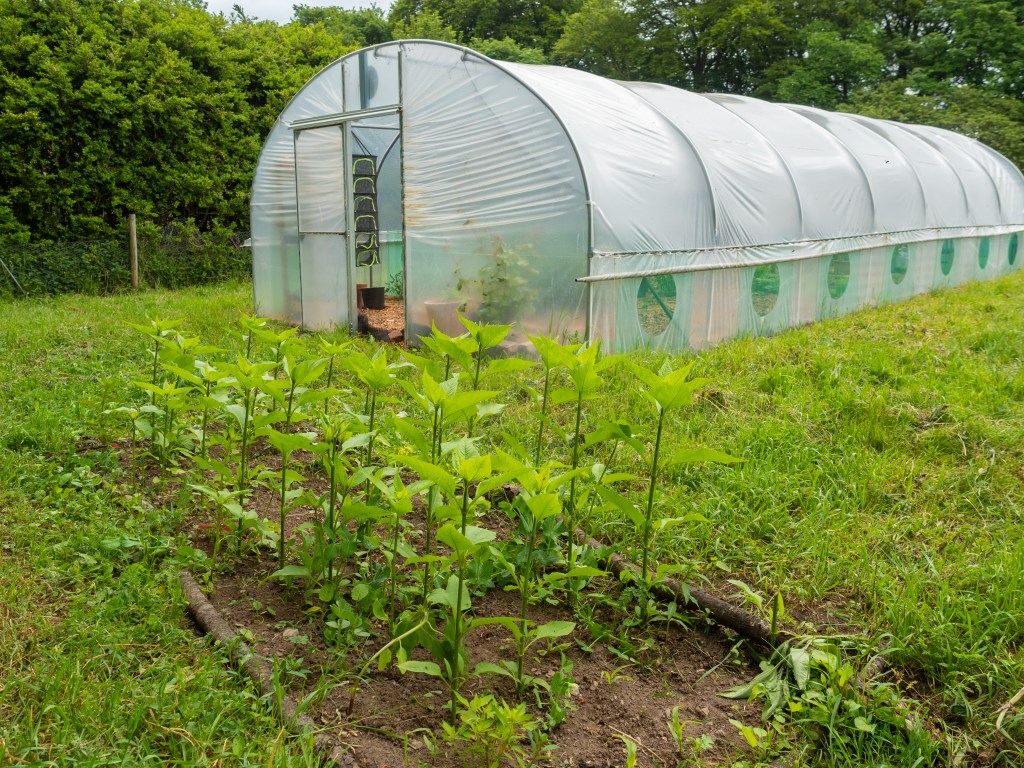
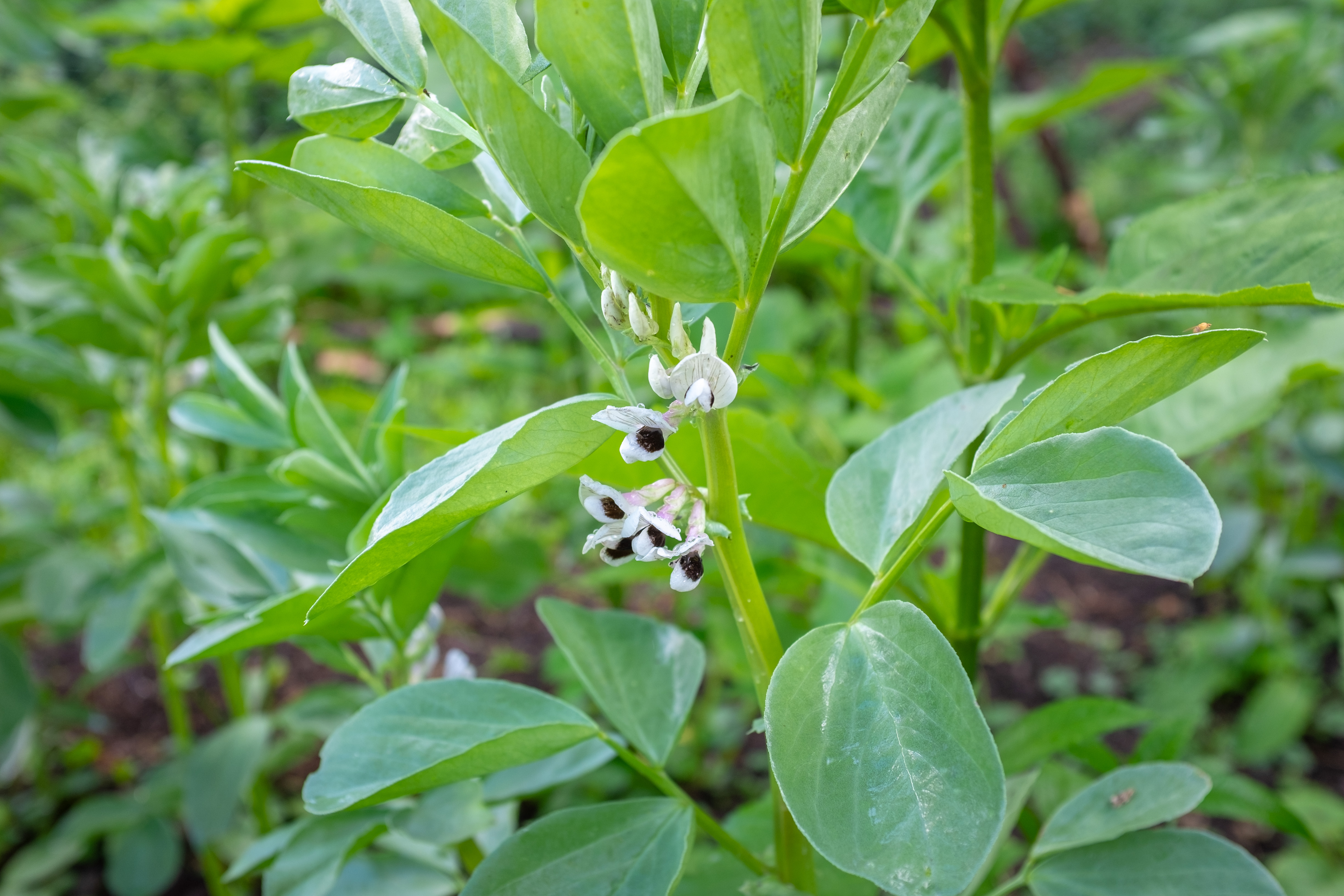
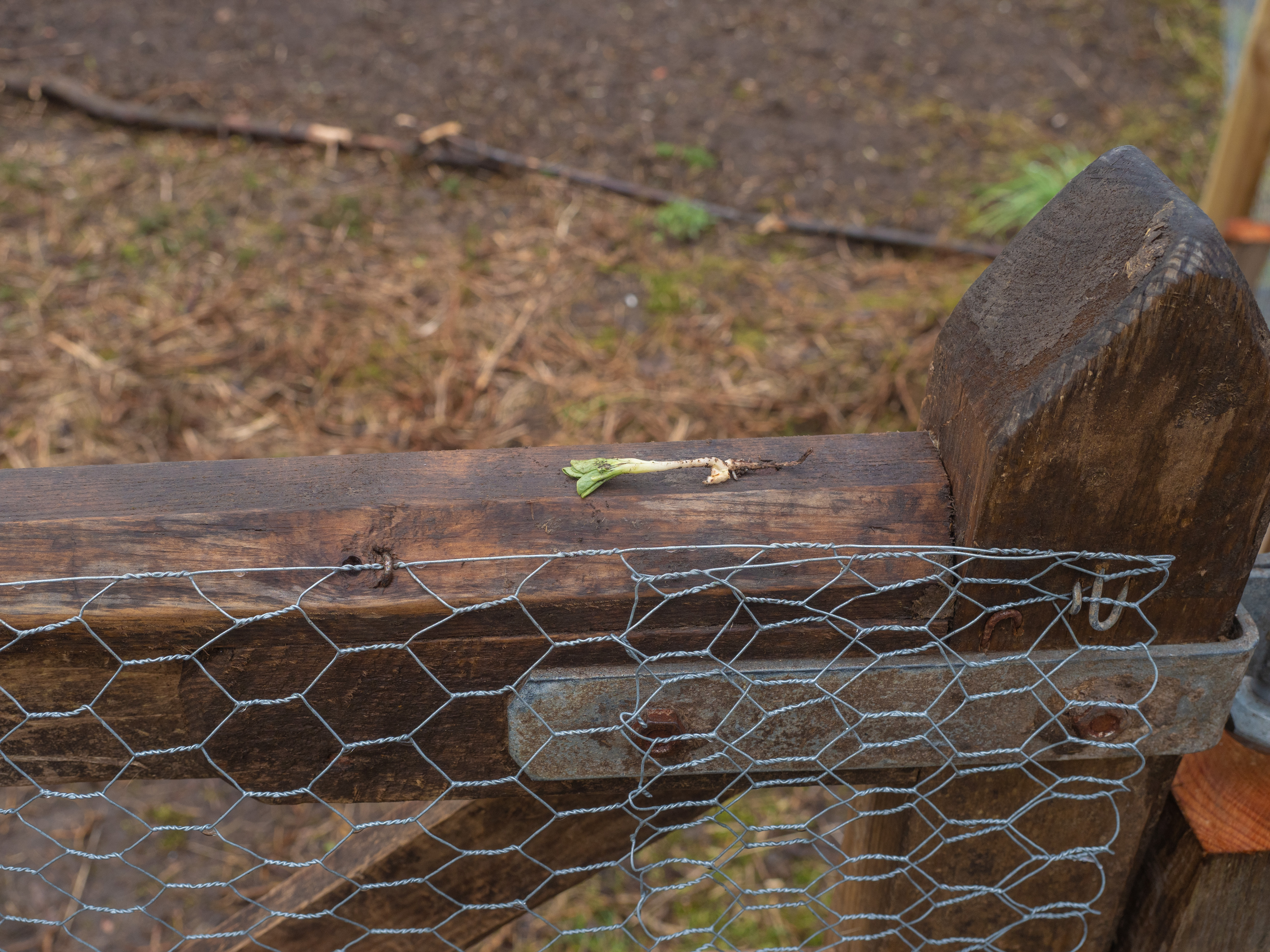
The long, cold, early spring period, saw absolutely no progress for weeks and weeks in any of these patches – when finally, BOOM – up they all came, together with their field bean companions. Except approx two thirds of the entire crop of field beans were demolished, predominantly by the resident jackdaws (and peafowl…), who lifted the young beans out of the ground and simply dropped them nearby, not really eating any of it. One was even meticulously placed on top of a gate, almost ritualistically! Next year a system of netting will obviously be needed for starting off the field beans – which are another magic crop that, although closely resembling broad beans, cost a fraction of the price as they are sold and marketed as, yes, good old “green manures“. Eating the raw young tops of these bean plants is so delicious!
Whilst last year’s squash plants grew only in the polytunnel, this year they also grow outside in these artichoke beds. There are now three varieties – Anna Swartz Hubbard, Victor and Hungarian Blue – hopefully they won’t cross pollinate.
Anna Swartz Hubbard squahses are again growing exclusively in the:-
-Polytunnel–
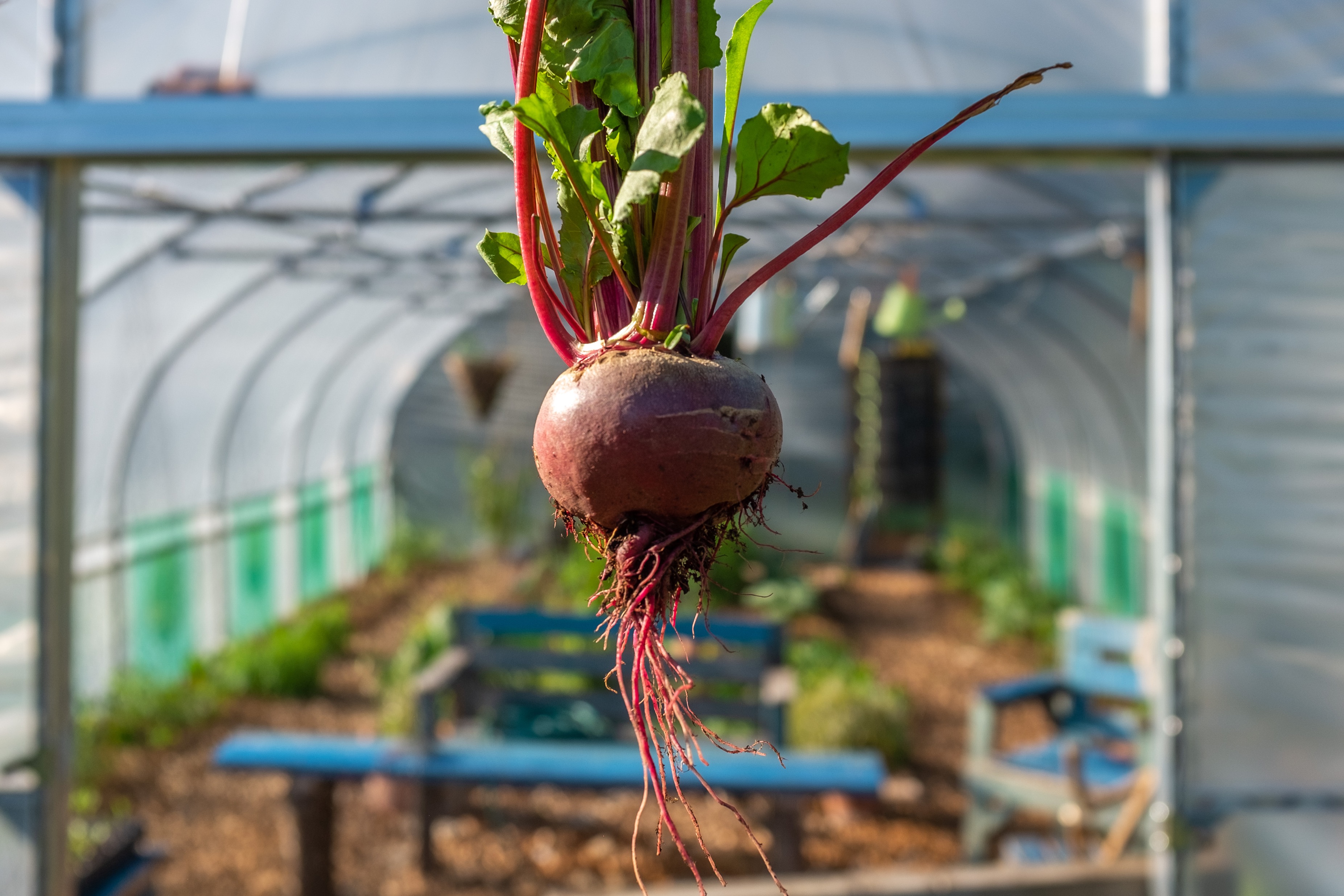
The polytunnel environment this year is also so markedly contrasted to last year, due to the appearance of over-wintering vegetables (cabbage, chard, carrot, celery, beetroot, bok–choy) and of course the possibility to plant and sow so much earlier. But the plants that I had been most looking forward to are, so far, growing rather well:
-Tomatoes-


I think I may have grown a struggling tomato plant in a compost bag when I was around 24 years old. About seven years ago I tried a bit harder to grow a few more – propagating some seeds in an attic room before planting out in an overcrowded and tiny garden in north London. I managed to get a little crop there I think..? So now in 2023 I’m hoping to get my first ever “proper” crop of tomatoes, and the very first for the polytunnel. Varieties planted were: Urbikany, Gardeners Delight (Irish version), Dr Carolyn Pink, India stripe, Beauty King and a type of plum tomato. I’ve lost track slightly of which variety went exactly where, but that should become more obvious over time. Most are in the ground along the east strip of the tunnel, whilst others are in containers. I’m making “comfrey tea” (comfrey leaves weighed down by a brick in a bucket of water, and left for a couple of weeks) to feed them occasionally – hence they look healthy, with virtually no sign of any leaf-curl or any other issues. I decided to not go down the pruning route, which may or may not work to my advantage regarding yield – there’s some argument about that, so I’ll let them develop as nice bushy tumbling plants for now…
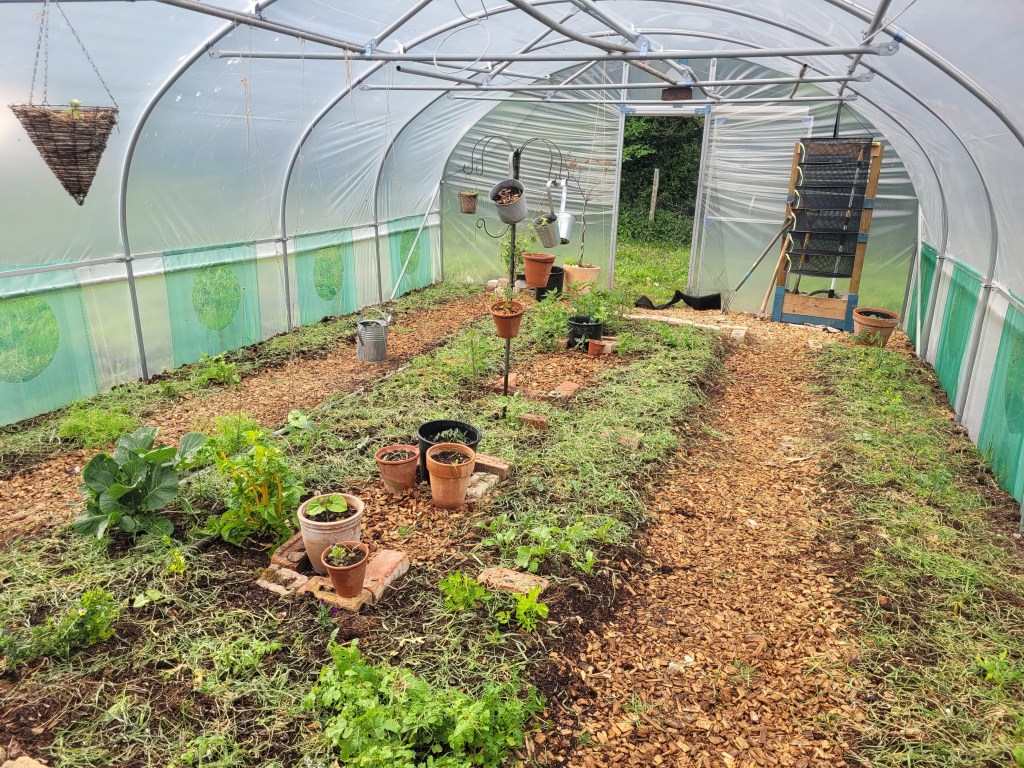
One great help for the tomatoes and all other plants – especially during the heatwave – is the use of grass clippings as a mulch. I’ve been using clippings from scything around the tunnel, plus extra from lawn mowing around Bamff house. The two pronged advantage of helping to keep the soil moist plus feeding the plants seems to be working very well so far – and was particularly useful for me, as the mushroom compost used in the tunnel had become so dry and dusty over winter that I wasn’t sure it was even viable anymore as a growing medium. Additionally, some old cow manure was mixed in with the compost, as luckily there’s a huge resource of that in the south side of the walled garden. Currently enjoying this mulched medium are: fennel plants, pepper plants, various brassicas, melon, climbing beans, cucumbers, chard, beetroot, peas, numerous herbs and salad greens and masses of mizuna.
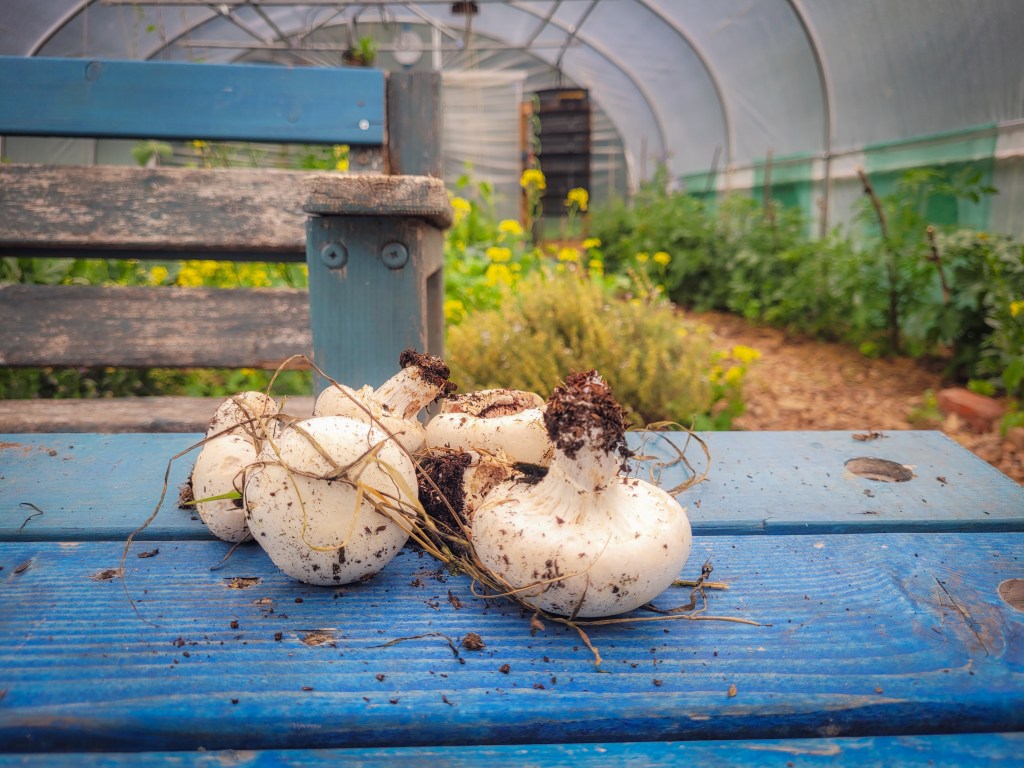
One great benefit of the mushroom compost though; the endless supply of field mushrooms. They seem to pop up at virtually all times of year, in every season. Then they might disappear for a month, and then they’re back again, bursting through the soil, usually very close to the stem of a plant. It’s an almost shocking discovery sometimes, especially as they can get really rather large…
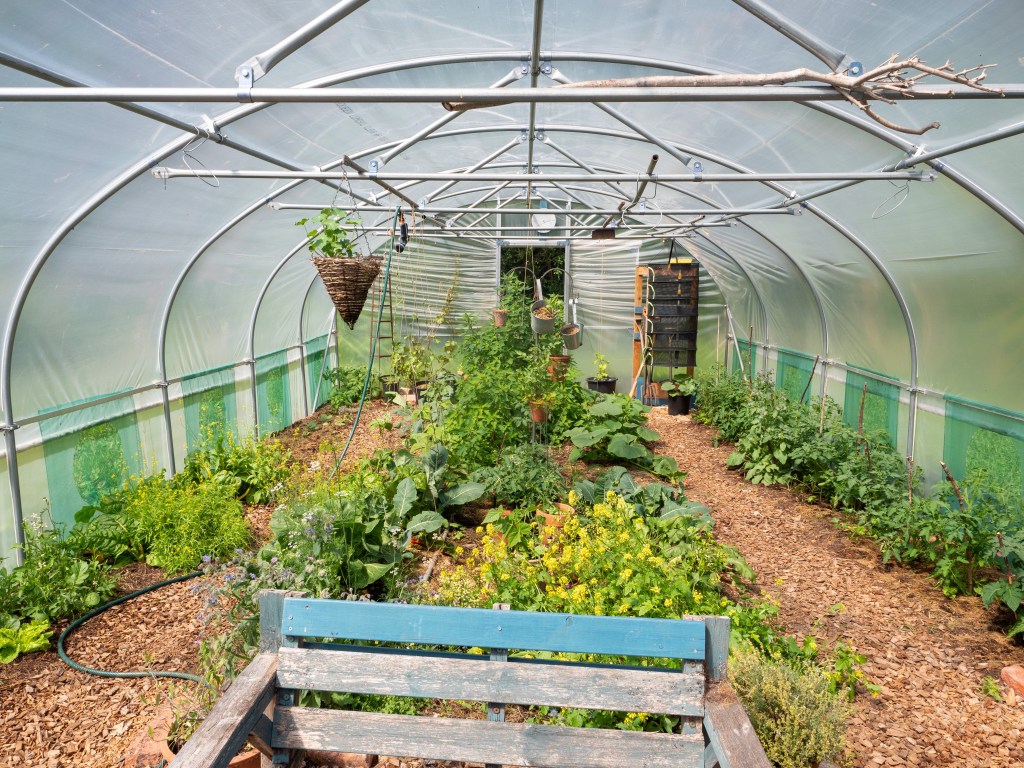
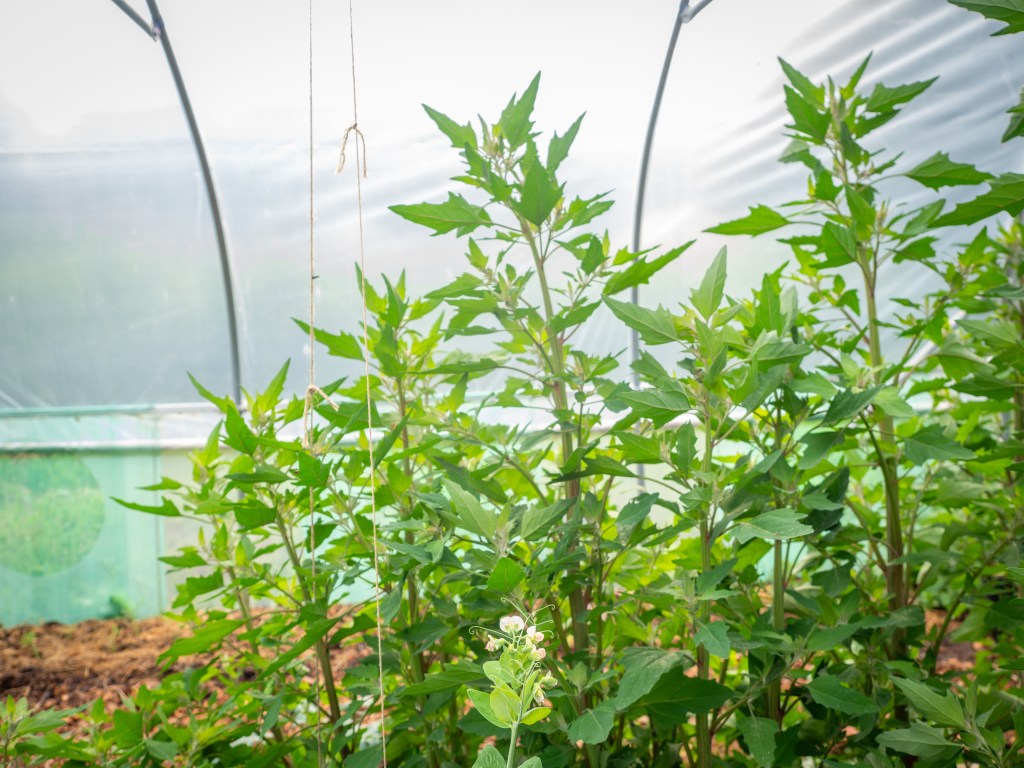
In fact, all sorts of success stories are emerging around the tunnel, again slightly late due to the cold spring, but very apparent by midsummer. One already giant crop is the self seeded aztec broccoli from last season. Even though it’s related to fat hen, seen as a weed by some, it’s such a delicious and versatile plant and I’m truly grateful that it just keeps on coming. It grows best inside the tunnel, but I’ve planted it practically all over the walled garden now…
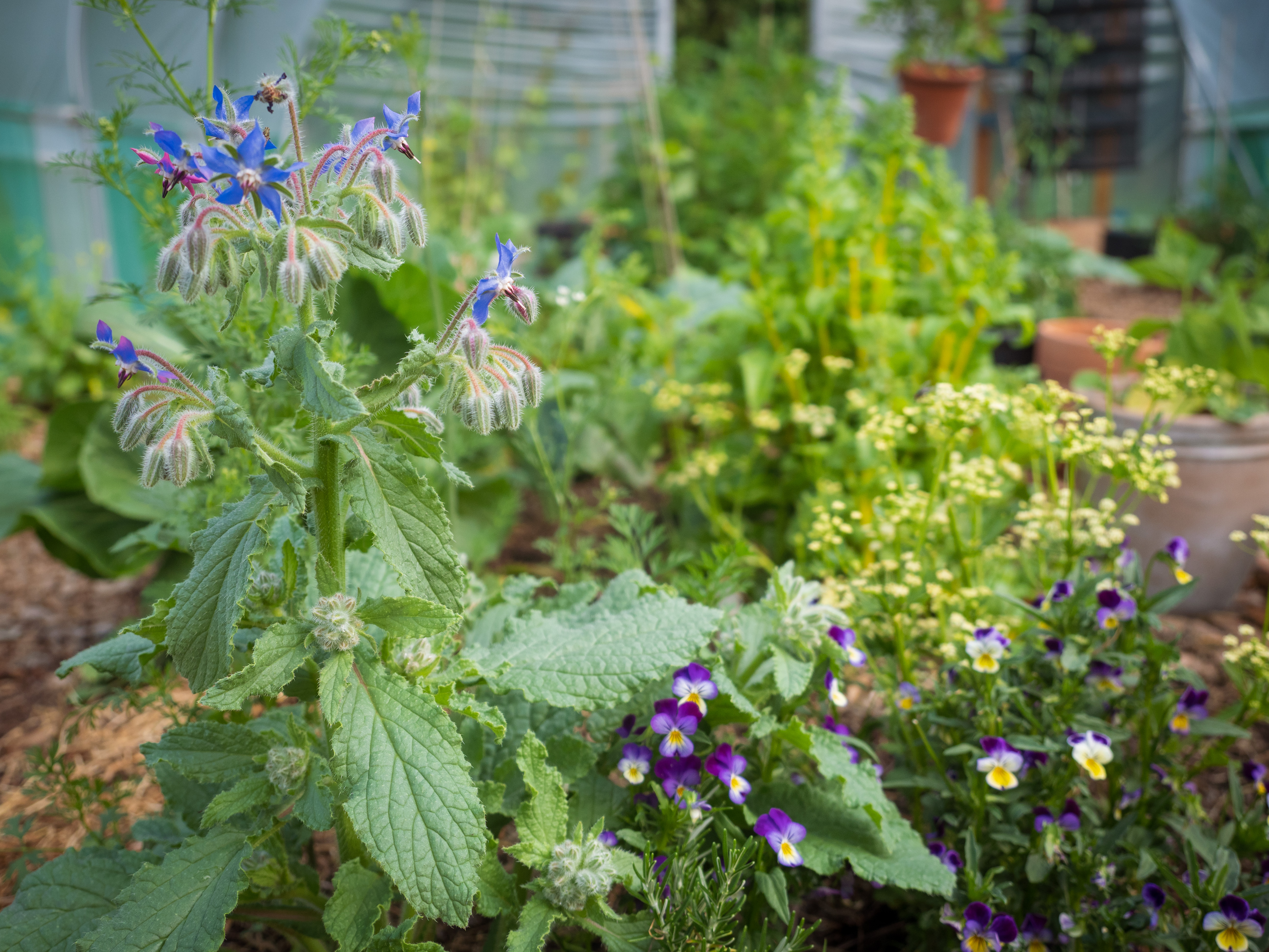
Towards the front of the tunnel, flowering borage plants jostle with the old over-wintered celery – which produces gorgeous flowers too, and last year’s wild pansy plants re-emerge with their beautiful tricolor flowers – whilst mustard yellow appears intermingled with annual rocket flowers and fruiting strawberry plants – tufts of feathery dill get a look in, and coriander flowers will soon be going to seed, during which process the basil and calendula will emerge – I’m finding that it’s important to have beauty and scent in the tunnel as well as productivity – and the pollinators appreciate this too.
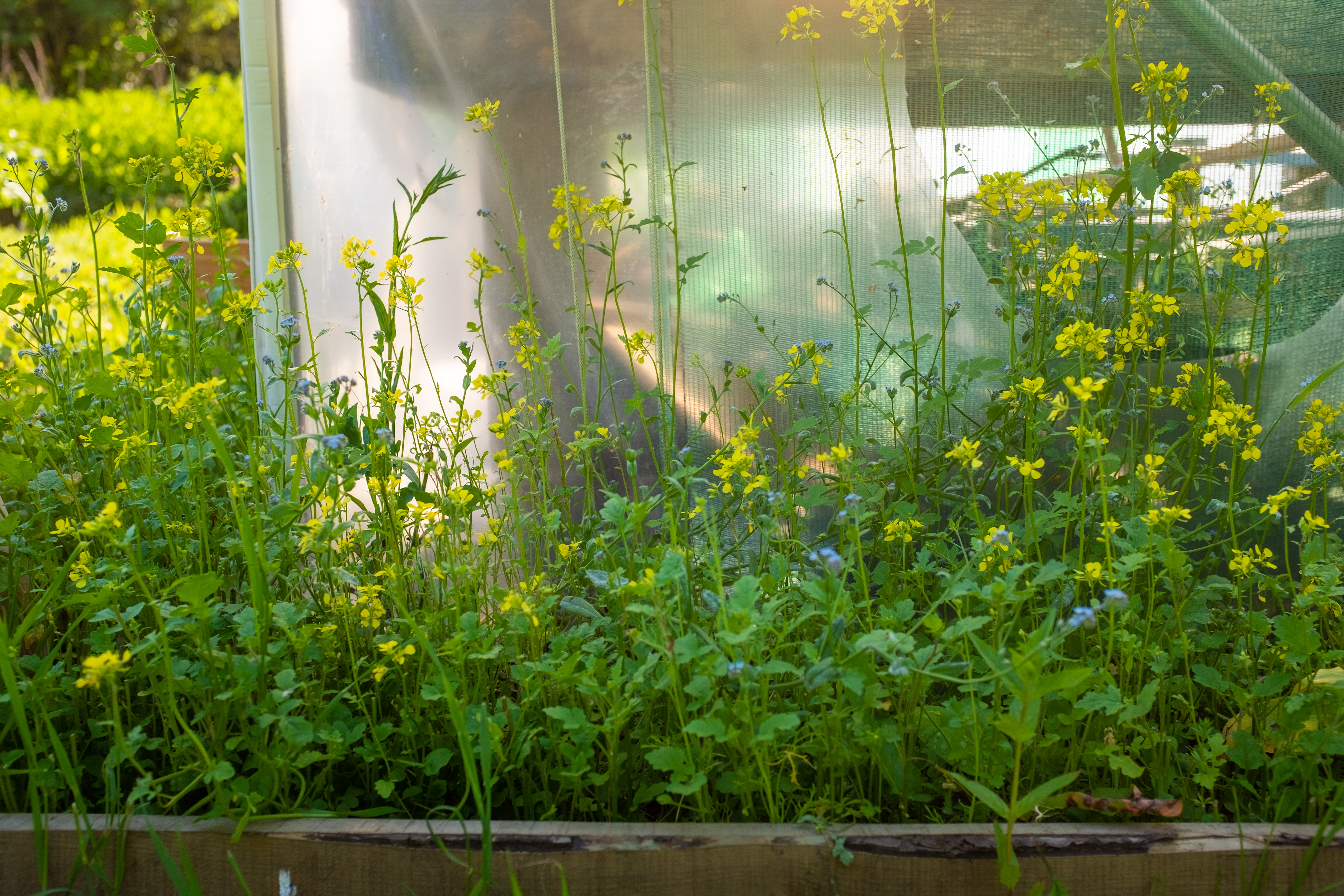
At the back of the tunnel, a grapevine has emerged again – I was convinced it didn’t survive the winter. This year I will try to train it onto the support bars along the ceiling.
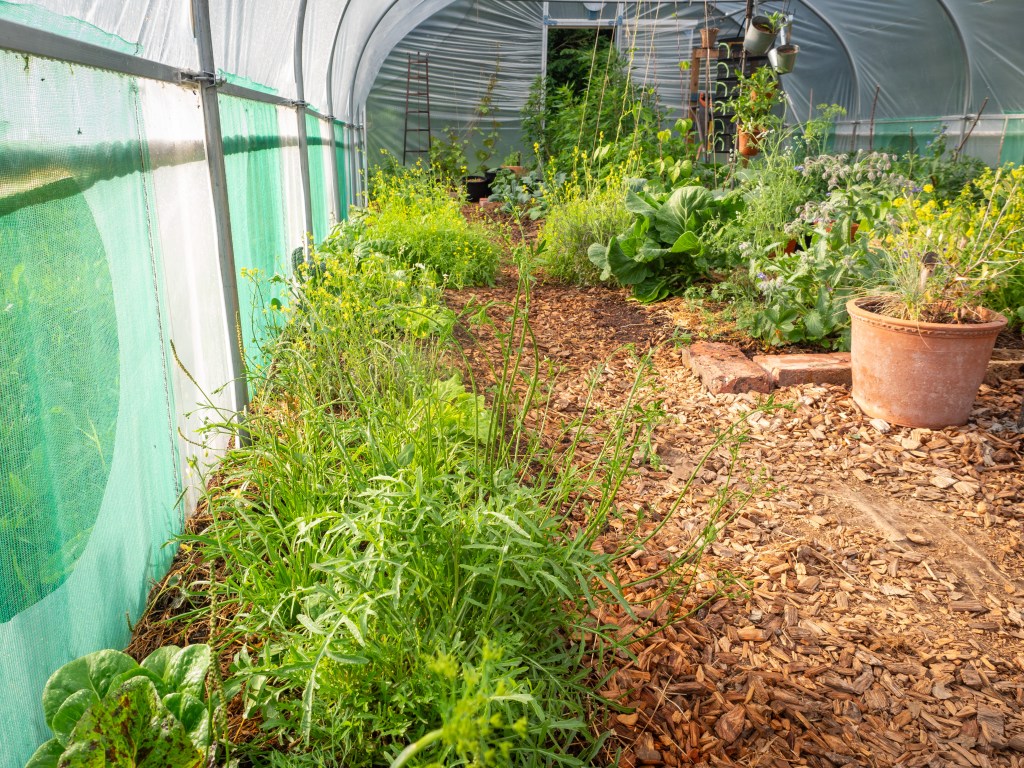
Aside from the new beds in front of the tunnel – new composting regimes have also started – including a leaf mould area, as well as two “lazy” composting bays. A black “dalek” hot composter is the latest to join the gang, as I need to up my game and produce as much compost for the next season as possible.
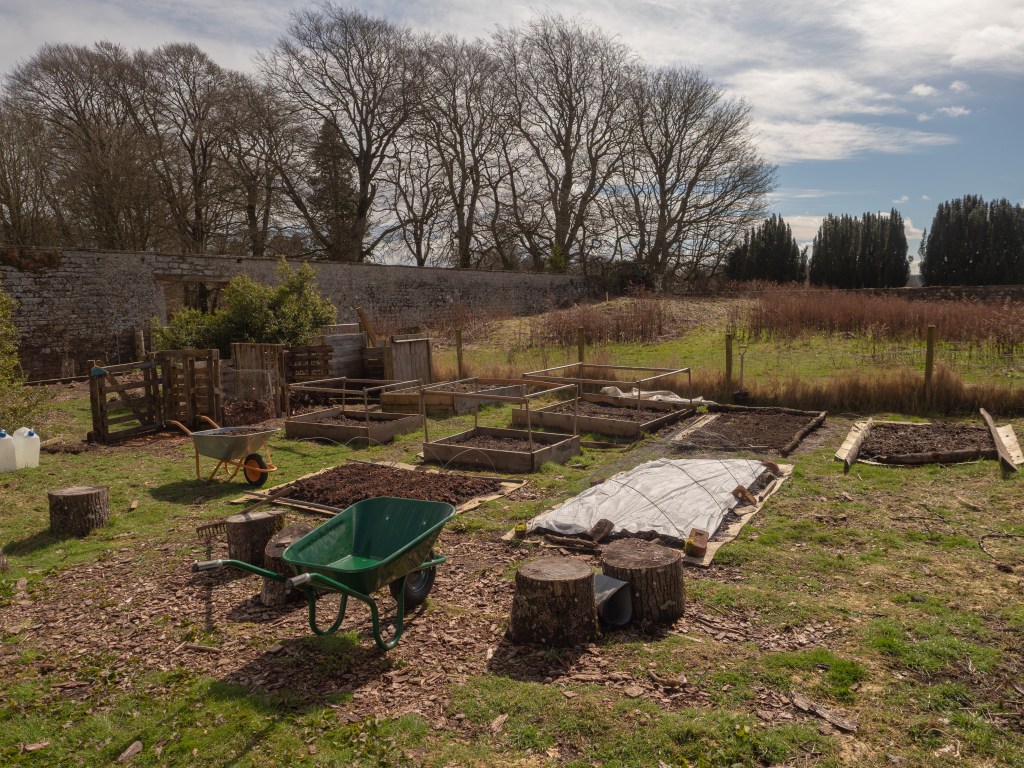
A deconstructed old compost bin provided a mound of soil that I have been drawing upon, but mostly lying in a pile unused. This year it finally became very useful – added to beds and containers, and then directly planted into for two varieties of:-
–Potatoes-
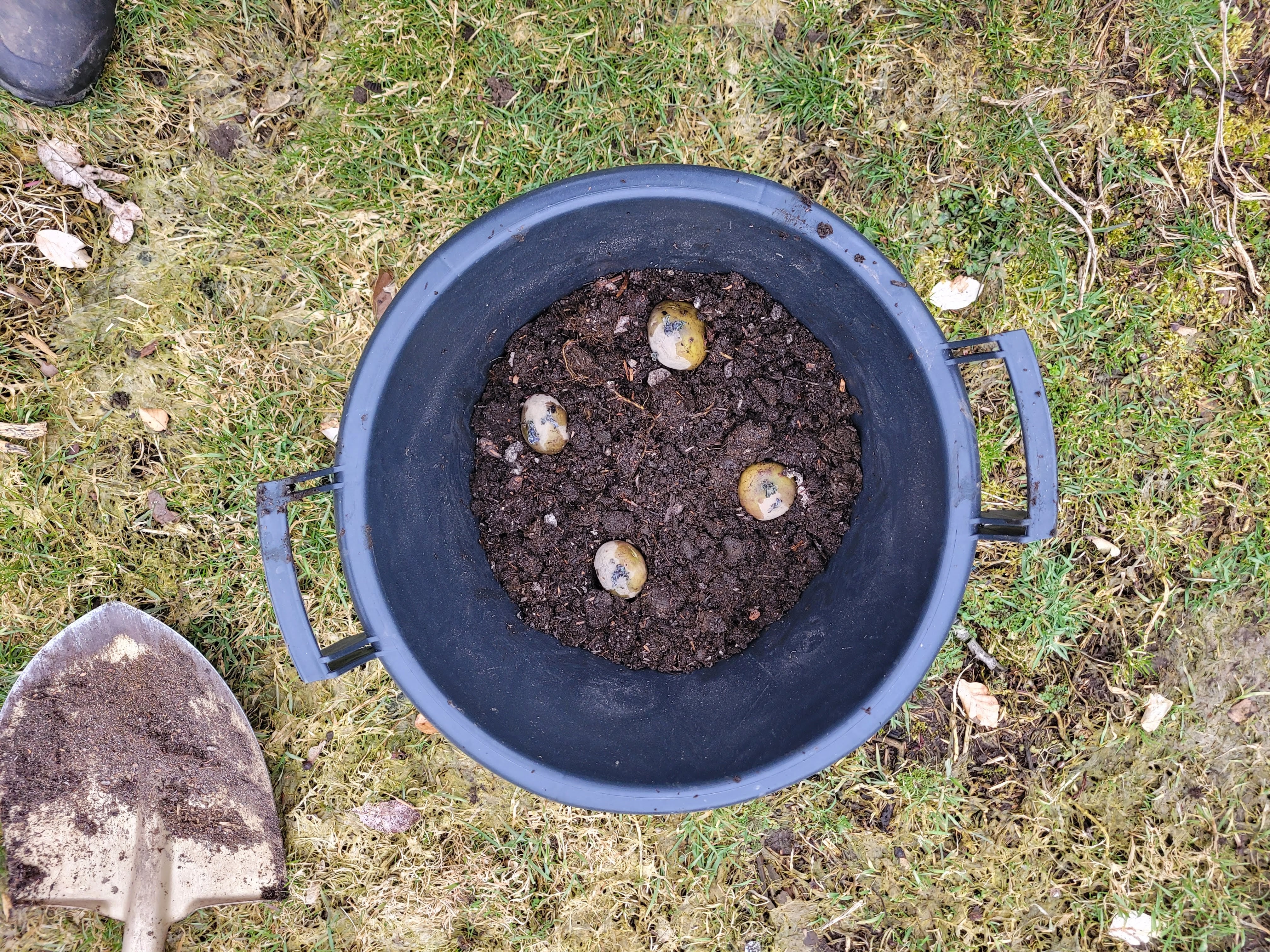
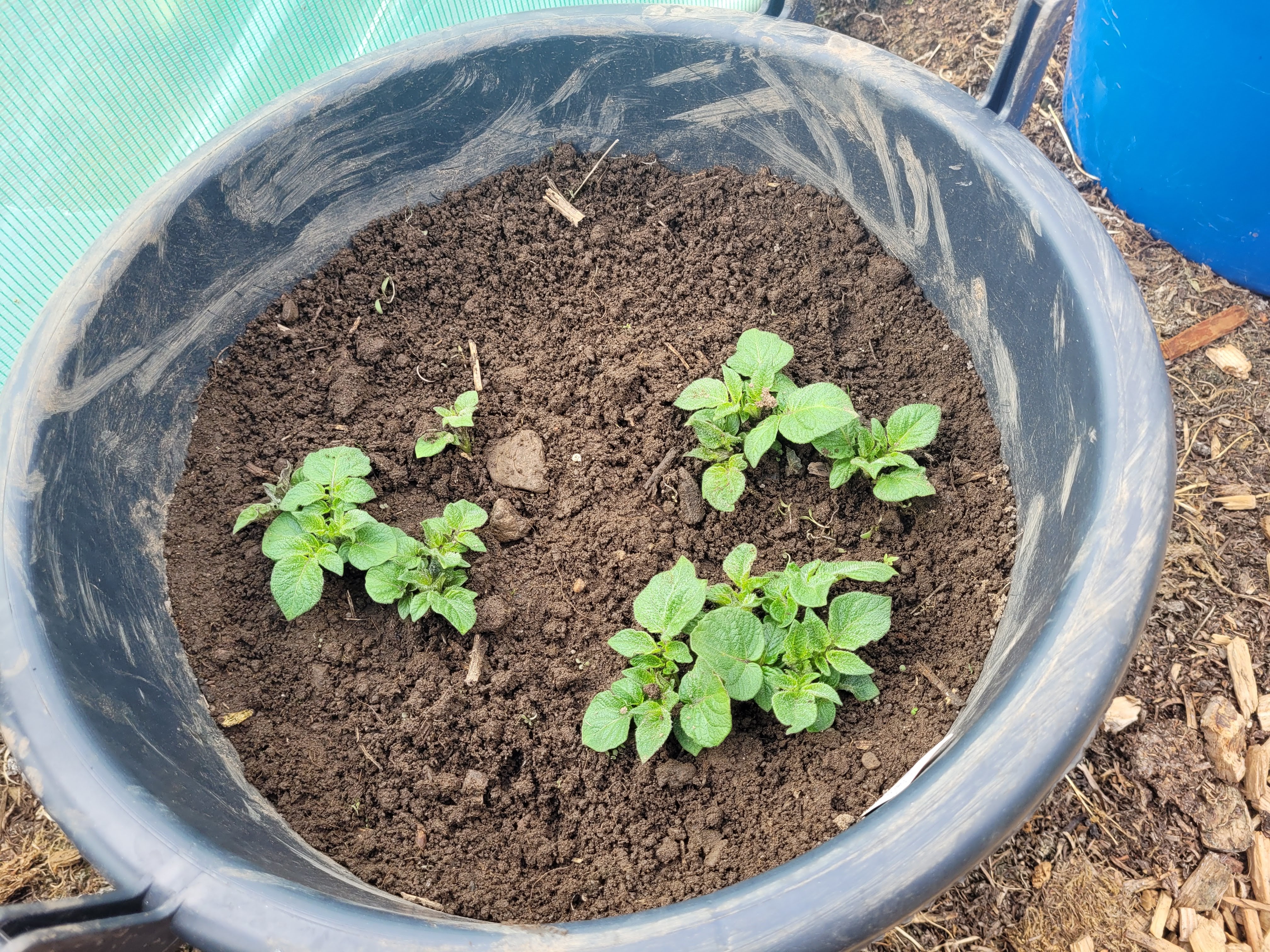
2023 marked my first ever adventure in potato growing. Due to my naivety, I went somewhat overboard in acquiring dozens of seed potatoes. Full list of varieties: Java maincrop, bambino, pink fir apple, rocket, kestrel, blue annaliese, casablanca, sarpo mira, maris piper and sarpo axona.
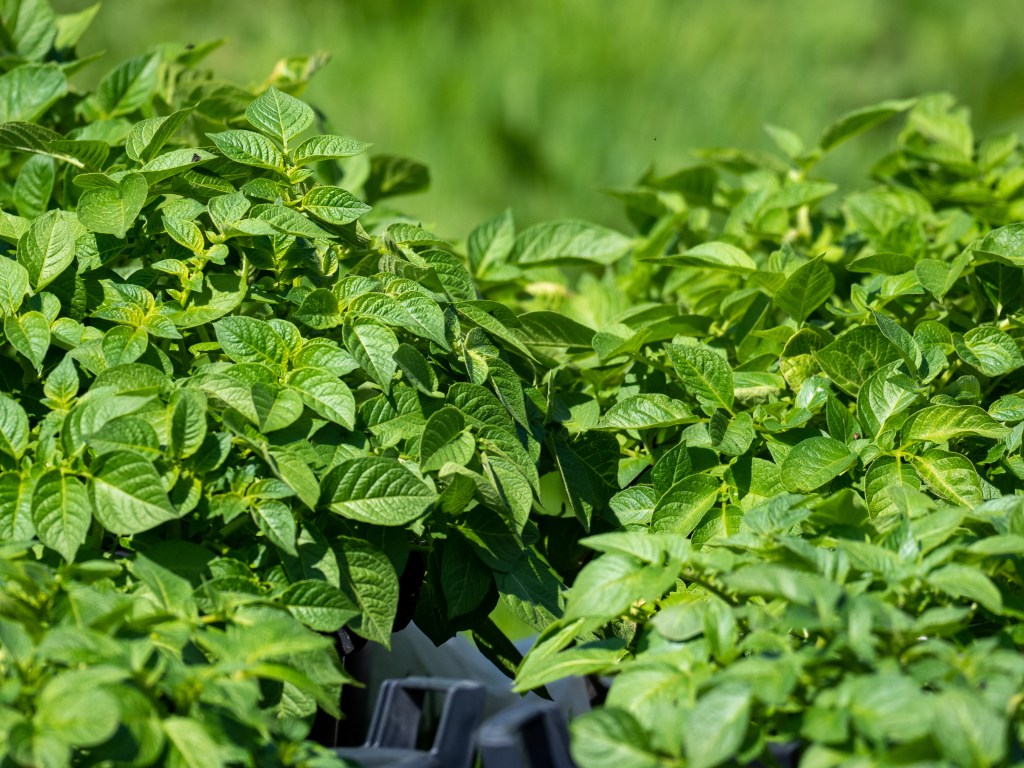
Where to plant them all? After chitting them, I decided to plant most first and second earlies in plastic containers (rocket, bambino, casablanca, kestrel) and maincrop potatoes mainly in the ground (apart from one container of sarpo mira). I tried planting some under plastic mulch sheets (pink fir apple, rocket, java), some in compost on a new no-dig bed (sarpo axona), some in the above mentioned topsoil patch (sarpo mira, blue annaliese), some in the ground on the “mountain” of top soil to the south-east (sarpo mira, maris piper), and some in the ground near the forest garden (bambino). There is also one blue annaliese planted in the polytunnel, in the ground. Potatoes in containers began life in the polytunnel for six weeks before being taken outside (protected on cold nights by fleece). The first plants to arrive were the rocket first-earlies, which appeared whilst protected in the tunnel.

I had over zealously cut many of these seed potatoes into halves or even smaller pieces to gain even more crops, hence I then assumed many would fail due to the lack of eyes for roots to grow from. I was wrong. I think that out of the approximately 120 seed potatoes planted, only about 3 or 4 plants didn’t emerge. The rest are in rude health. Or so I thought until, during the dry heatwave, I saw what I was convinced was early potato blight appearing mainly on the rocket variety and only in containers.
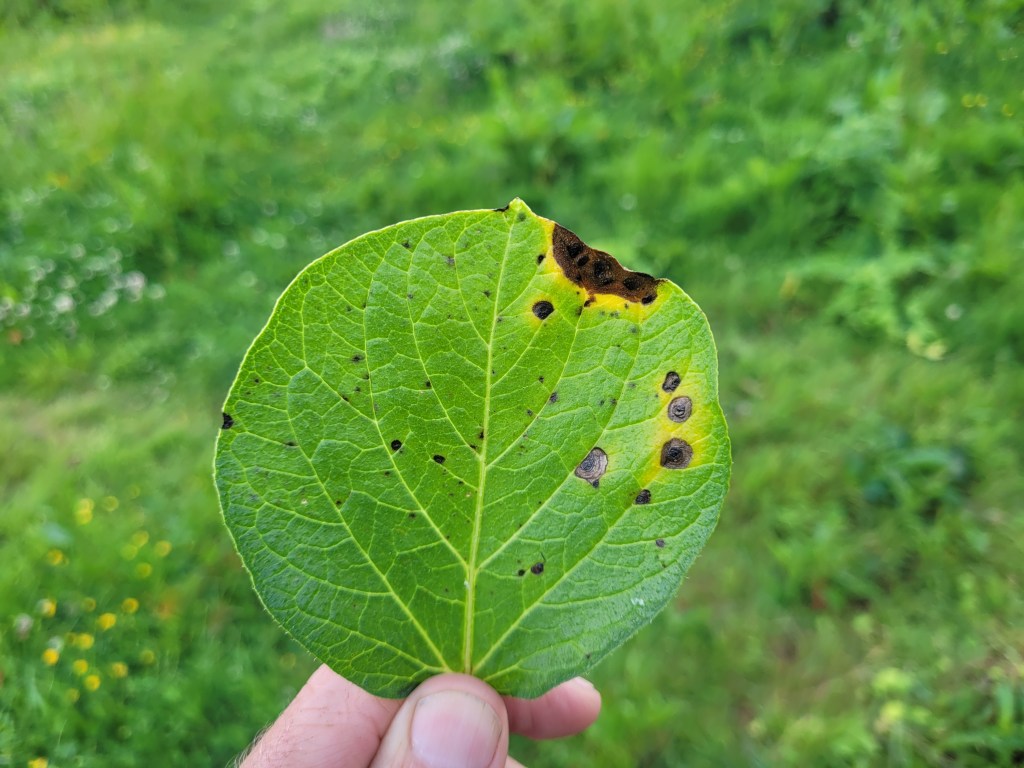
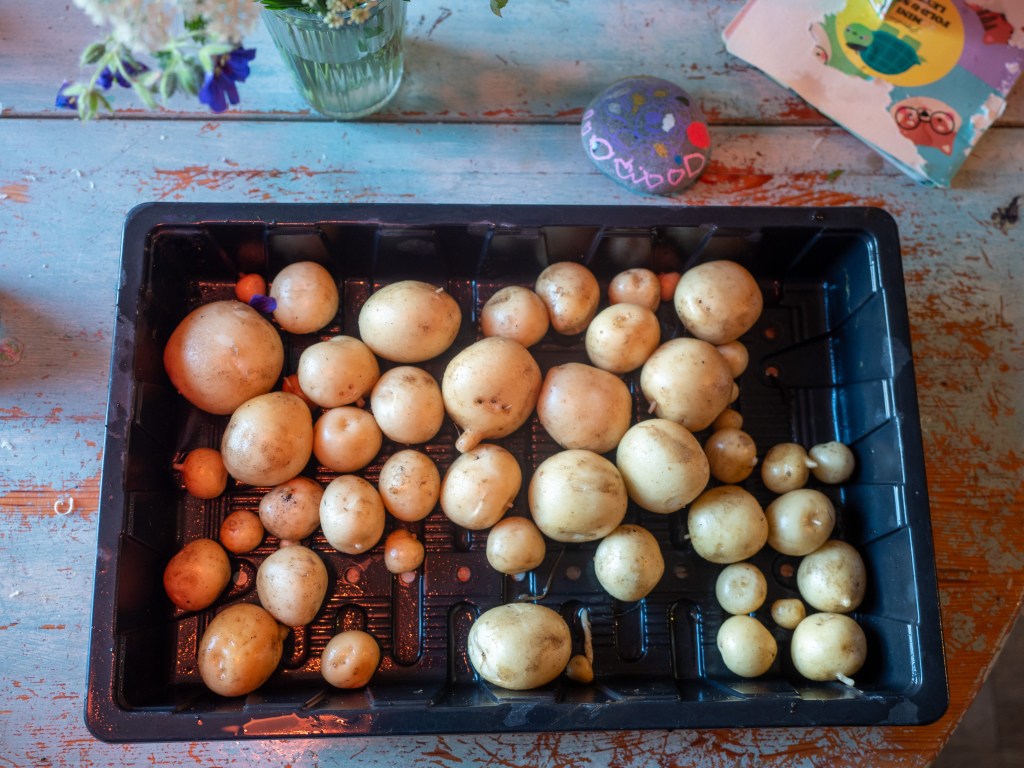
I cut that away – and ended up harvesting two containers before mid june – the first potato harvest of my life – and they were delicious! (though the rocket variety does need a fair amount of seasoning to help it along). Rocket is supposedly prone to early blight, so I was paranoid this had struck mine – though maybe I was wrong, as cutting away the foliage that I thought was affected seem to get rid of it entirely – and in the week or so since I don’t see any signs of any more blight suddenly appearing or spreading. Phew…for now. Chris tells me that maincrop potatoes will almost certainly get blight later in the year in the walled garden, as his always do. I still hope to be able to store some over winter – otherwise I’ll be hastily eating them, donating them, or selling them, as 120 seed potatoes may produce over two thousand tatties!
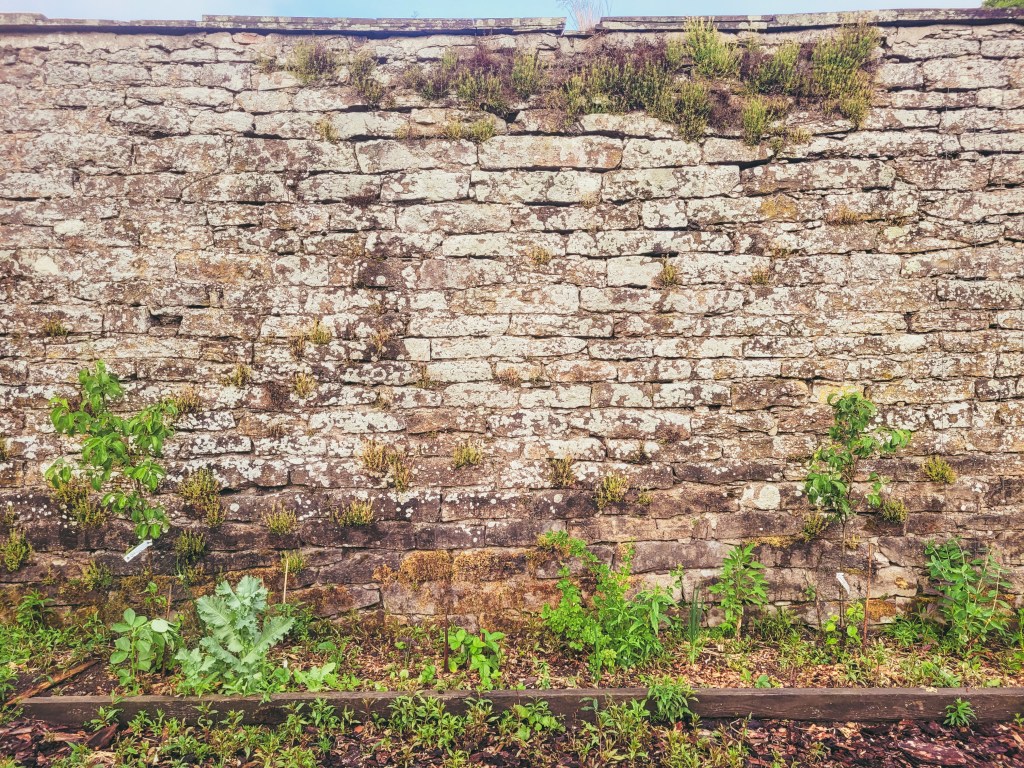
Along the west facing wall on the other side of the composting area, the “forest garden strip” which began life late last year is evolving nicely. Two young pears blossomed healthily (no fruit though, yet). Various berry plants are happy, and the veteran clematis plant which lived unhappily in a pot for years since coming with us from London, has now climbed up to near to the top of the huge garden wall.
Together with last year’s remaining seed collection, a new set of seeds are being experimented with this year. Aside from tomatoes, peppers etc. the biggest successes so far are the irrepressible asturian tree cabbage (a short lived perennial), the copious sutherland kale and… some quinoa! I hope to get some success with quinoa as a plant to harvest for grain, as plans are afoot to explore the growing of grain crops in the rough ground quadrant.

 The Bamff Walled Garden.