
Update on the Forest Garden quadrant.
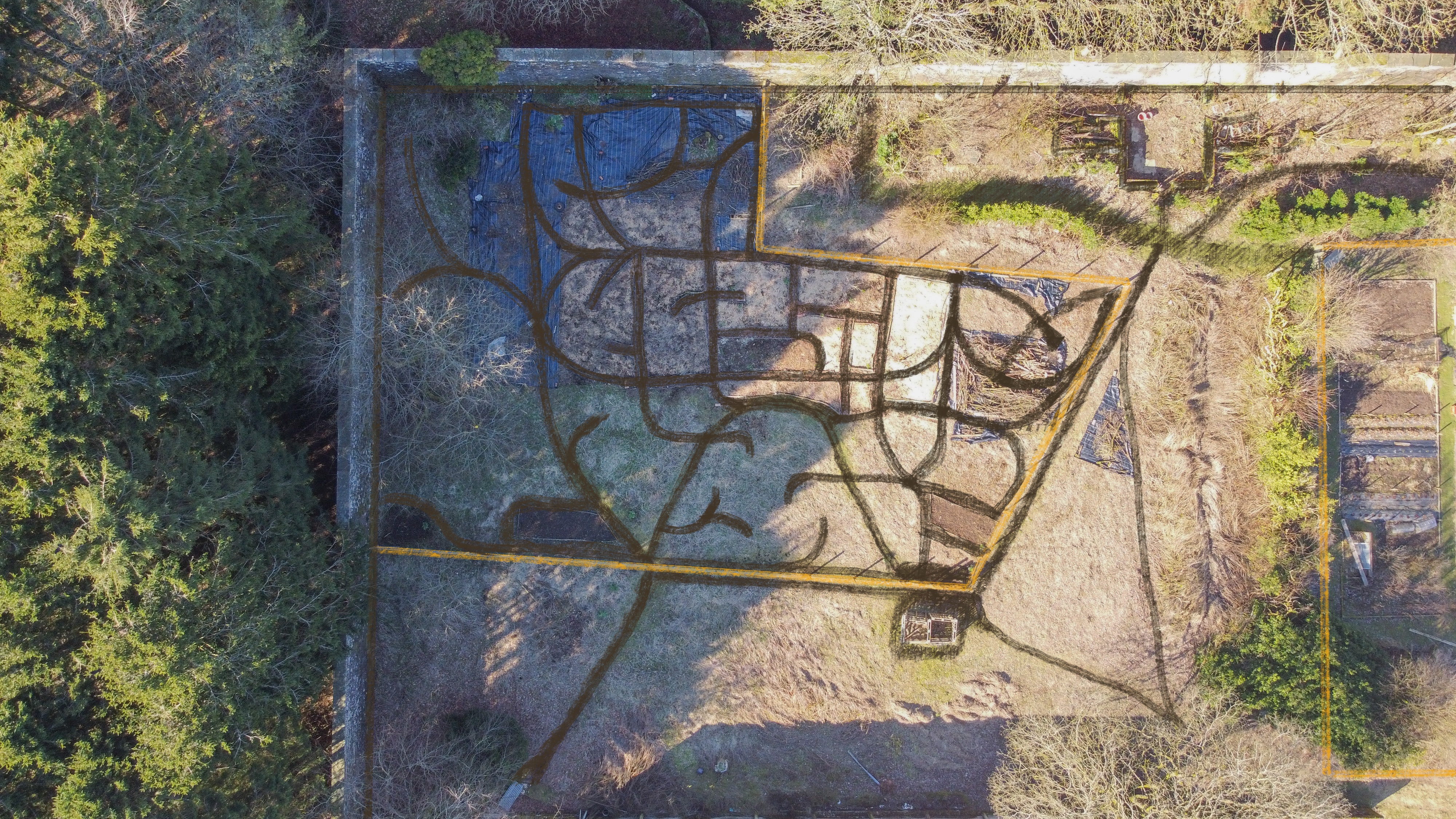
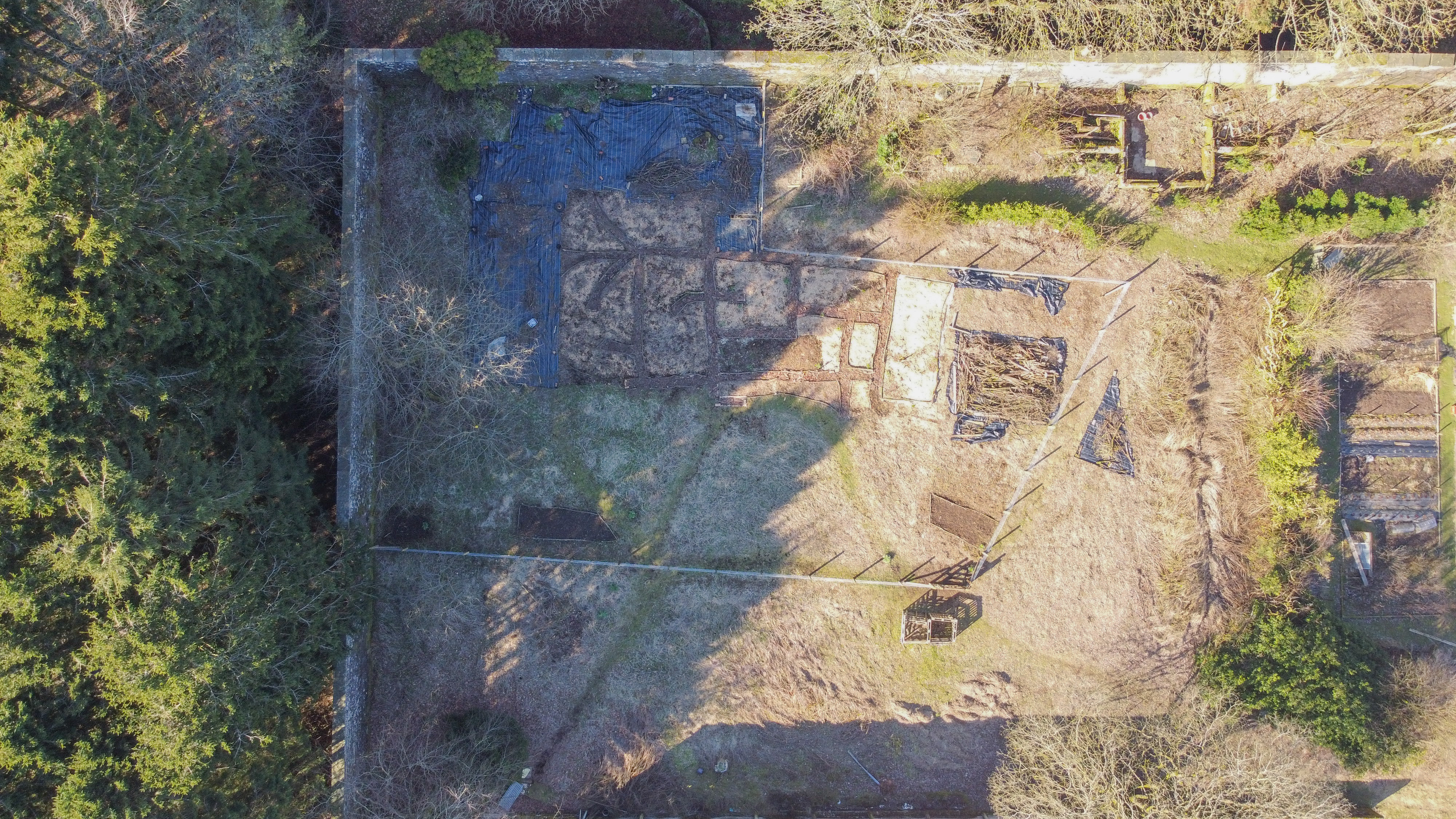
In my last post about the forest garden project, I described the tentative process of uncovering some of the vast plastic mulch sheets, liberating large expanses of space, and then planting during some very cold late winter conditions. I also imagined a path network, and remarked that very few of the old weeds seemed to be emerging from those once covered areas.
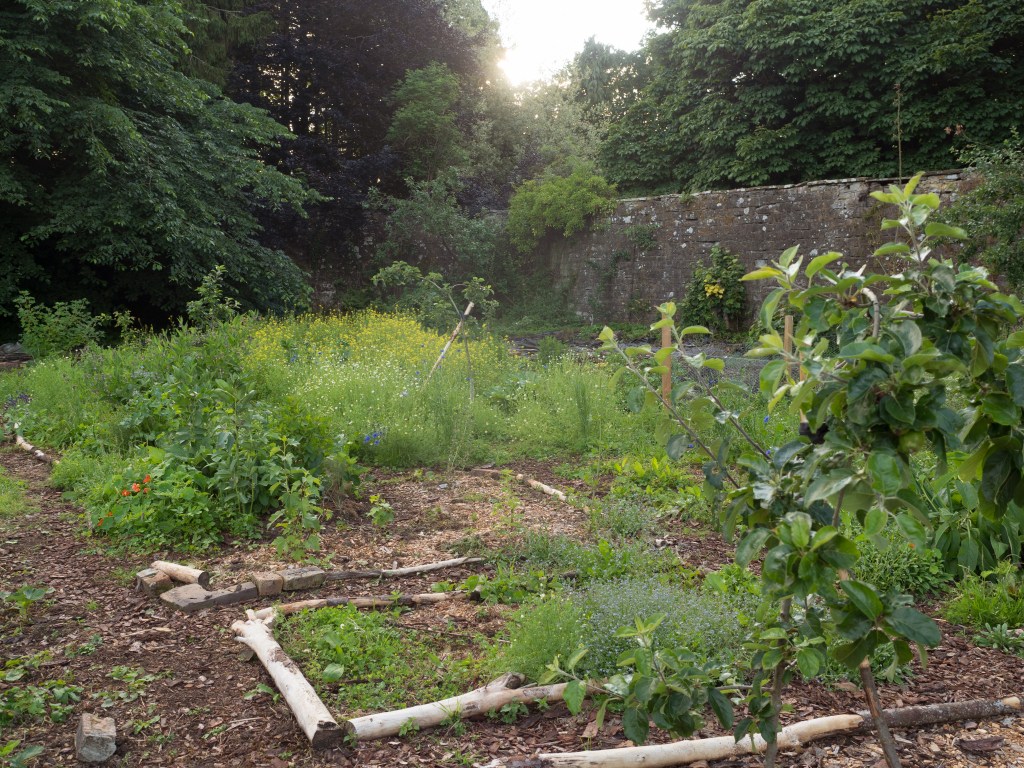
Well…that’s not quite the case. As my big lesson here is that, whilst some weed roots can die relatively quickly when smothered after a season, the seeds, of course, simply remain. And there are seemingly thousands of them. What’s interesting though is the variety. In its climax /neglected form from recent years, the dominant weeds are usually a towering jungle of rosebay willow, nettle, ground elder, all intertwined by cleavers (also evocatively called “sticky willy”). Now that they’ve been suppressed in this particular area, one sees a whole new array of “weeds” growing from seed, some of which are to be welcomed – such as the beautiful forget-me-not, or dead nettle – or the sudden spectacular expanse of glorious wild chamomile. In fact they are all “welcome” as such, but the battle for ground cover must be guided so that the forest garden abundantly produces all the edible plants wanted for future foraging. Creeping buttercup is also now emerging prolifically, for example, and that probably needs to be kept in check, due to its ability to suffocate other plants of nutrients.
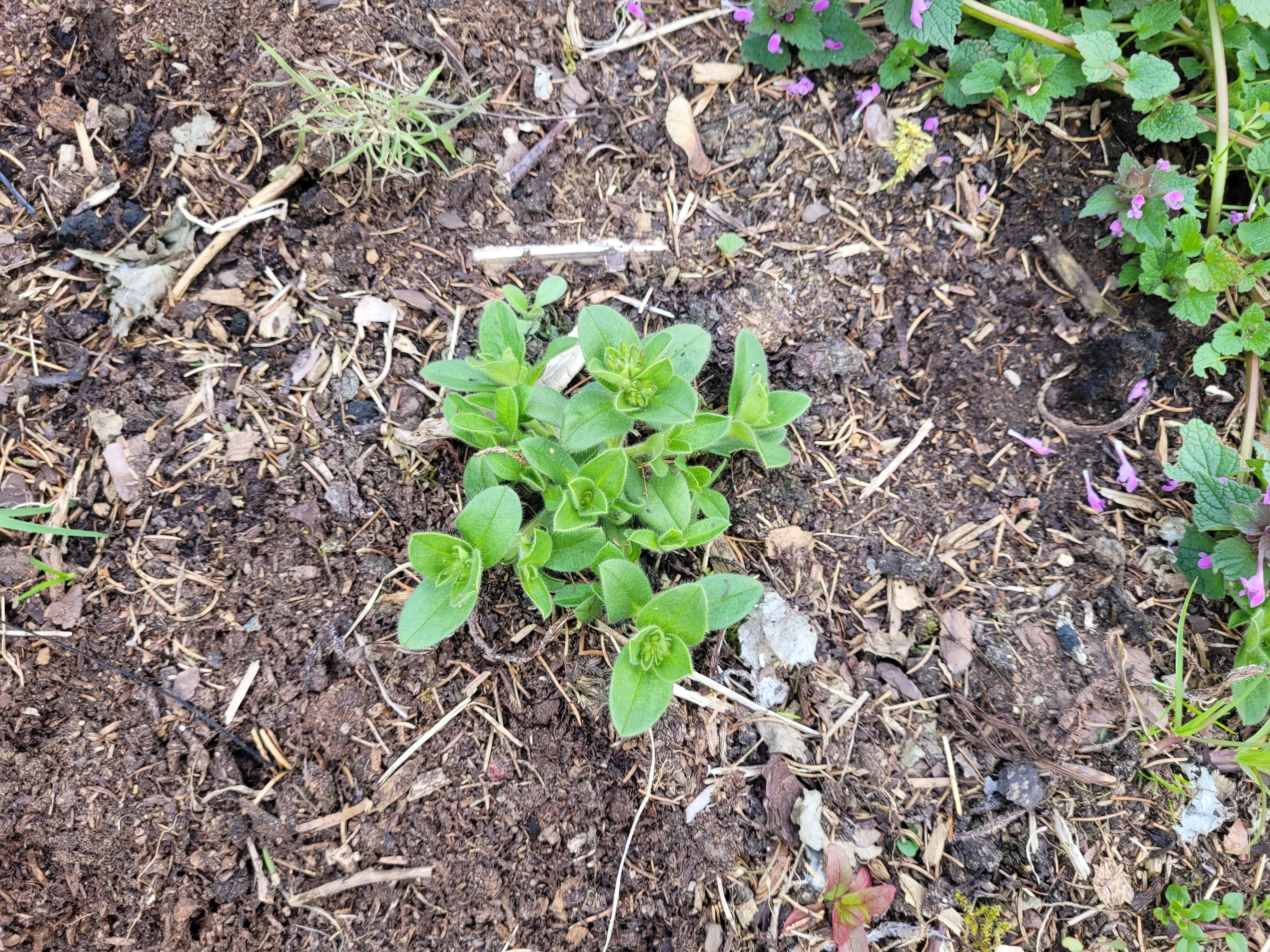
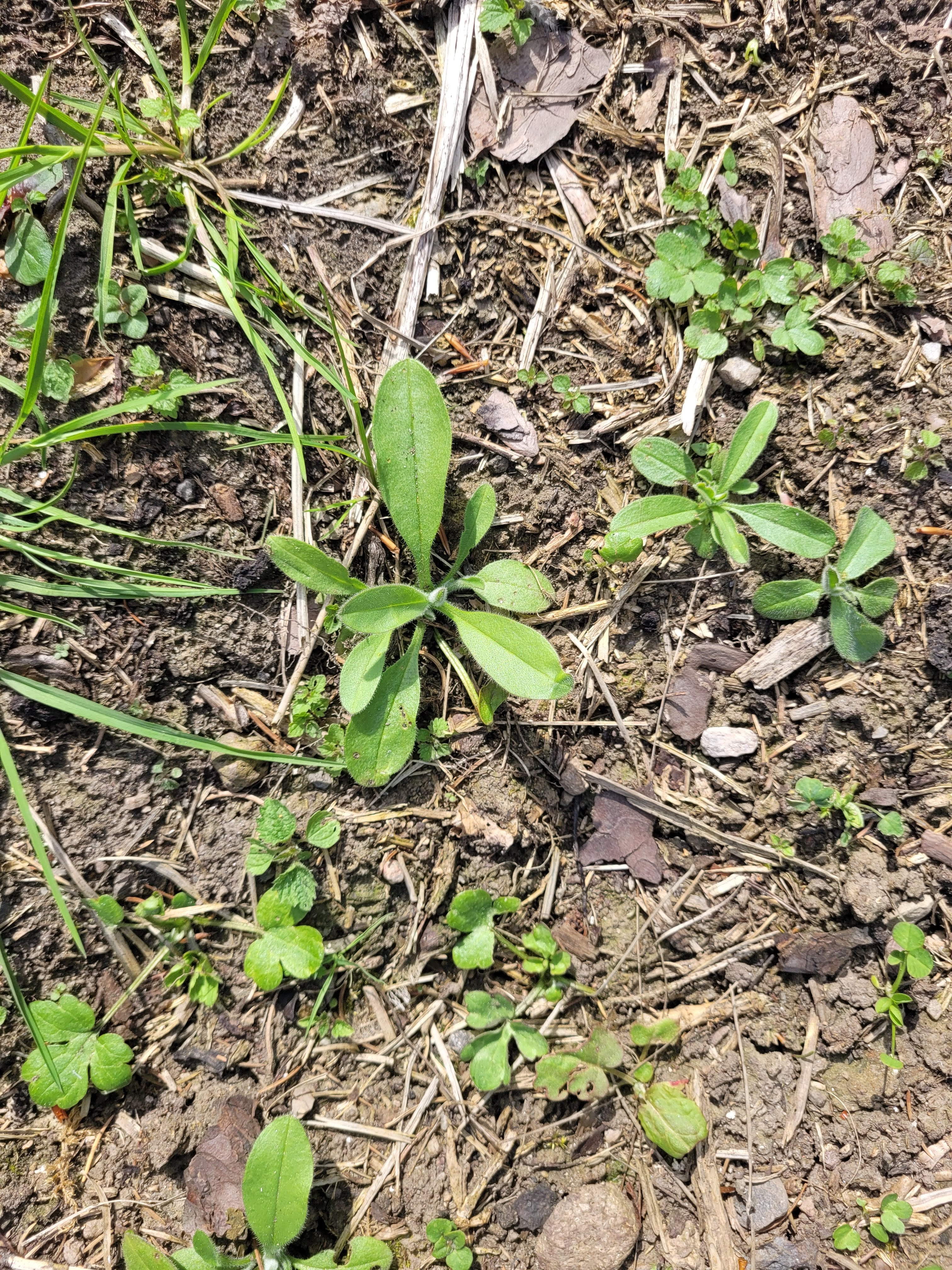
Hence regular casual hoeing – focussing mainly on rosebay willow, cleavers, buttercup, dock and nettle is currently occurring. But this is casual rather than meticulous, so some will possibly establish themselves, though hopefully only in limited amounts. Other weeds such as forget-me-not, dead nettle and mouse eared chickweed are left largely to their own devices. Then there are numerous others which I simply don’t recognise yet, and am mostly leaving those too. Apart from those tiny low growing micro-white flowered things whose name I have forgotten and which are usually just pulled out by hand. However, this approach may turn out to be unmanageable, as previously dominant weeds may once again take over. And so, rather than weed the garden every day forever, I may need to revert to some kind of suppression – probably cardboard or maybe even corn starch mulch sheets, plus some woodchip. Alternatively, perhaps the fast spreading wild strawberries and mints might instead win out. Or maybe the mexican marigolds may clear an area entirely alone…
In any case, there is so much literal ground to cover, and my deliberate plantings and sowings have only marginally achieved this. But this is only the beginning..
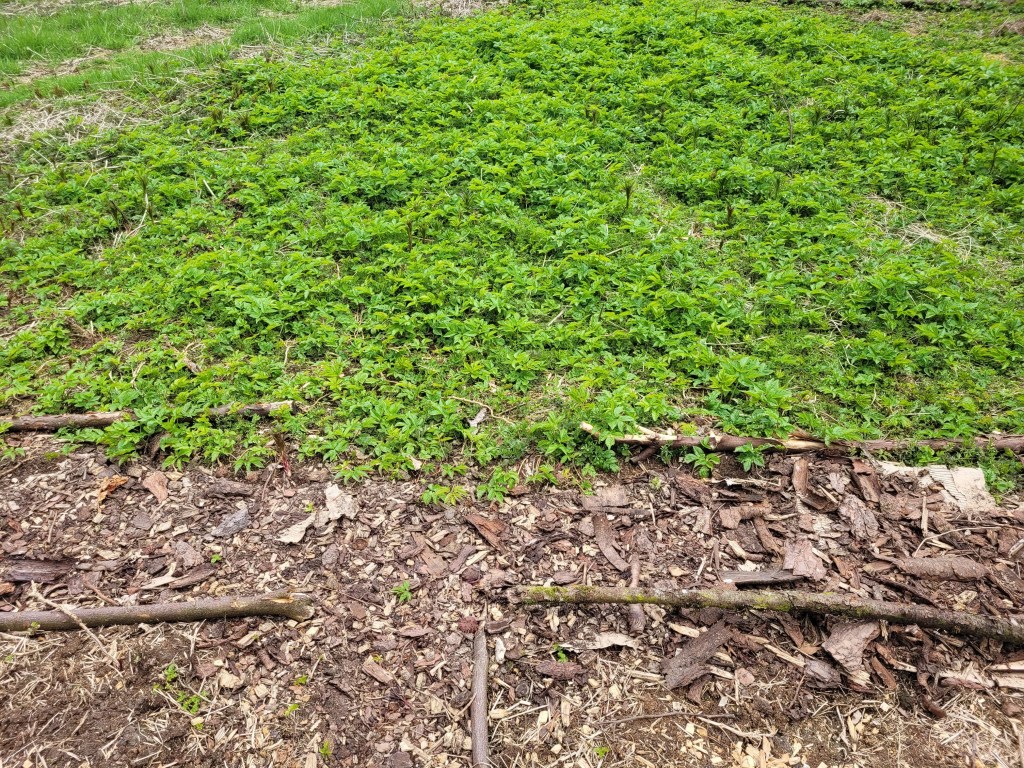
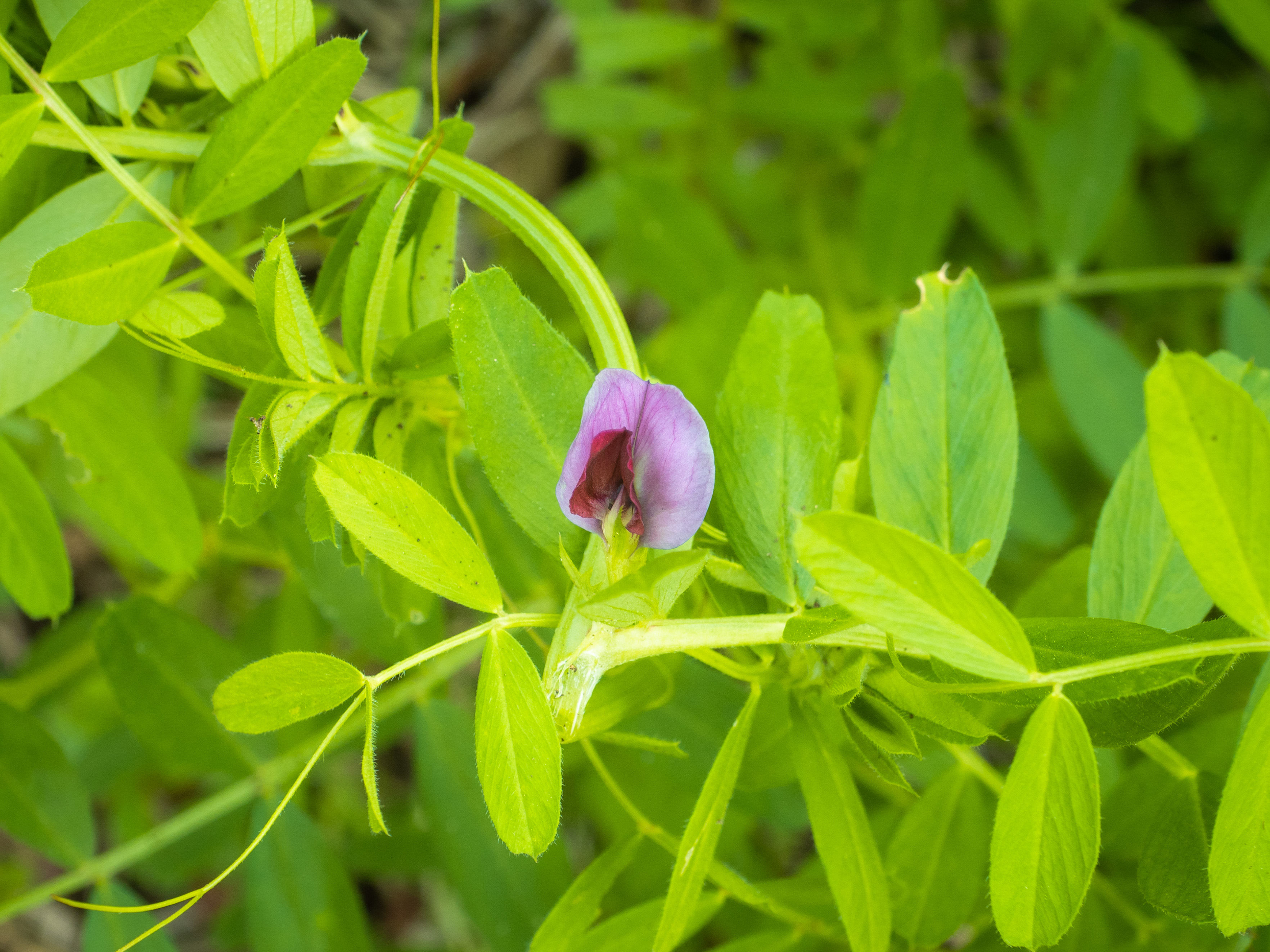
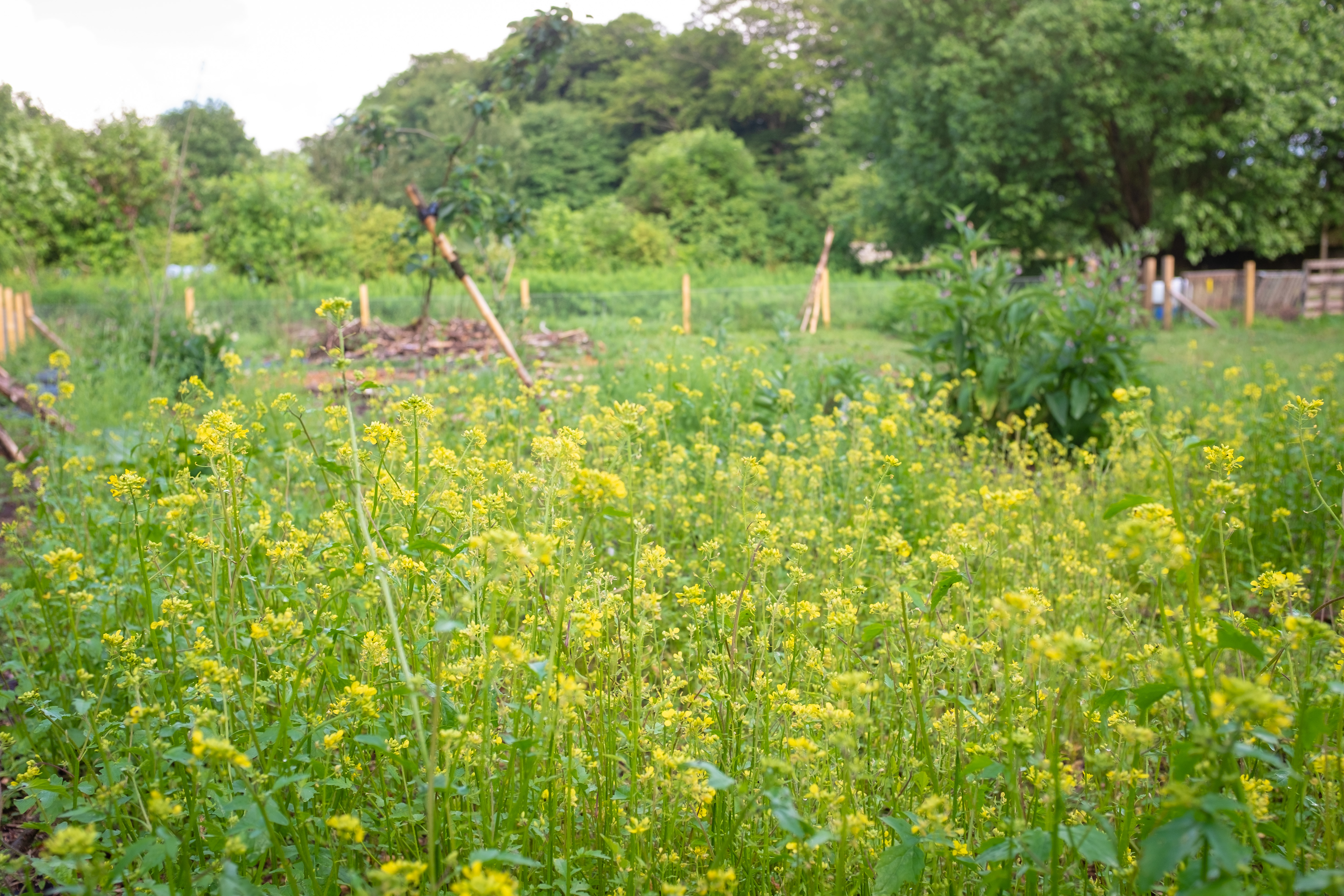
Speaking of sowings, my daughter Flora helped to sow wildflowers and also some of the generous bags of “green manures” seeds that I bought in February/March, and which have mostly since germinated; with spectacular success particularly for white mustard, vetch and field beans. I like to forget that they are specifically marketed as “green manures” – and instead enjoy their colours, structures and their massive contribution to both ground cover and delicious foraging and I expect that these will become a permanent feature in future years, especially as many will self seed. But the impressive expanse of these flowers and foliage give a quick-fix “illusion” that a garden has been quickly constructed – though in reality, various perennials have only just been planted or sowed relatively sparingly.
Which include:
Wild and cultivated strawberries, different varieties of loosestrife, cardoon, globe artichoke (from seed), rhubarb (transplanted from elsewhere at Bamff), wild and non wild garlic, walking onions, bocking 14 comfrey, lovage, rose campion, ginger mint, perennial kale, lesser celandine (transplanted), Siberian purslane (transplanted), winter purslane (from seed), welsh leek, red veined sorrel, hyssop (transplanted), jostaberry, worcesterberry, wild raspberry, blackcurrant, whitecurrant, four types of gooseberry, honeysuckle, sedum, pulmonaria, horseradish, lemon balm, potentilla, scabious, sweet woodruff, babingtons leek, minutina, asturian tree cabbage, climbing kiwi, applemint, walkie leeks, chives, bronze fennel, oregano, wild pansy, lupin…
I’m sure there are more, but that’s probably enough for now..
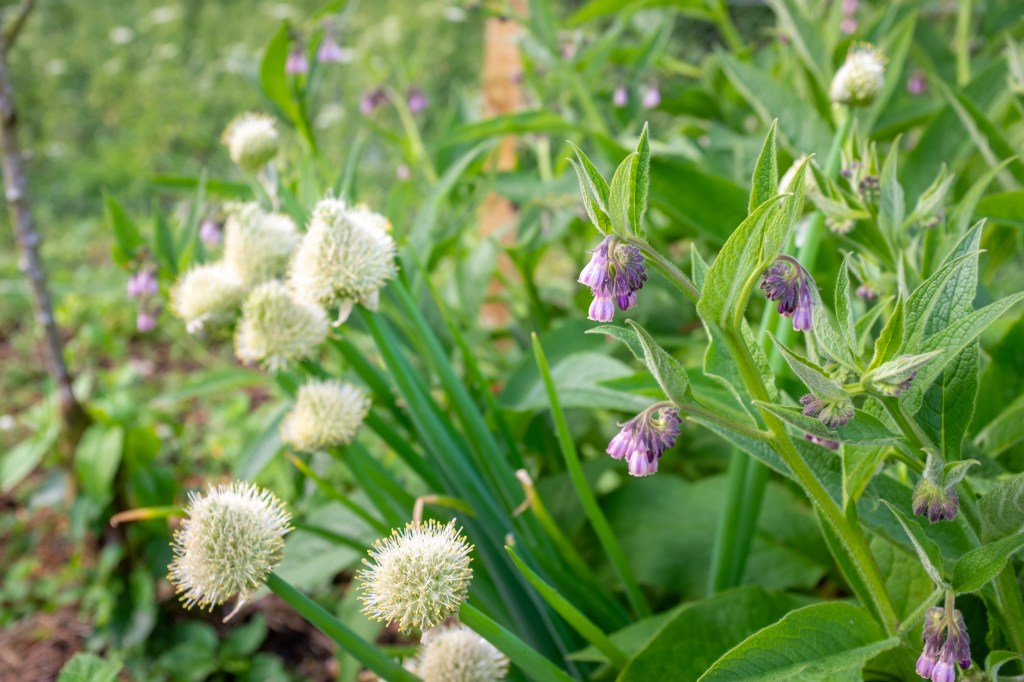
A small number were planted in a small experimental bed last year, and the rest were either sown from seed, transplanted from elsewhere at Bamff, bought online, or donated by friends.
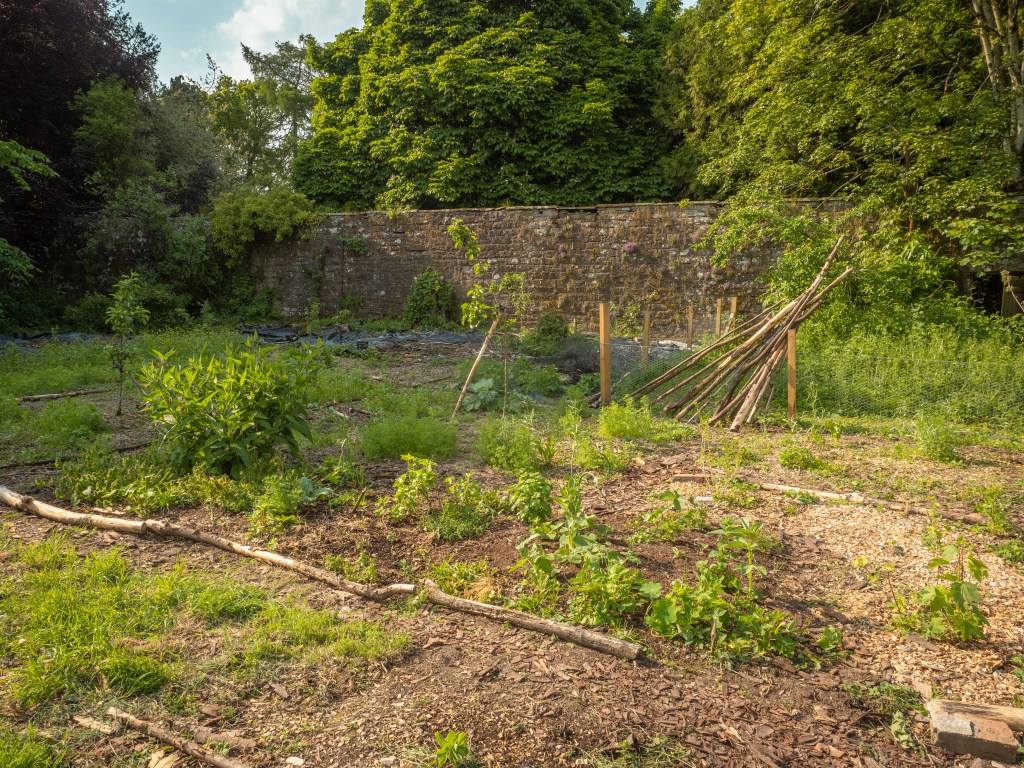
The choices I made were often informed by my historic interest in herbs, and my more recent introduction to permaculture and forest gardening – often inspired by books and established/establishing gardens elsewhere. Such as the legendary garden of the late Graham Bell in Coldstream, or the younger project from my ex PDC tutor Carole Egner in fife.
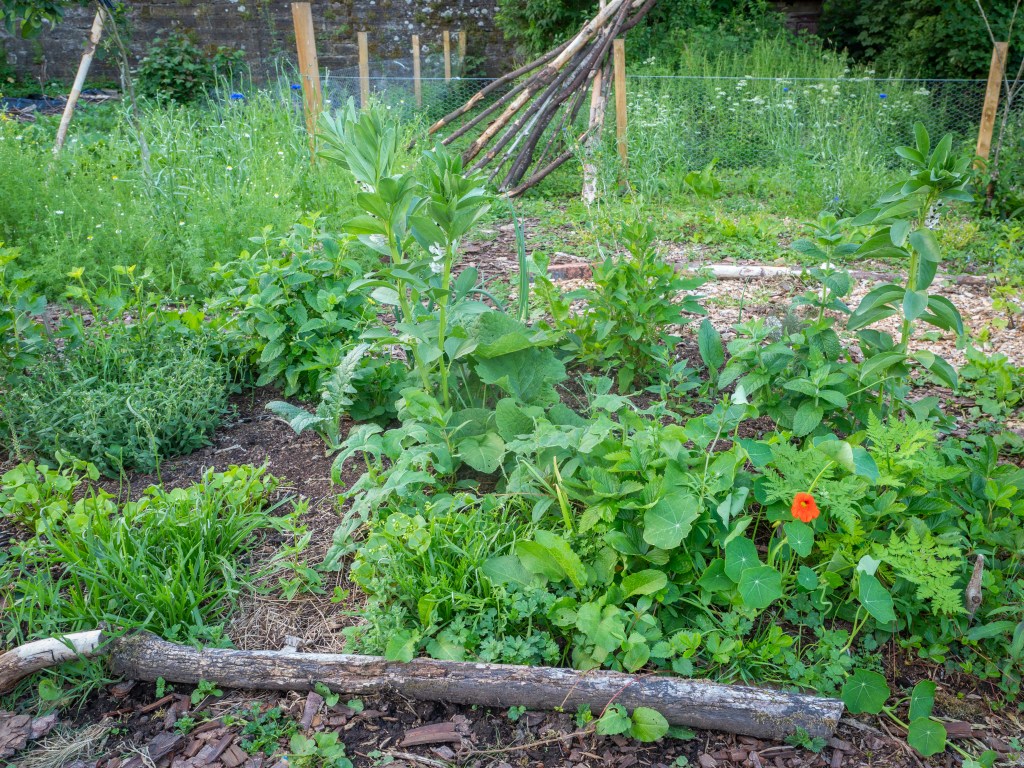
After a long cold early spring, when it seemed nothing would evolve at all, and even though there was an unusually long and very dry late spring heatwave, it all suddenly burst into life, and I almost burst into tears to see it begin to flourish – giving me for the first time a real tangible sense of what the future might actually be like for this area: a generous and abundant haven of beauty, foraging, resilience, and reflection.
Then there are the fruit trees. Six apple trees were originally planted in late 2021. Two were ring barked by rabbits (prompting the rabbit fence construction). One was damaged in a storm. Of these three one is definitely dying off, but new shoots are emerging above the graft, so it gets a second life. Others are producing very little or no fruits. Overall this is a serious setback for those three. However, the remaining three, plus a new one added in early spring this year have all blossomed and now have set around 70 little baby apples between them – which is heartening. A massive increase by about six times compared to last year, and with fewer viable trees.
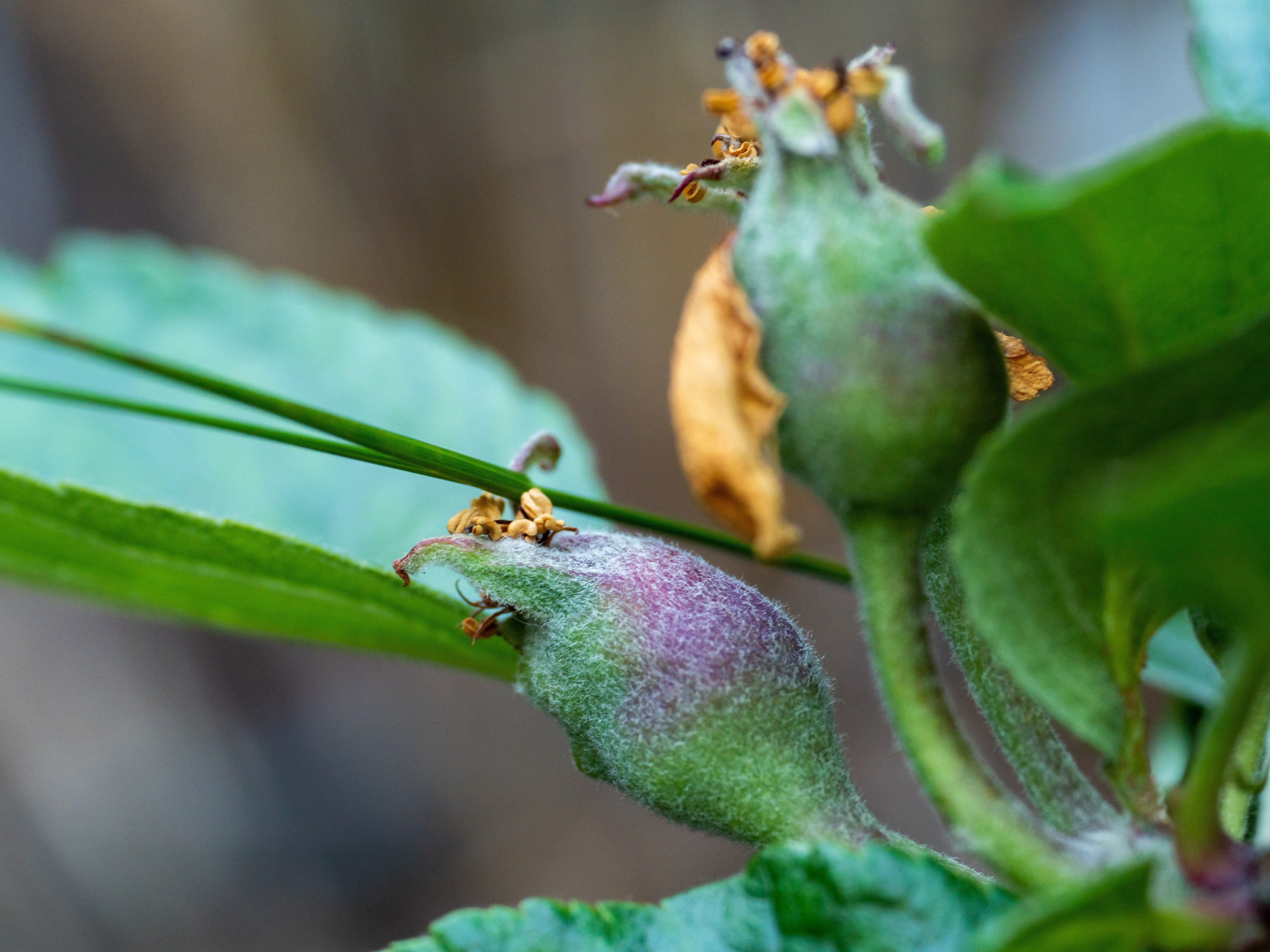
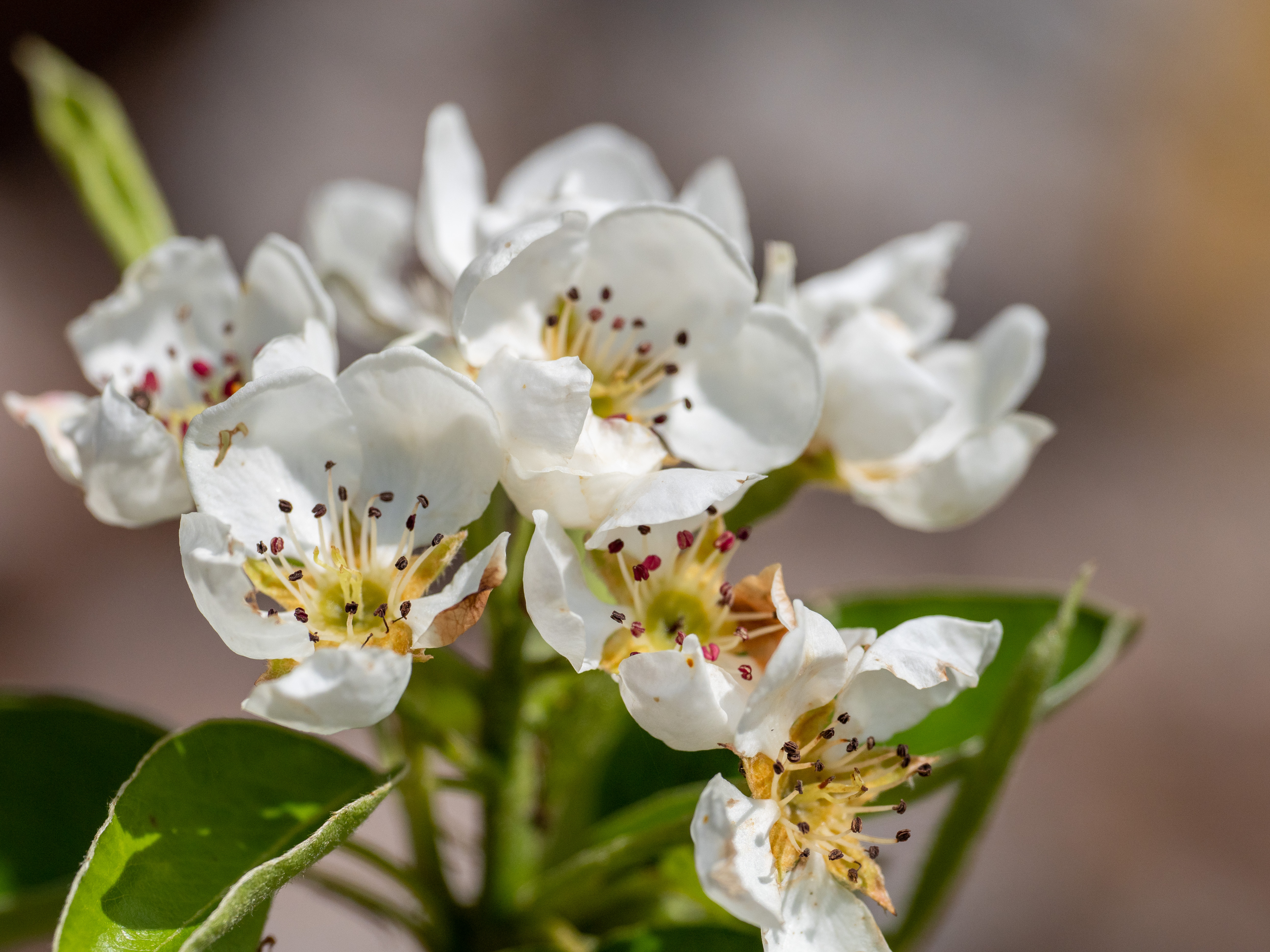
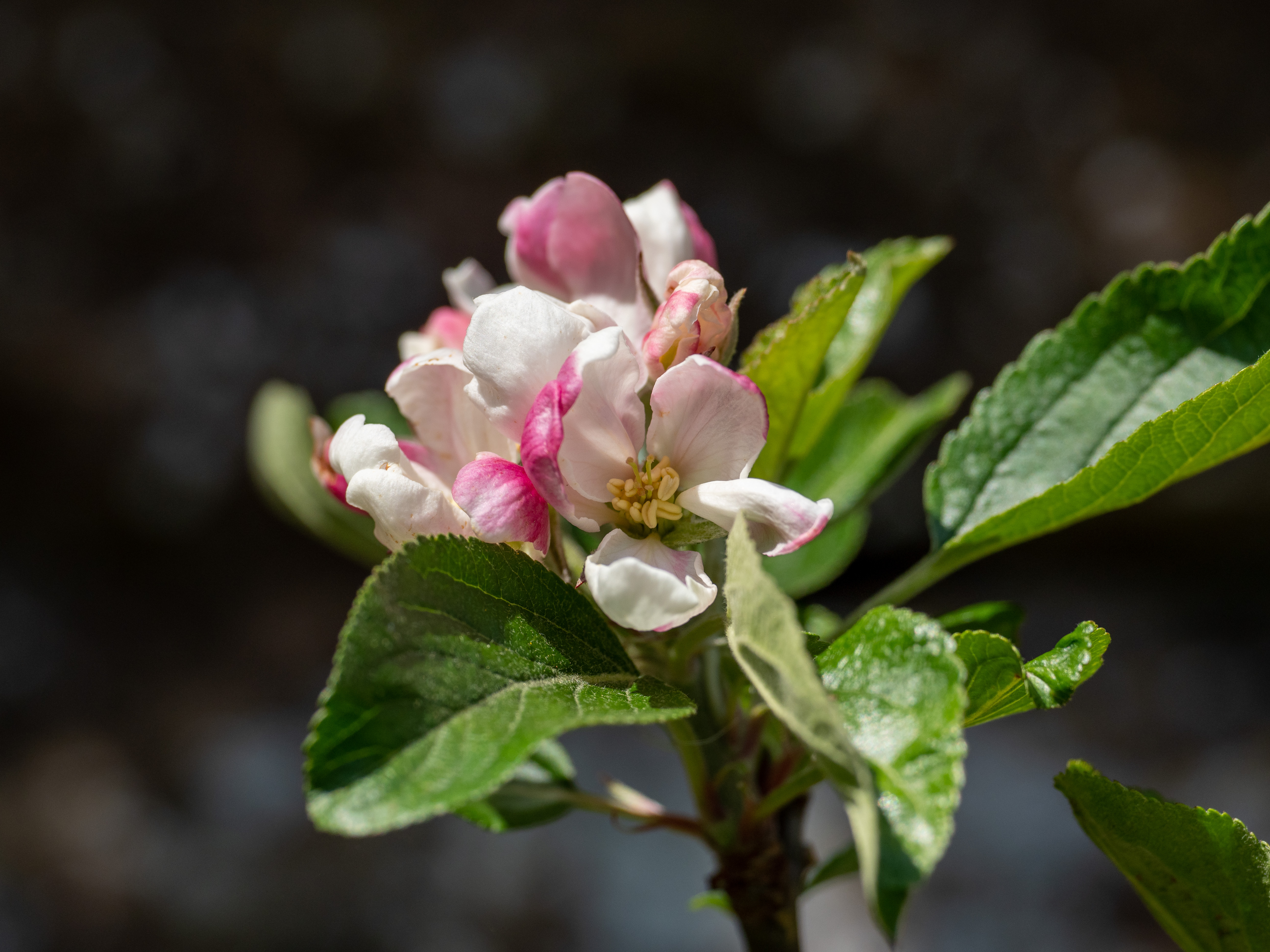
Some other new fruit trees include a young gorham pear tree, and some very young plum trees – victoria, damson, mirabelle and greengage. Needless to say, although most did produce blossom, there are no fruits coming quite yet.
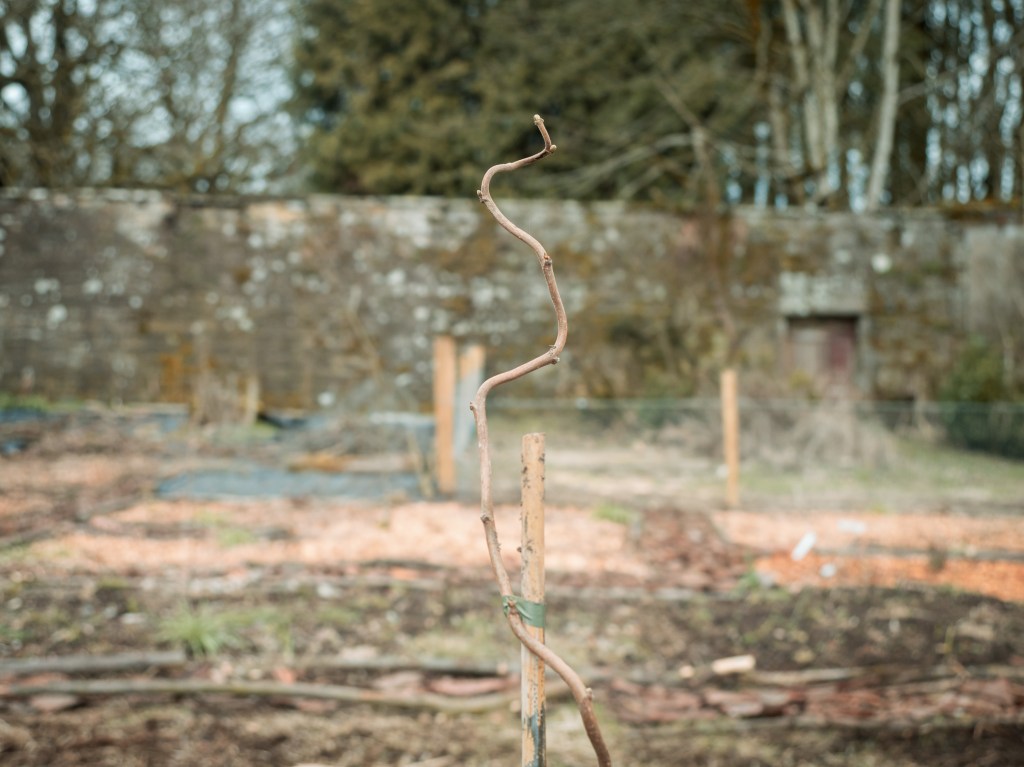
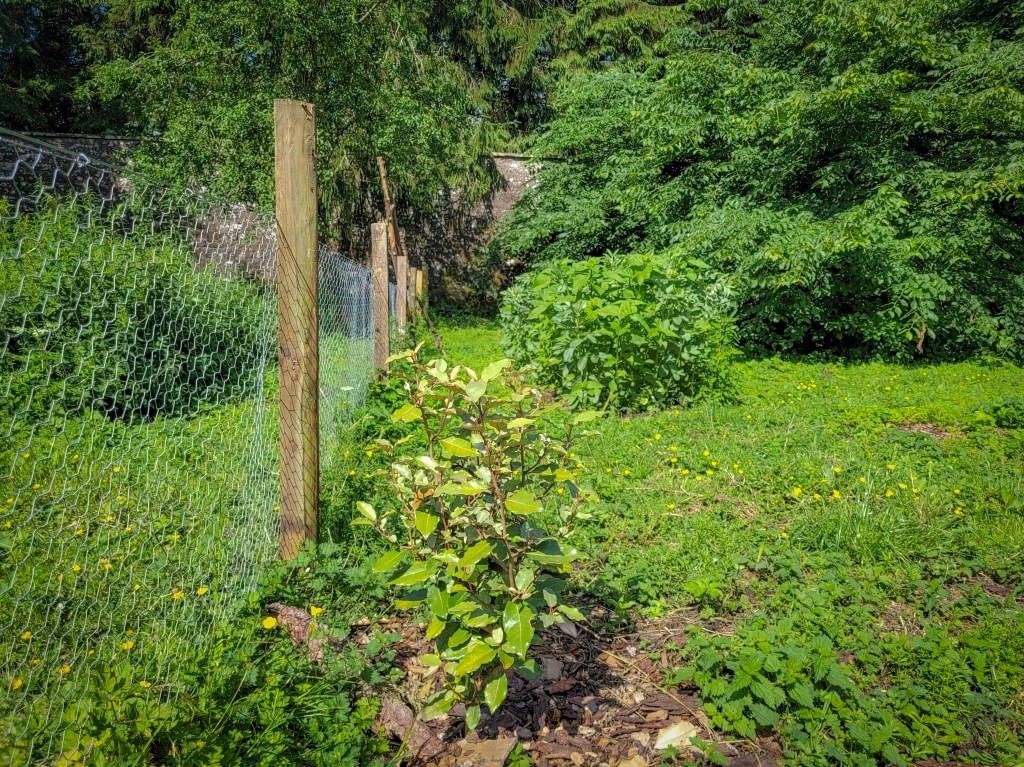
Finally – some other “food forest” trees were planted – contorted hazel, silverberry (elaeagnus) and siberian pea tree. The hazel takes centre stage, the elaeagnus will hopefully develop into a hedge along the rabbit fence, and the siberian pea tree is, well, currently very tiny, but larger than a pea, at least.
Next to the forest garden is the old footprint of the victorian heated greenhouse by the south facing wall. I’ve had a little clear out of pieces of old glass and created some space for a large terracotta pot, with a fig plant in it… maybe it will survive the winter?
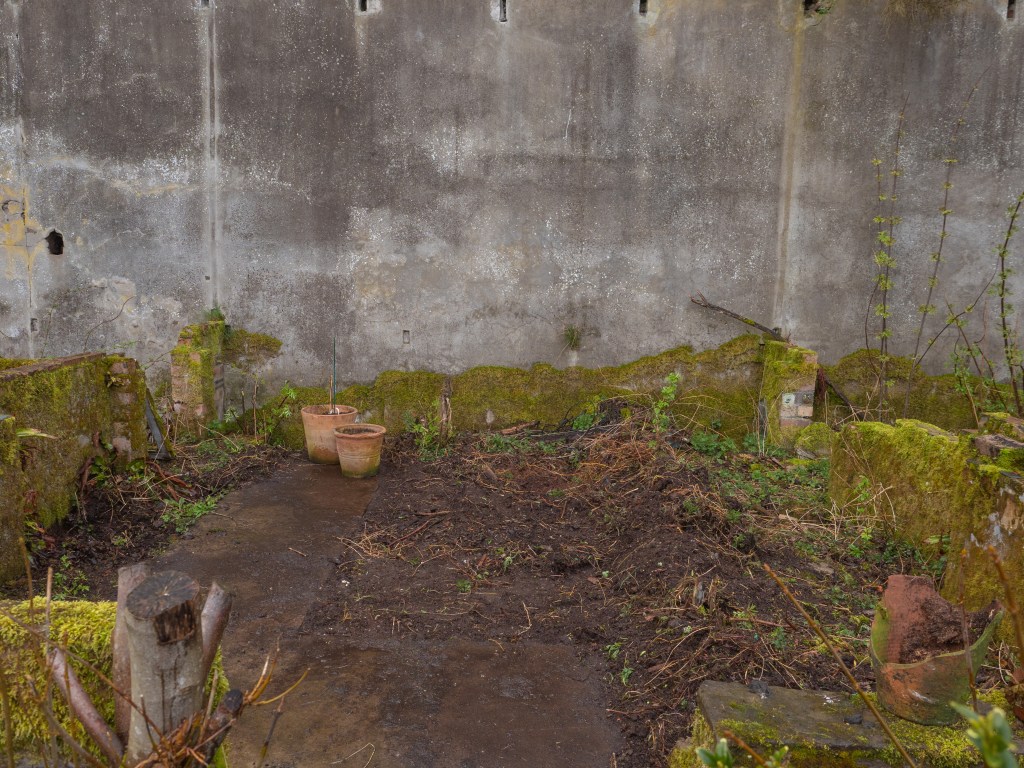

 The Bamff Walled Garden.