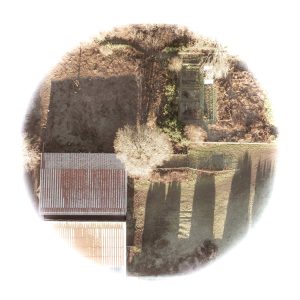

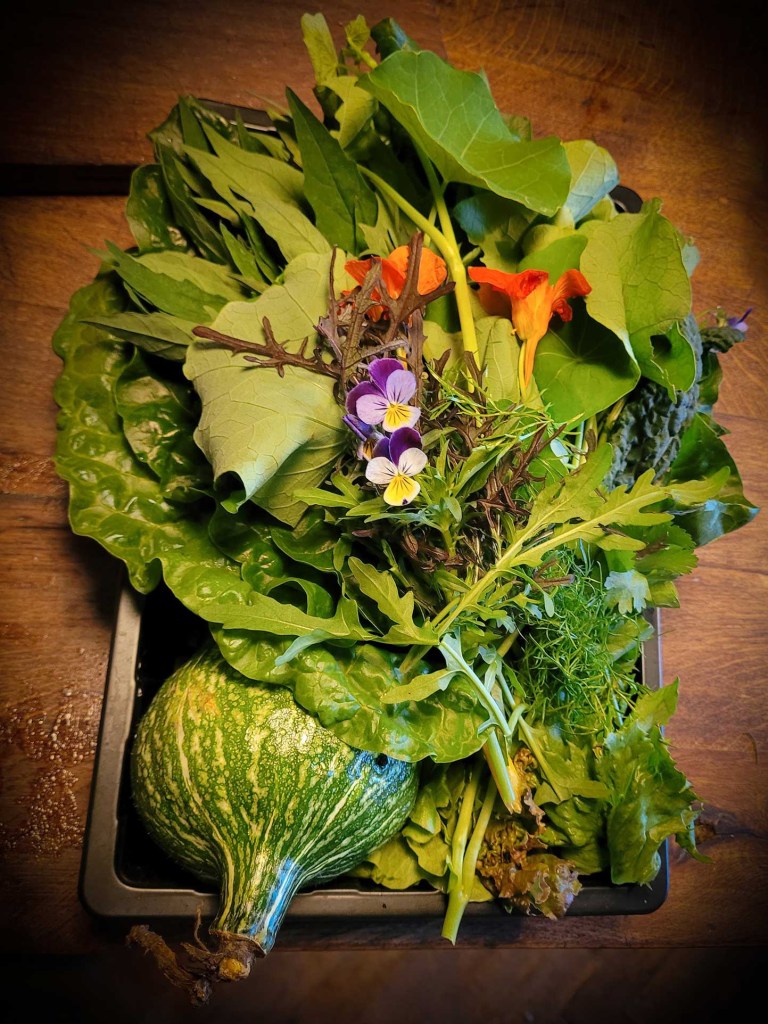
The construction of a polytunnel was a fairly hasty decision taken at the beginning of 2022, resulting in a baptism by fire during construction, and a sense of achievement when finally completed. During the long construction period, the whole point of it – to grow some food – was sometimes almost forgotten, and this was complicated a little bit further by its fairly late completion in mid May. I genuinely thought at points that I wouldn’t be able to achieve very much at all during this year in the tunnel. But that turned out to be…completely wrong.!
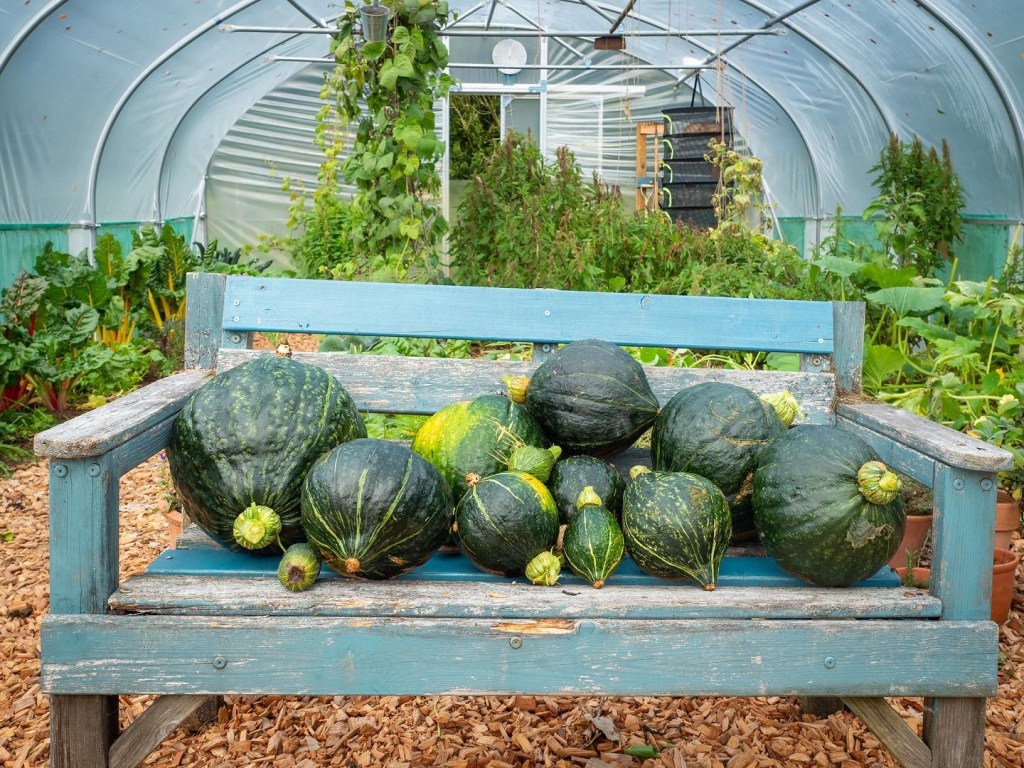
Probably the actual (literally) biggest success from the annuals planted in the tunnel came from the Anna Swartz Squash plants, which I trained vertically upwards to form a monumental wall of squashes – a truly delicious variety that is like a delicate globular courgette when young, and a gorgeous subtle nutty/sweet squash in the autumn. The largest ballooned up to typical pumpkin sizes.
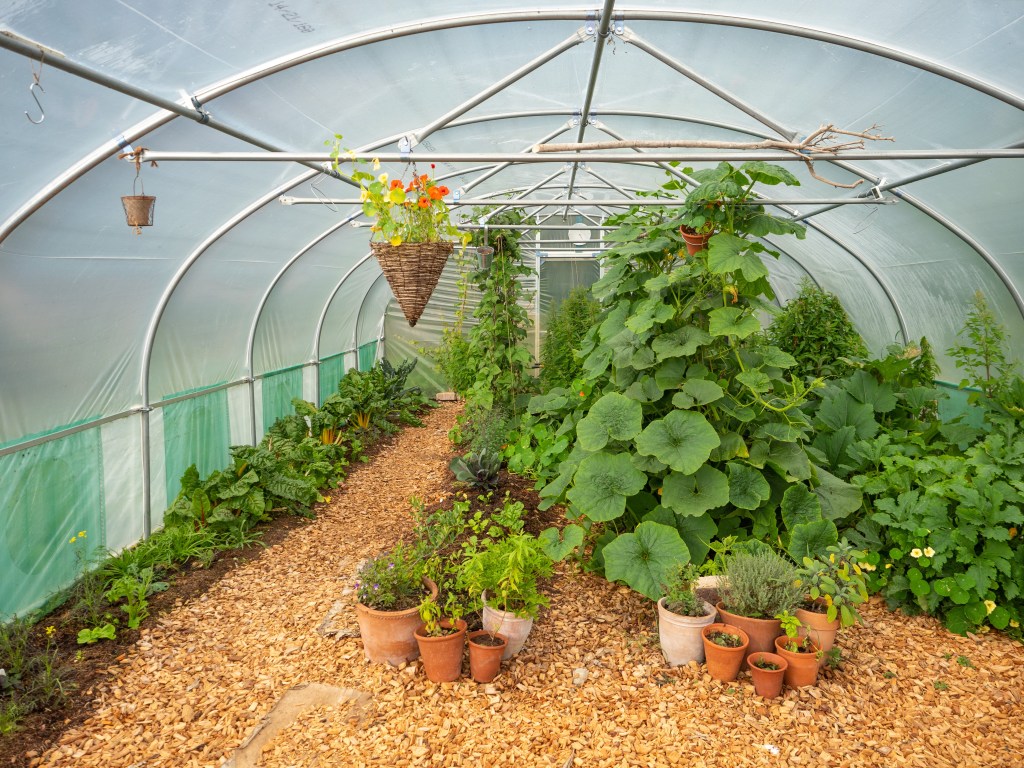
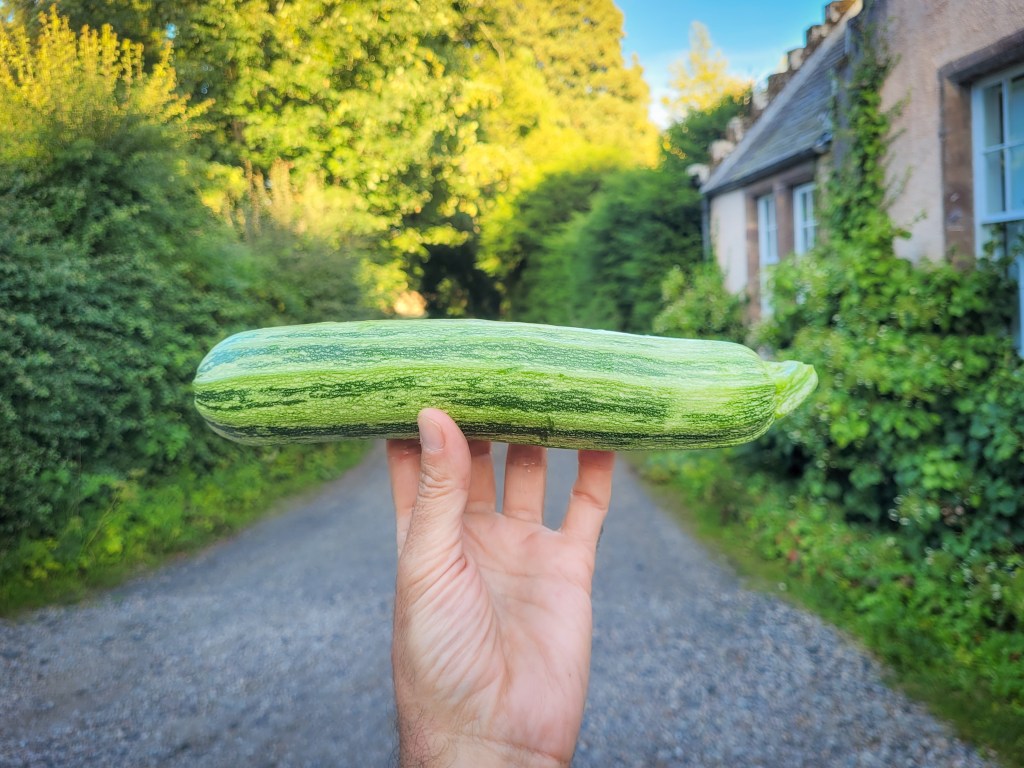
The two courgette varieties work pretty well in the tunnel, and some were accidentally left to reach marrow-like proportions. The general overcrowding of the courgette and squash plants did result in a certain percentage of them rotting, hence I should probably try growing some of these plants outside next year – to see how differently they respond to that cooler but airier environment. Or space them further apart.
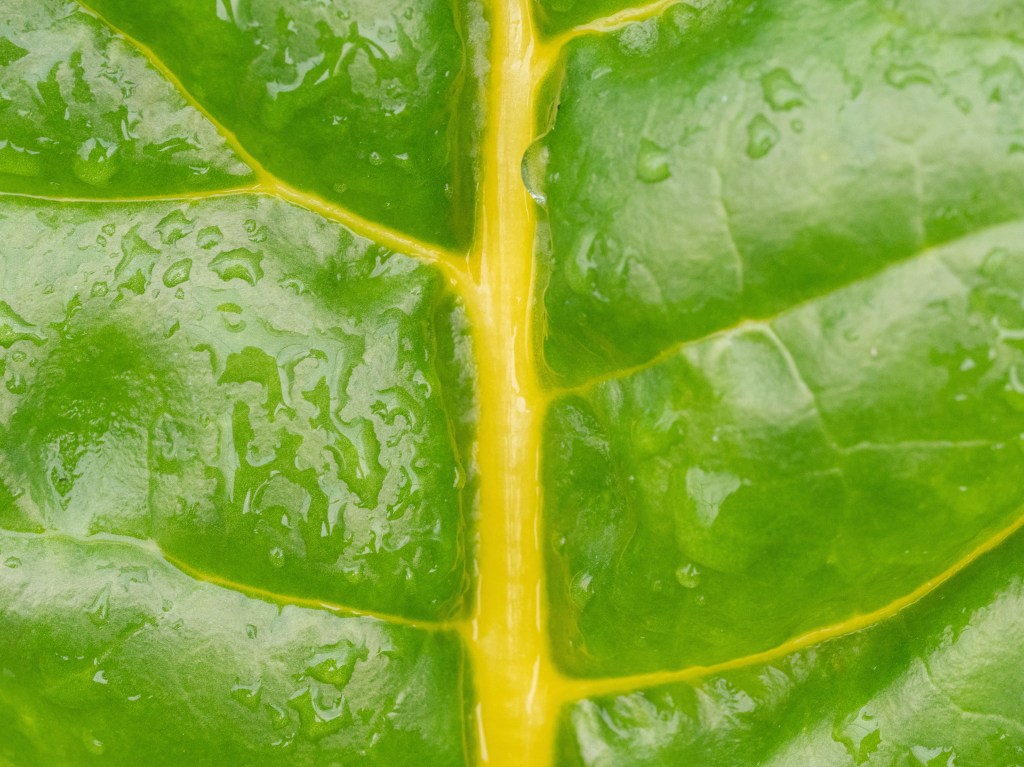
Chard! Chard is unstoppable and irrepressible. It’s nearly the most successful plant of all and grows brilliantly inside and outside. It’s seemingly neverending (especially when flowering parts are cut back) and feels more like a perennial plant than an annual. The varieties grown were golden and fireworks.
A great revelation was the mammoth lettuce-leaf basil. Exactly as described, the leaves are huge, and taste of basil. What more could anyone want? They also seemed to grow generally more vigorously and more easily than “standard” basil – of which a friend had given me a number of healthy seedlings, so I was able to compare them directly in the same environment.
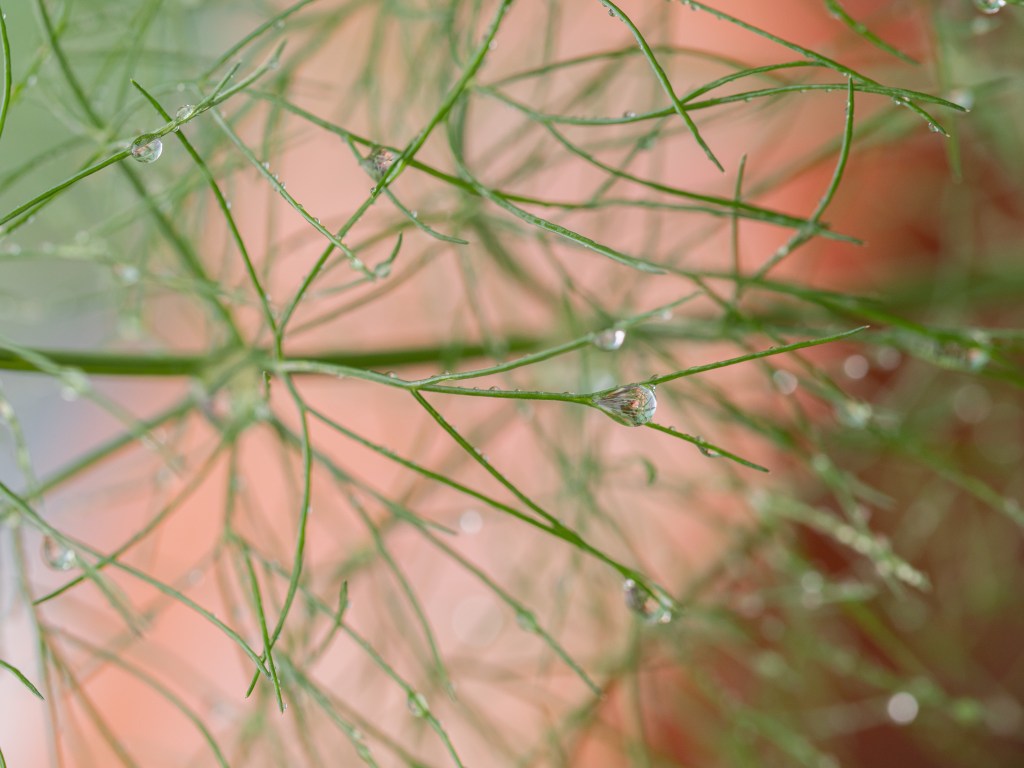
Other successful herbs included the sowings of coriander, fennel, flat leafed parsley and dill – but those of which were unprotected became largely demolished by the resident peacocks… However, the Moroccan and apple mints were their usual irrepressible selves, and gorgeous chives, rosemary (with cuttings too), sage, bay, thyme, and beautiful blue hyssop were all very happy too. A couple of Corsican mint plug plants, growing in a shaded spot behind bricks in the tunnel – their intense scent a delight, and something that I used to grow years ago in London – flourished well, as did the Quillquiña, which seemed to take forever to grow, but finally got there in the end, providing a remarkable deep scent that infused many vegetarian meals. Gigante di Napoli parsley seemed happy enough in the tunnel, but special mention must be given to the wall rocket, a wild perennial rocket (perhaps sometimes seen as a weed) with a fiery hot flavour (which I love) which I think stowed away secretly in a pot from London years ago.
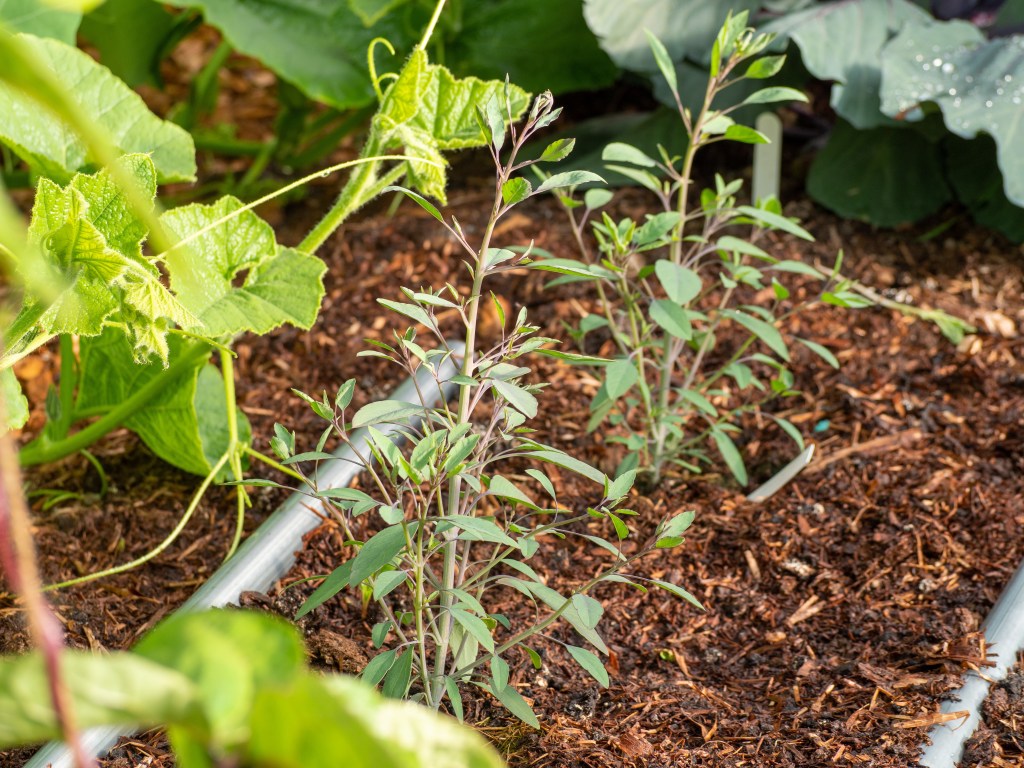
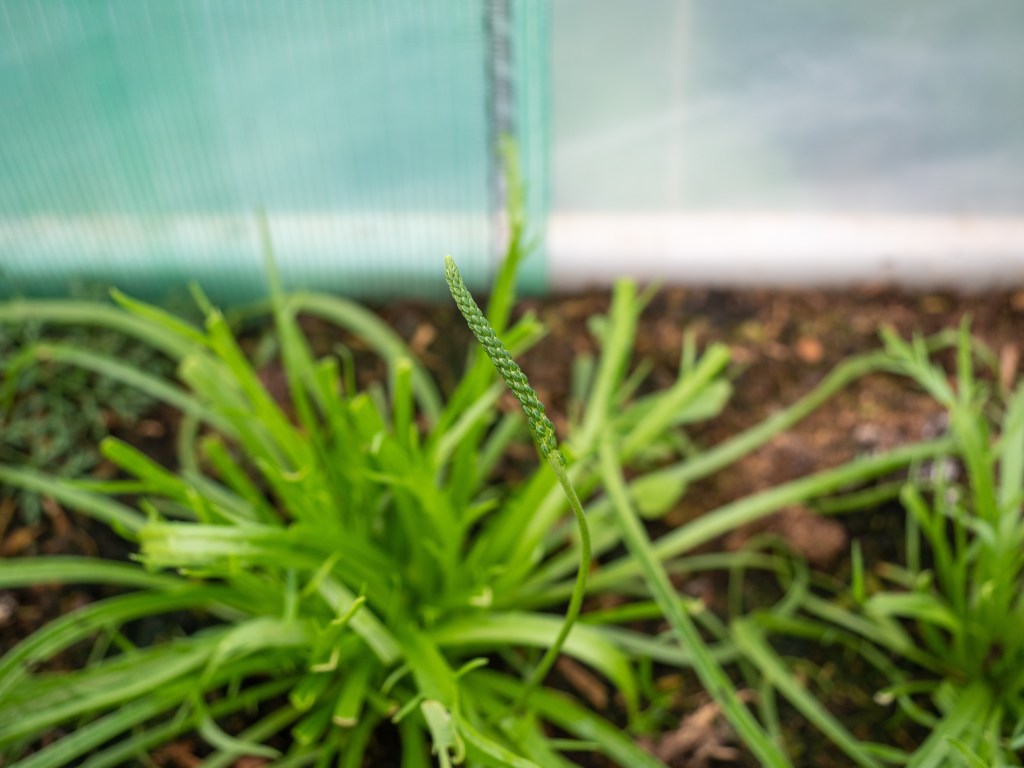
Great later additions included the minutina (erba stella or buckshorn plantain) with its anemome like leaves, betraying perhaps some resemblance to plants that grow close to the sea. And green wave mustard greens, which I adore, as I do with all leaves that exhibit any kind of mustardy or horseradish like flavour.
The decorative and delicious red mizuna also grew perfectly well both outside and in. Needless to say, nasturtiums didn’t fail to go crazy as they always do, in practically every location. Miner’s Lettuce (or winter purslane) worked well outside, and some rather modest sized white celery plants produced some nice stalks to munch on – but were most successful inside.
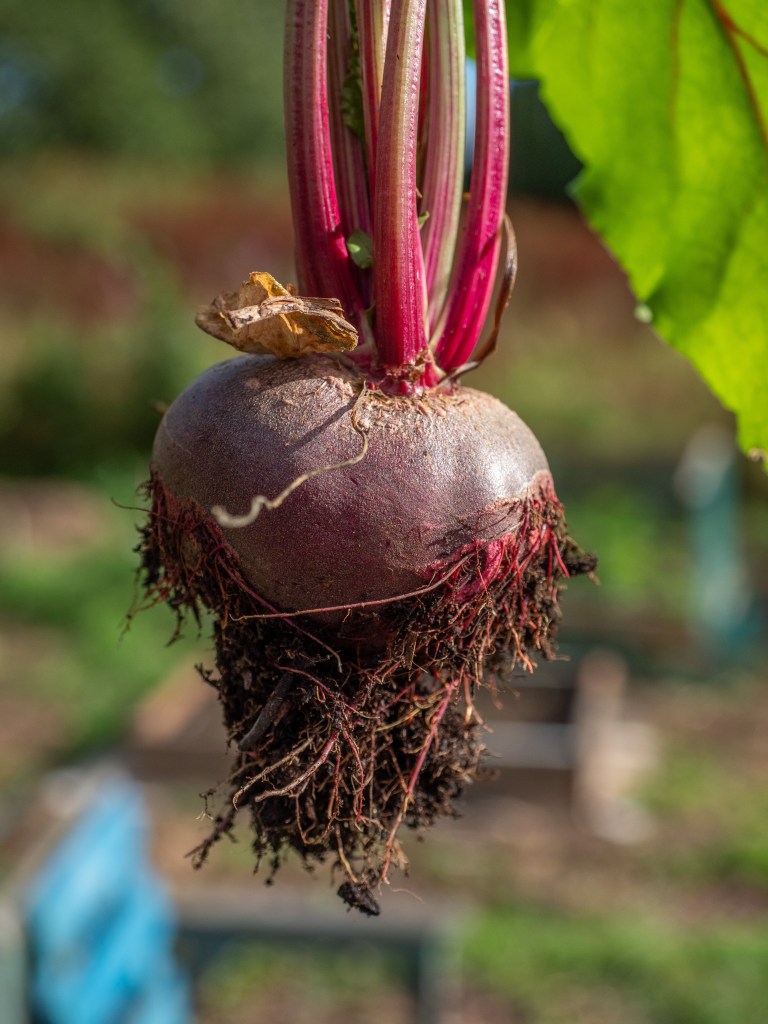
I was so pleased to be able to grow one of my favourite vegetables – the beetroot, in three varieties, both inside and outside the tunnel. But the inside crop of Sanguina was actually the most successful, producing the largest and juiciest examples, as compared to Alvro Mono and Chioggia, but they were sowed a couple of months later which may perhaps explain why.

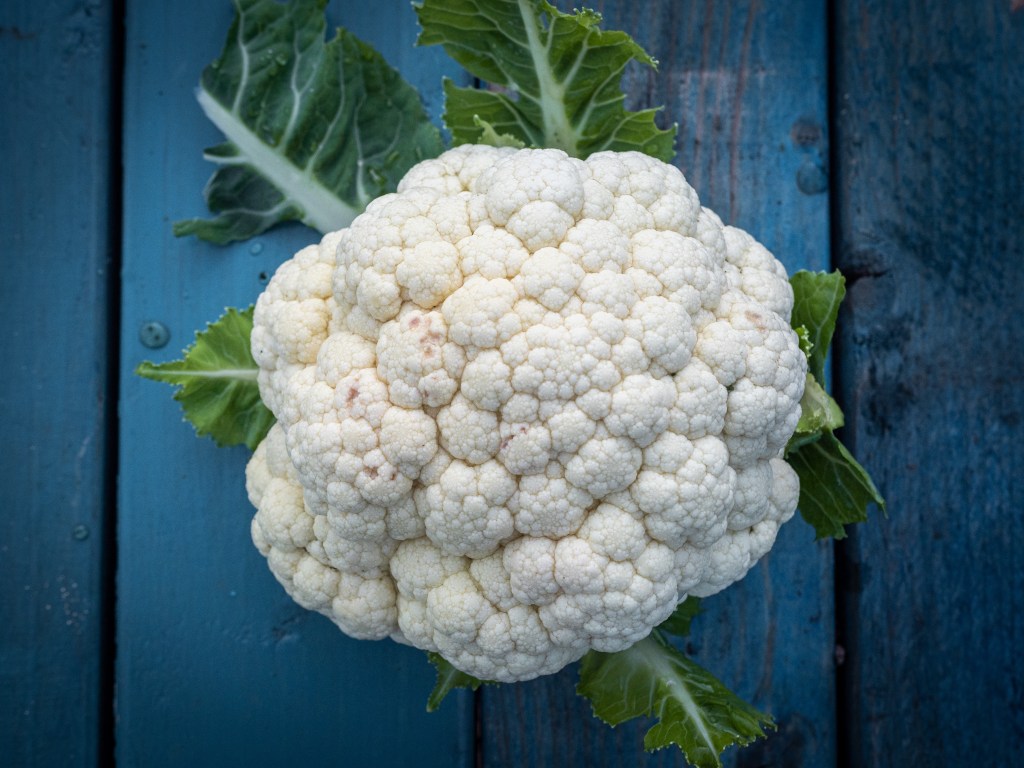
The mystery brassica from a friend turned out to become a red cabbage. But one with an almost horseradish flavour. Most of it was pickled, but that was eaten almost instantly. Only one cute cauliflower arrived. These brassicas were growing in the tunnel, which may not normally be considered the right location for them, but I eventually learned that inside/outside choices were not always so predictable in their outcome.
I didn’t expect any success in growing Perfection fennel bulbs for some reason, but actually they seemed to flourish quite well in the tunnel, even when crowded out a bit – and although I didn’t produce any giant fat bulbs like those you might see in an Italian marketplace, there was enough to provide – together with stems and leaves – a satisfying overall vegetable – which is of course delicious due to its delicate aniseed flavour – another type of flavour that I personally love. The later sowing of Florence fino fennel was slightly less successful outside in august.

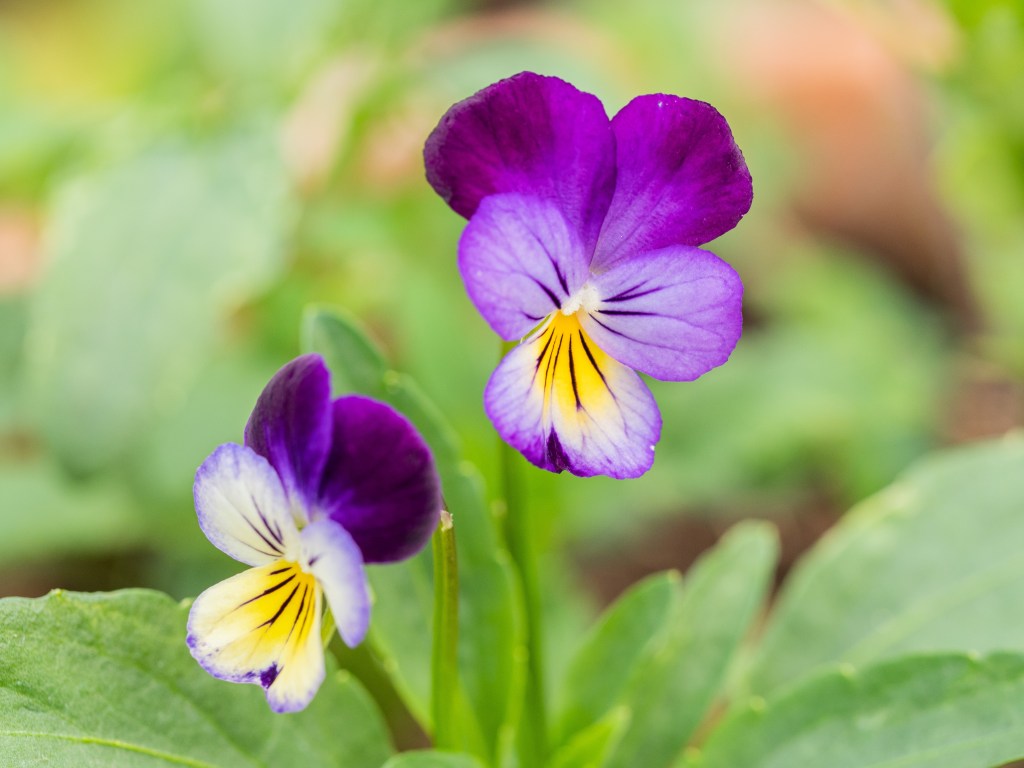
The winter Rosa radishes were amazing! Fiery and huge. No complaints there – and seemed to work both inside and outside the tunnel. Although perhaps outside was slightly better. Whilst in nearly every container and raised bed flourished the beautiful viola tricolor (wild pansy) – simply one of the most beautiful of edible flowers.
The porcini mushroom compost sadly didn’t appear to produce any accidental porcini mushrooms (as was promised). There was quite a generous crop of field mushrooms growing inside the tunnel, however. Did this mean that the description was inaccurate? Not sure..

AZTEC BROCCOLI!
All hail Aztec broccoli. This weed like plant, also known as Huauzontle, is directly related to fat hen, and grew to over head height inside the tunnel, but only a few feet high outside – then turned red in autumn. Whatever the location, the young leaves are delicious raw as are the flower heads and stems when lightly cooked. It has a distinctively subtle flavour – I can only best describe it as….“pea like”? Aztec broccoli probably was the most strikingly successful plant of all this year, as it was happy and bounteous in multiple locations – but most importantly of all, was able to provide a food source right from the point it produced leaves – and all the way up until it flowered – not necessarily unusual qualities, but in each case they were genuinely delicious and hugely prolific, and the overall length of harvesting time seemed to last months. A remarkable plant that I would recommend to anyone.
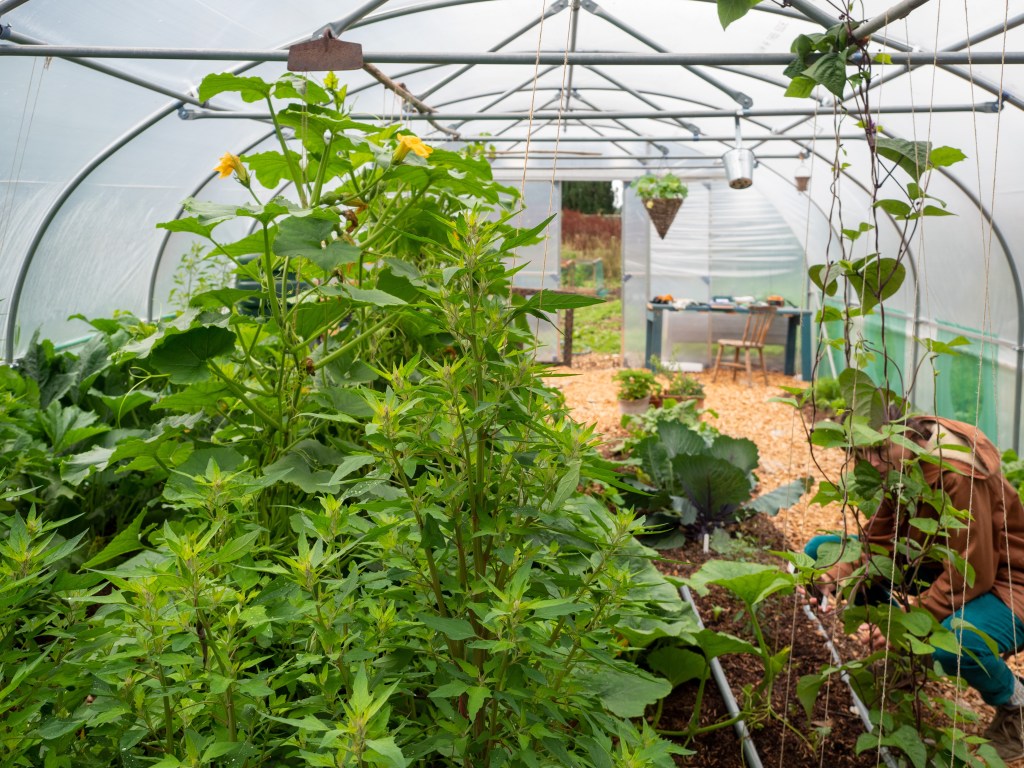
Cucumber plants did fairly well in the tunnel – some fairly massive ones suddenly appeared unexpectedly on occasion, hidden away in the foliage. The Nero di toscana kale produced some lovely young leaves with a beautiful flavour, however they evolved into a magnet for insect activity and became fairly desiccated over time – but in any case, I realise now that I’m not really a fan of the flavour from older kale leaves…
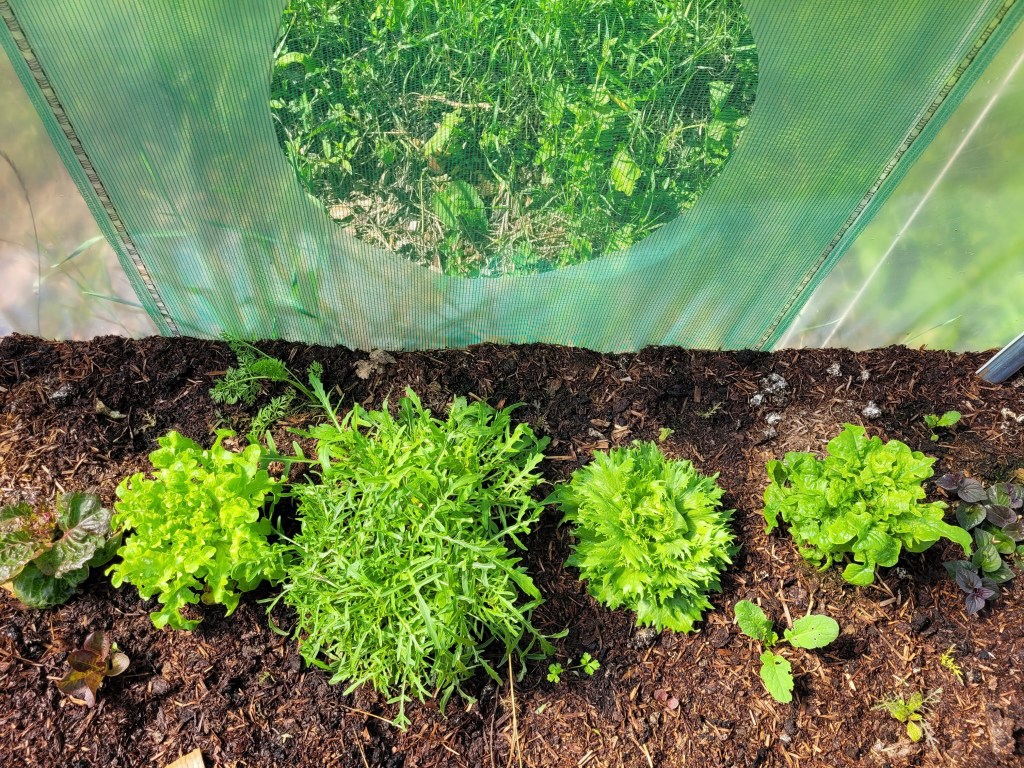
Various lettuces were happy inside the tunnel, but not the donated sorrel plant, which may have been due to the intense record breaking heatwave in summer 2022, which saw temperatures hit 30 degrees Celsius here at Bamff, possibly for the first time ever. A typical Bamff summer would be lucky to (briefly) reach around 24 degrees, whilst remaining for the most part in the mid teens. These unprecedented scorching temperatures did inevitably present a few problems in the tunnel, even though doors were open at each end, and side ventilation was permanently open on both sides.
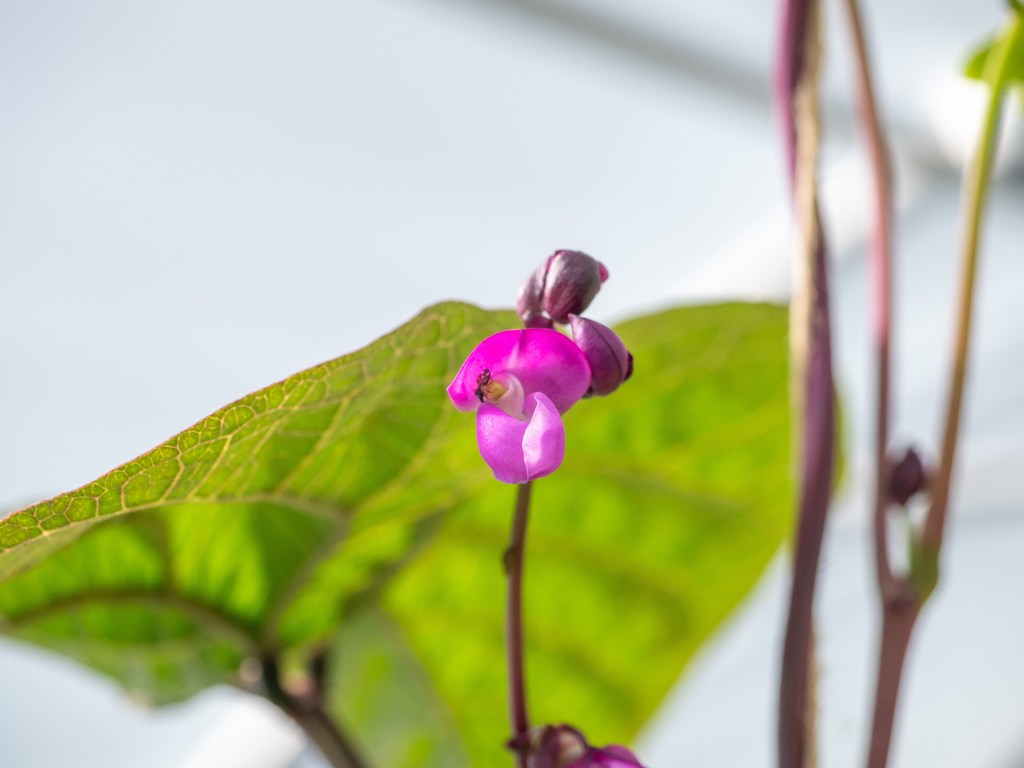
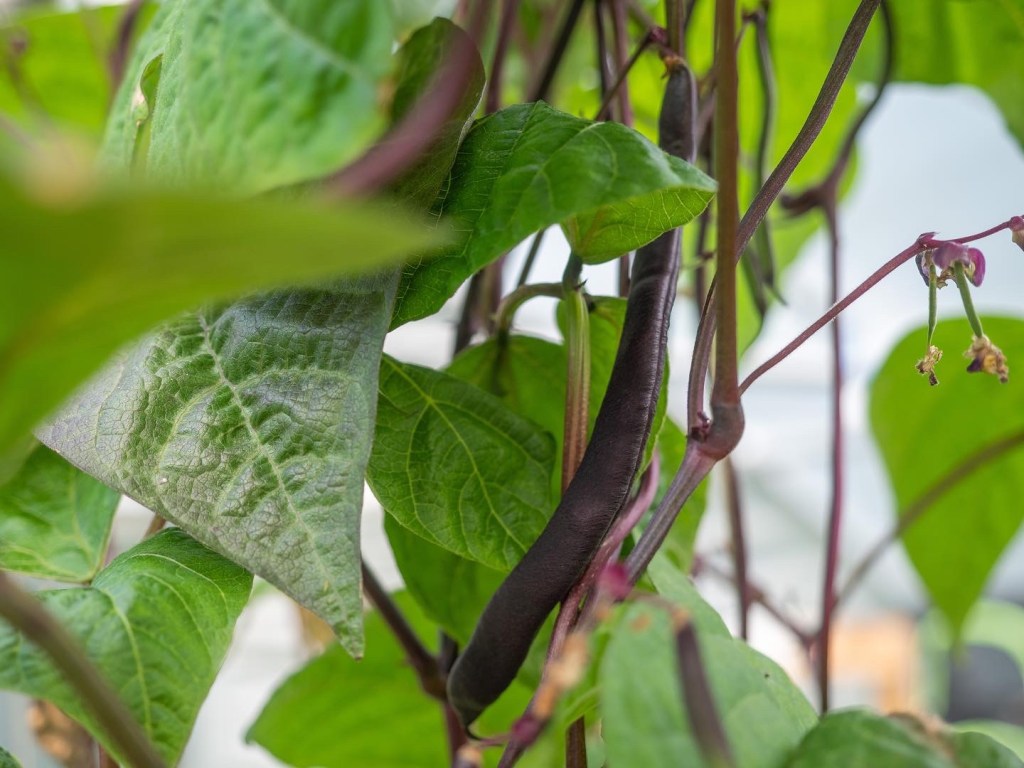
The most disappointing casualty of this was probably the Cosse Violette purple climbing french beans. Of around eight plants, only two survived. But these shot up dramatically (think, Jack and the beanstalk) and began to more than make up for the loss of the others in terms of their overall height and mass, it’s as if they were trying to break through the roof of the tunnel, reaching ever further and further towards the light, all to prove themselves to their tragically lost brethren. But flowers stubbornly remained absent until quite late, leading to only a fairly mediocre bounty of beans. Even worse were the barlotto di fuoco French dwarf beans both inside and out, which began vigorously with healthy leaves and swiftly began to produce some flowers and baby beans, but seemingly failed to then really deliver – though to be fair, the peacocks had nibbled to death certain plants outside the tunnel which were unprotected, including these beans.
The biggest disappointment overall was the Saint Valéry carrots. No plant produced anything other than a small stumpy sad misshapen lump, around an inch or two long at the most. I will need to either try a different variety, or to start them earlier in an outside no-dig bed next year. Or perhaps the super hot summer conditions meant that the cardboard underneath the compost in the no-dig polytunnel beds remained tough and resilient for much longer than they should have, when ideally it should have started to decompose a lot earlier. There was a water shortage at one point too, which didn’t help.
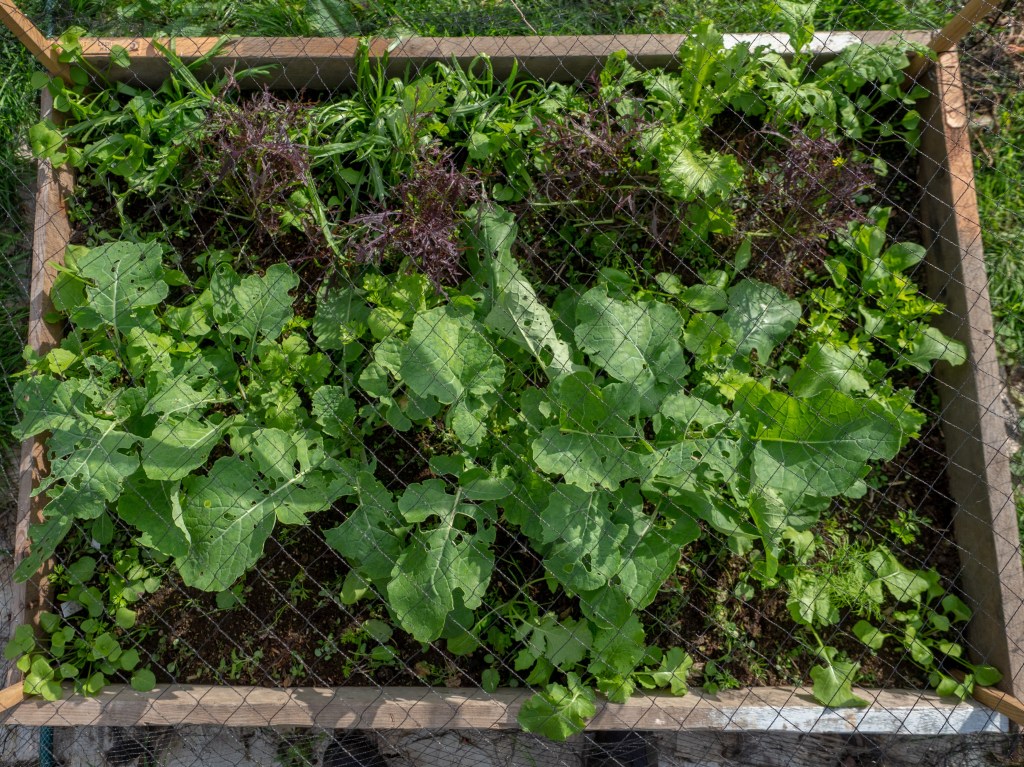
Of the later outside sowings, many brassicas were perfectly fine, but didn’t reach a particularly large size – including the two varieties of turnip and the Joan swede. But there was a decent crop nonetheless. We will see next spring if some of these sowings (such as cabbage and Japanese onions) will manifest themselves into an early crop. For some reason, the Blue Delikatess Kohlrabi didn’t amount to very much, even though the plants seemed to be growing fairly well. A later redbor red kale was slow to grow, but did ok inside and outside the tunnel.
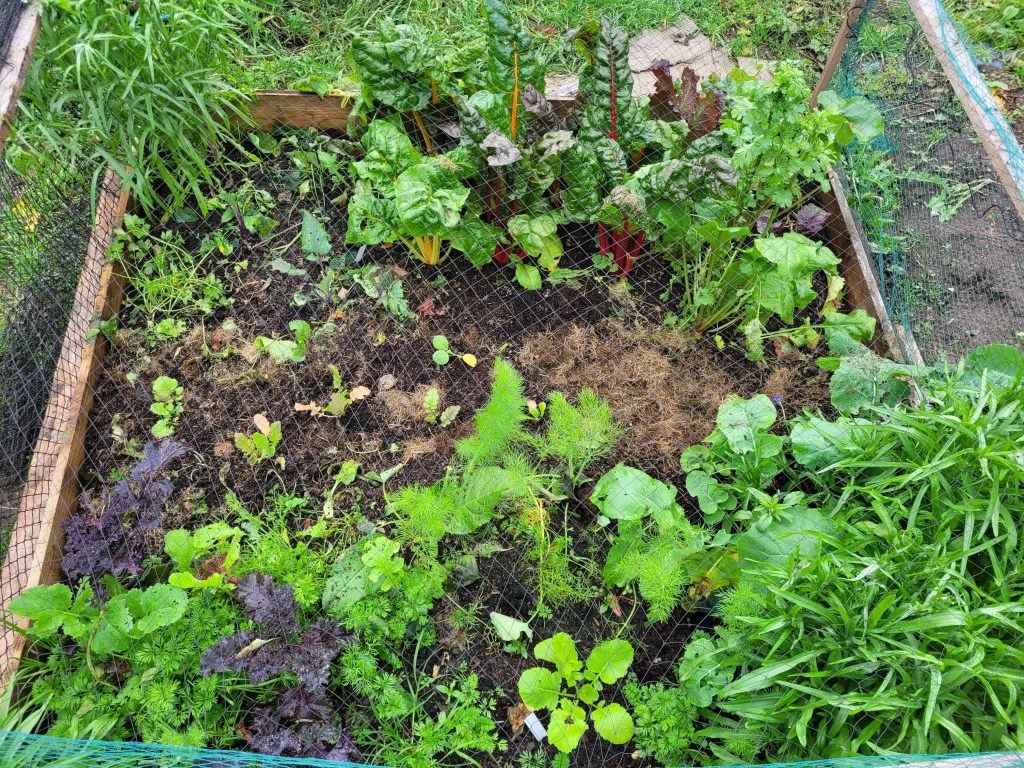
As so many seedlings were available (due to some rather enthusiastic sowing by a small child who I adore), I decided to place many of these brassicas inside the tunnel too, including some bok-choy, where they succeeded the earlier plants that had been fully harvested.
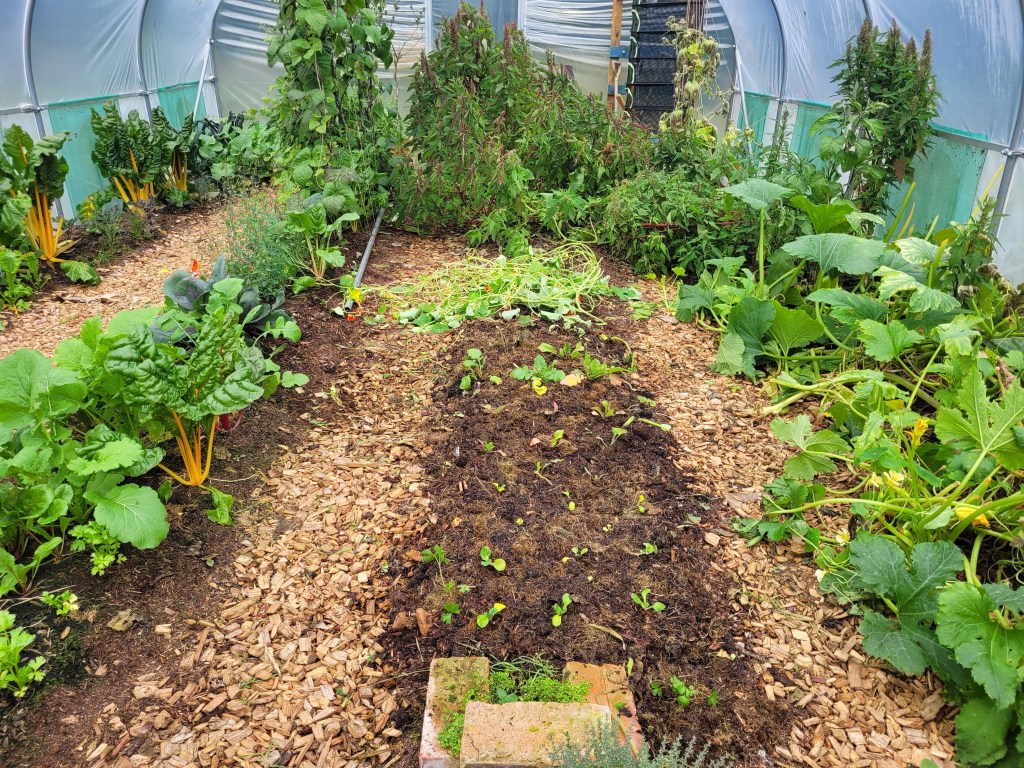
All in all then, the polytunnel’s first year was a roaring success, and I’m very much looking forward to see what is possible next year, especially with the possibility of starting many plants off much earlier (the time of the tomato must come….).

 The Bamff Walled Garden.