
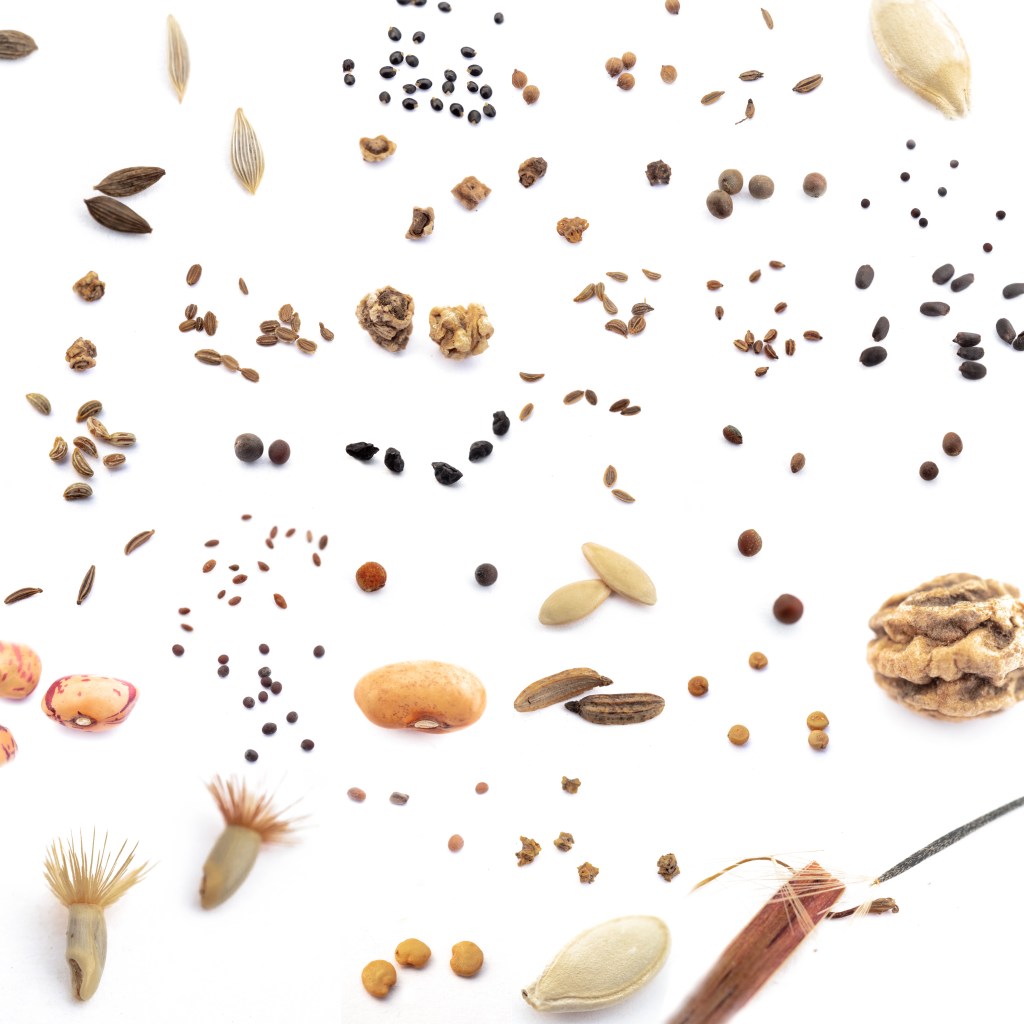
As the tunnel wasn’t finished until fairly late in May, it felt like time was running short for sowing seeds. On my PDC course we already experienced a friendly seed swapping session which gave me some promising candidates for sowing, additionally I went on a shopping spree online on the Real Seeds website – looking mainly for vegetables and herbs that could be grown from this time of year onwards, though others were also tempting too. Tamar organics also supplied some seeds a short while later.

Just prior to the tunnel completion some seeds were already sown in seeds trays. Others at various points afterwards.
Initial seeds sown included:
“All the year round cauliflower”, Saint Valéry Carrot, Full White Celery, two varieties of courgette, the wonderful mammoth lettuce-leaf basil, the Mexican herb Quillquiña, nasturtium, the irrepressible golden chard, a “secret mix” of lettuces, fennel, black Tuscan kale, Anna Swartz squash, purple French climbing beans, wild pansy, beetroot and Aztec broccoli.
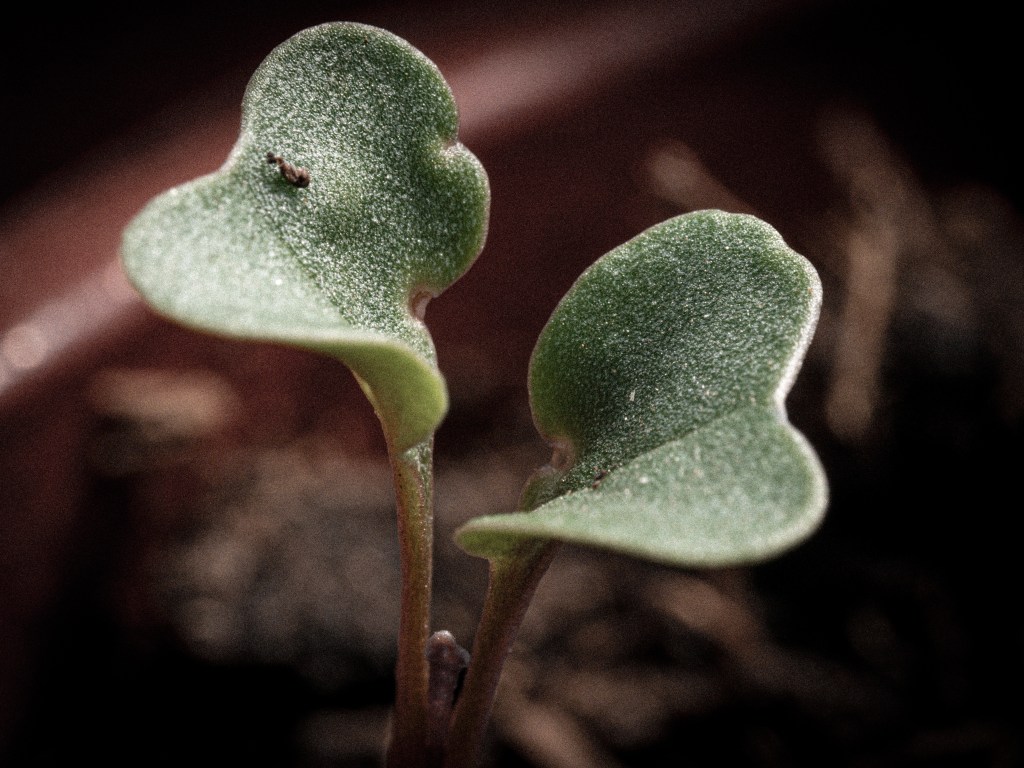
Then, when seedlings finally appeared and began looking robust, they were planted out into the still settling and still rather warm mushroom compost.
Additionally some more mature plants were kindly donated, a large leaved sorrel, cucumber plants and a red grave vine. I had found a deceased baby corvid in the garden, and decided to give it a funeral buried underneath the vine plant (as apparently they were often grown over animal carcasses). An unknown brassica from a colleague was planted – but I wasn’t 100% sure what it would be.
In terracotta pots were plants that had mainly arrived with us from London in 2018; a beleaguered, lifeless bay tree, an olive tree that was coppiced as it had lost all its leaves, oregano, and some other herbs purchased a year or so later in Scotland: including thyme and sage. All these plants were previously exposed to the harshest winter elements – most close to dying, but very soon they were all to spring back to life in the warm tunnel environment, including a lovely new crop of healthy bay leaves, and a heartening resurrection for the olive tree. Up above were pots and baskets with nasturtium and violas.
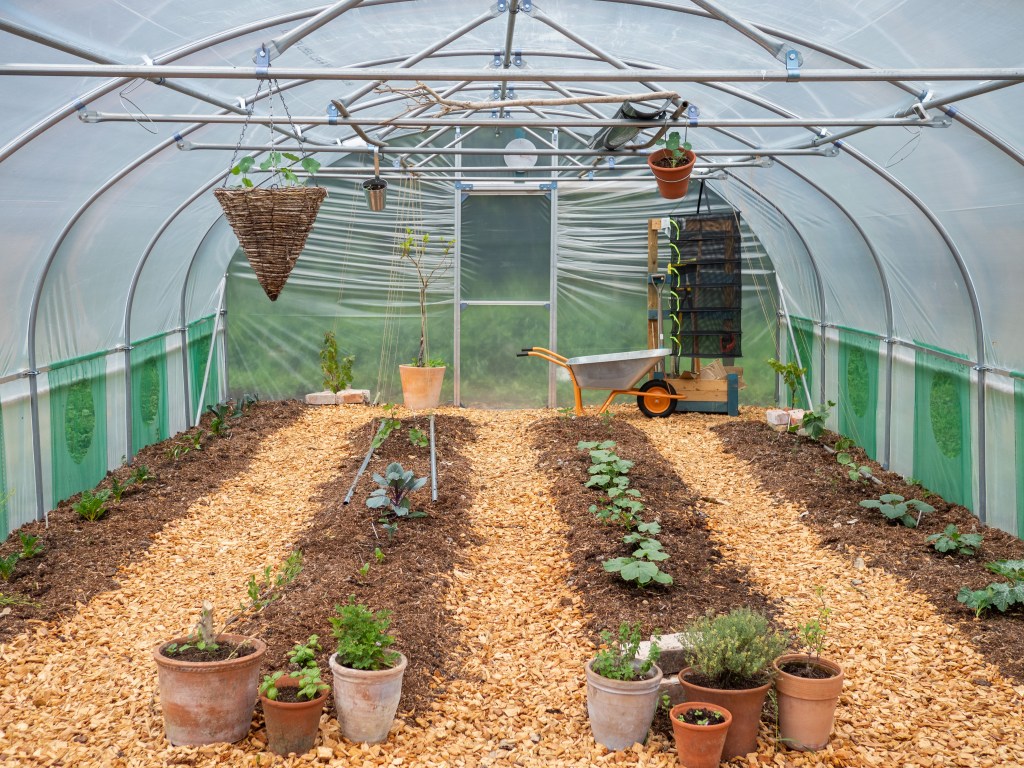
Miraculously, the hot compost didn’t kill off any of the seedlings. Practically everything started to flourish.

 The Bamff Walled Garden.